
Agriculture Ministry Urged to Move Beyond 'Firefighting' When Palm Oil Prices Fall
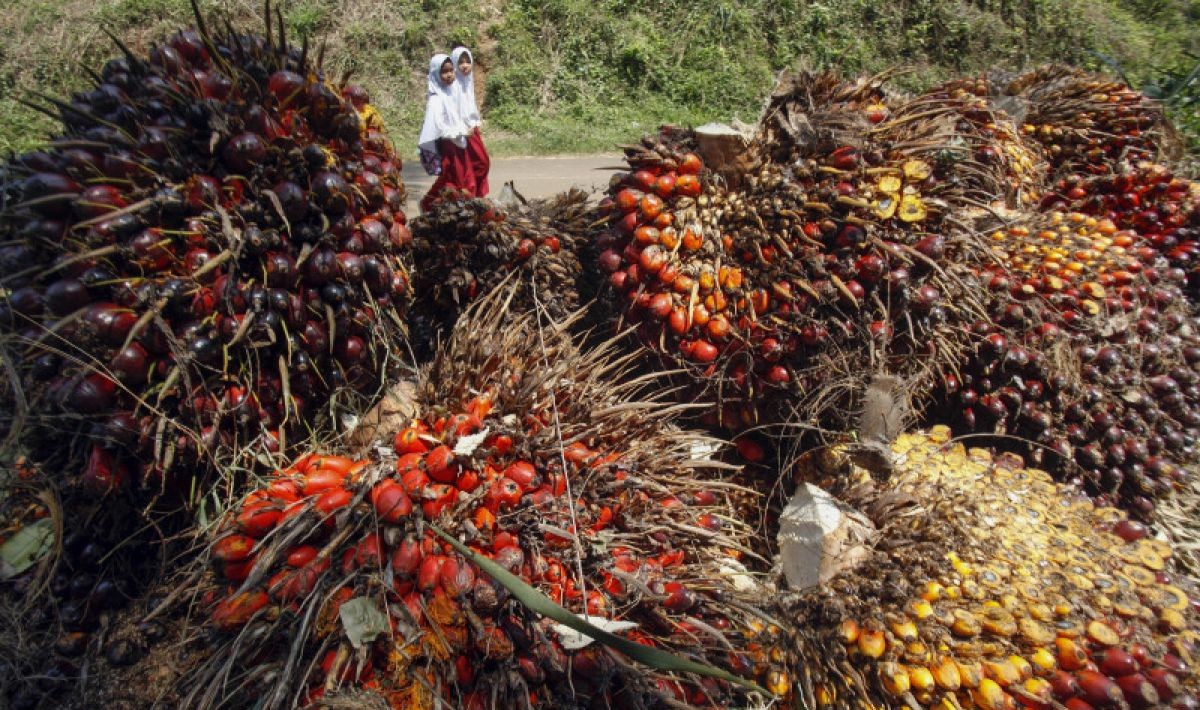
Indonesian Palm Oil Farmers Organisation (POPSI) Chairman Mansuetus Darto has stated that the Ministry of Agriculture should assume a more strategic and constructive role, rather than merely responding when fresh fruit bunch (FFB) prices have already fallen. He made the remarks in response to Agriculture Minister Andi Amran Sulaiman’s statement attributing the drop in FFB prices to the actions of businessmen and palm oil cartels.
“The Ministry’s current position appears to be merely that of a firefighter. Yet the same problem could re-emerge if the root causes are not resolved,” Darto said on Wednesday (17/6).
According to Darto, as the agency responsible for the upstream sector, the Ministry of Agriculture needs to gather all stakeholders—from farmers and business actors to relevant regulators—to consolidate various inputs and seek policy formulations that do not disrupt the national palm oil ecosystem.
He also stressed the importance of improving palm oil trade and logistics governance. In his view, supply chain transparency can be enhanced through digital data integration involving customs, surveyors, and other related parties.
“The flow of money in the palm oil supply chain originates from the end consumer, then the retailer, processor, importer, and buyer. What needs to be fixed is the system at customs and surveyors to ensure the entire process runs transparently. There must be a data-based digital platform that can monitor commodity movements, including tanker movements, so that market confidence increases,” he said.
Darto further asserted that efforts to maintain FFB price stability must also be carried out through policy improvements in the upstream sector, including strengthening partnerships between independent smallholders and companies.
“If the government wants FFB prices to be more stable, it needs to fix policies at the Ministry of Agriculture and strengthen partnerships between independent smallholders and companies. That is a more fundamental step than simply looking for a scapegoat for the price drop,” he explained.
Currently, FFB prices received by farmers have begun to return to normal in recent weeks after experiencing a decline. This condition is positive news for oil palm farmers who had previously faced price pressure due to high information uncertainty in the market, which generated considerable speculation.
FFB prices as of 16 June 2026 at various Palm Oil Mills across Indonesia varied between Rp 2,580 and Rp 3,400 per kilogram, depending on region, plant age, and fruit quality. Previously, FFB prices had been depressed to around Rp 1,800 per kg for farmers in various areas.
This increase occurred alongside the arrival of information certainty and regulatory clarity regarding the single-export plan, and countered the Agriculture Minister’s statement attributing the FFB price drop to the actions of businessmen and palm oil cartels.
Darto assessed that the fall and rise of FFB prices cannot be simplified to just the factor of cartels or business actors’ behaviour. According to Darto, several factors influence FFB price formation at the farm level, including policy uncertainty related to the DSI, which recently triggered market speculation.
“FFB prices do not emerge out of nowhere. There are other aspects that shape FFB prices. The government, through the Ministry of Agriculture, only discusses the drop in FFB prices at the farm level, whereas there are more fundamental issues from the market and policy side,” Darto said.
He explained that one of the factors triggering price pressure was the emergence of the DSI policy discourse, which is considered to lack implementation clarity. According to him, the policy appeared without adequate discussion with stakeholders and was not accompanied by clear policy documents.
“From the demand side, many parties question this single-exporter policy. It was never widely discussed with stakeholders, suddenly appearing in a speech without a clear policy document. Its direction, mechanism, and whether margins will be taken by the DSI or how—everything remains unclear,” he stated.
This situation, Darto continued, caused market players to hold back transactions because they had not obtained certainty. As a result, the price formation process was disrupted and generated speculation that culminated in pressure on FFB prices.
“What happened then was no price deals. Prices were not formed normally, so speculation emerged in the market. This situation contributed to depressing palm oil FFB prices,” he said.
Darto also assessed that the existence of the DSI has the potential to disrupt the palm oil industry ecosystem if not accompanied by adequate mitigation and socialisation to all business actors and farmers.
“The DSI disrupts the palm oil ecosystem and has the potential to cause further damage if there is no clear mitigation or socialisation. This kind of uncertainty actually creates new costs for the industry,” he concluded.