
Agriculture Ministry Supports Hoya Conservation, Develops Indonesia's Germplasm Wealth for Global Stage
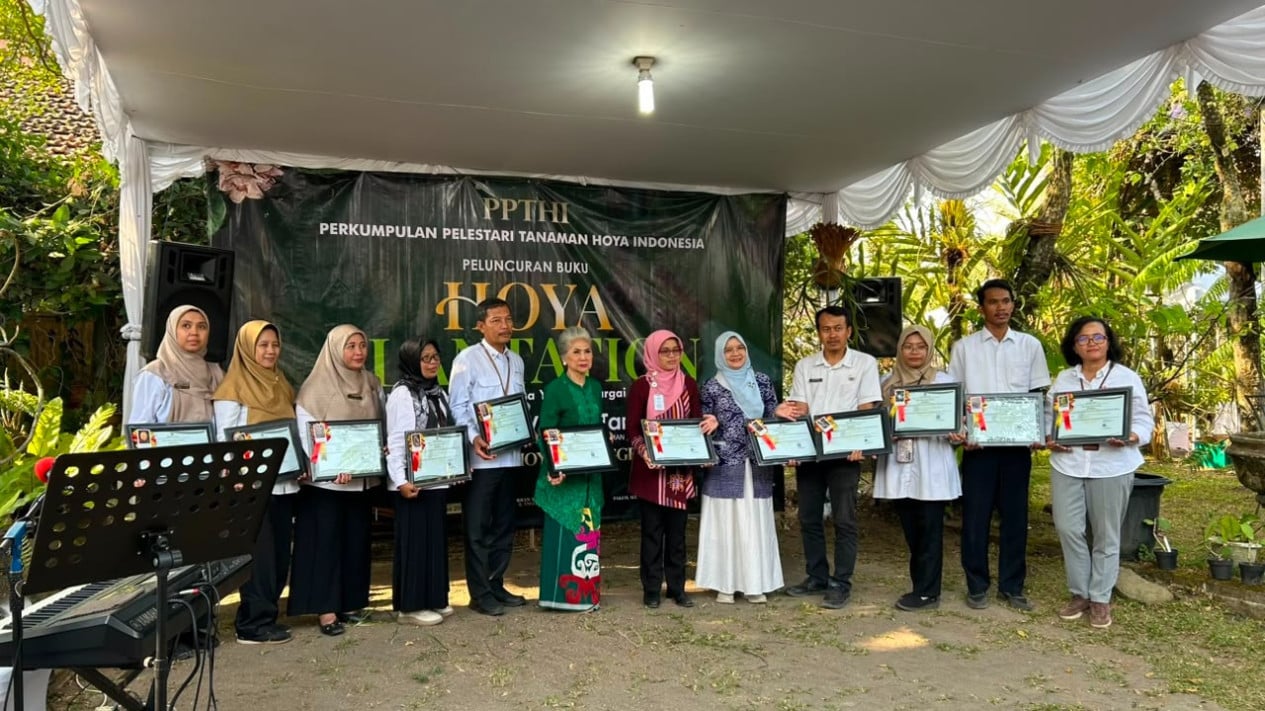
The Ministry of Agriculture is strengthening its commitment to developing Indonesia’s plant genetic resources, one of which is through the registration of Hoya varieties.
Head of the Centre for Plant Variety Protection and Agricultural Licensing (PVTPP), Leli Nuryati, explained that the effort is being undertaken to ensure that the wealth of Hoya varieties is documented, has an identity, and can be preserved and developed sustainably.
“Registration, documentation and preservation of Hoya varieties can be carried out through PVTPP sources both online and offline,” said Leli in her statement on Thursday, 13 August 2026.
The commitment was also demonstrated through the handover of the Hoya Variety Registration Certificate (TDV), which was combined with the launch of the book Hoya Plantation: Germplasm Genetics Valued by the World by Hervia Latuconsina Budi.
The activity was also held in conjunction with an exhibition of Hoya and orchid species, organised by the Indonesian Hoya Plant Conservation Association (PPTHI).
For Leli, variety registration is not merely an administrative activity or ceremony. The step is part of efforts to document, recognise, preserve and develop the wealth of Indonesia’s plant varieties.
“Variety registration is not the end, but rather the beginning of the responsibility to maintain the identity, existence and sustainability of the variety,” she said.
Based on data from the PVTPP Centre, 25 Hoya Variety Registration Certificates have been issued to date in the name of the Regent of Sleman. A total of 10 varieties were registered in 2024, five varieties in 2025 and 10 varieties in 2026. The five varieties registered in 2025 consist of Arum Pethak, Keningar, Matasari, Re Surai and Kembang Roket.
Meanwhile, the 10 varieties registered in 2026 are Si Tangkai Merah, Juntai Pastika, Citra Manah, Patera Garib, Wangijambera, Meta Arunika, Dolipink, Katra Aruna, Manusa and Ronsina.
Leli emphasised that registered varieties must continue to be maintained, developed and utilised sustainably so that registration truly provides benefits for the community.
“In addition to having conservation value, Hoya also holds significant economic potential. The diversity of shapes, colours, leaf patterns and flowers makes this plant attractive as an ornamental plant,” she said.
Head of the Plant Variety Registration and Release Group, Nani Suwarni, said that collaboration between the central government, regional governments, communities, breeders, researchers, conservationists and business actors is considered important to encourage Hoya to develop from merely a collector’s plant into an ornamental plant commodity with economic value and competitiveness.