
Agriculture Ministry Strengthens Licensing Assistance for Local MSMEs in Sukabumi
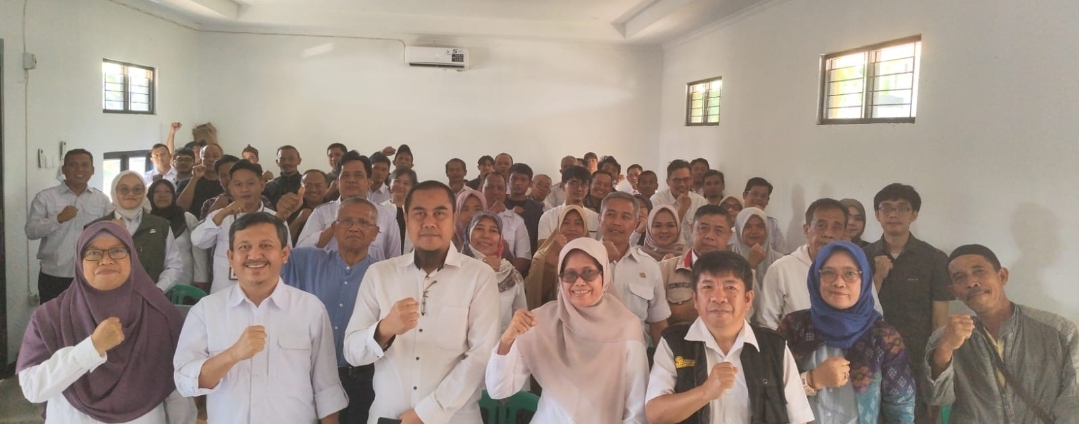
The Ministry of Agriculture, through the Centre for Plant Variety Protection and Agricultural Licensing (PVTPP), continues to promote ease of doing business for micro, small, and medium enterprises (MSMEs) in the agricultural sector. This was carried out through assistance for Business Licensing to Support Business Activities (PB UMKU) for fertiliser registration, held at the UPTD Region I Sukabumi Hall in Baros, Sukabumi City, West Java, on Wednesday (12/8). The activity was attended by Agricultural Extension Centres (BPP), agricultural extension workers, agricultural MSMEs, and relevant stakeholders. The assistance aims to improve business actors’ understanding of the latest regulations while providing practical knowledge regarding the mechanisms and flow of integrated online fertiliser registration.
Head of the PVTPP Centre, Leli Nuryati, emphasised that the assistance is part of the government’s effort to deliver licensing services that are easy, fast, transparent, and provide certainty for business actors. “This assistance is expected not only to improve MSMEs’ understanding of regulations but also to encourage them to comply with licensing provisions and produce fertiliser products that meet quality standards,” Leli said. During the presentation session, a speaker from the Sukabumi Regency DPMPTSP explained changes to business licensing policies, particularly the implementation of Government Regulation (PP) Number 28/2025, which replaces PP Number 5/2021. The implementation of the Risk-Based Business Licensing system through the Online Single Submission Risk Based Approach (OSS RBA) is an important instrument for determining the risk level and licensing requirements of a business activity. “With the issuance of PP Number 28/2025, the risk-based licensing system becomes clearer and more efficient. OSS-RBA helps simplify and organise the licensing process, including for business actors in the agricultural sector,” he explained. Although many agricultural business activities have a low-risk level, MSMEs still need to ensure compliance with the Business Identification Number (NIB) and PB UMKU according to the type of business activity carried out.
Beyond regulatory aspects, the assistance also provided technical understanding regarding fertiliser registration through the OSS and SIMPEL1 systems. Dwi Herteddy explained that business legality is a crucial aspect that business actors must fulfil before distributing fertiliser products. Furthermore, products must meet the Indonesian National Standard (SNI) or Minimum Technical Requirements (PTM) and be accompanied by quality and effectiveness test results in accordance with provisions. Participants’ enthusiasm was evident during the discussion and Q&A session. Several MSMEs raised questions regarding testing costs, technical requirements, and licensing procedures. The limited budget for testing was a concern for MSMEs. They hope for more affordable mechanisms and continuous assistance so that the process of fulfilling licensing requirements can be carried out properly. The registration process can be done independently through the online system with Non-Tax State Revenue (PNBP) rates according to applicable regulations. Assistance is also provided to help business actors understand the stages and requirements that must be met.
The assistance did not only focus on administrative licensing aspects. Participants also received technical training on producing organic fertiliser by utilising agricultural and livestock waste available in the surrounding environment. Elsanti from the Soil and Fertiliser Assembly and Modernisation Agency (BRMP) provided a practical simulation of organic fertiliser production. The material was directed at improving MSMEs’ ability to utilise the potential of local raw materials while producing products that meet quality standards. “The success of fertiliser production is greatly influenced by the selection of raw materials, the composting process, and storage. Quality must not only be checked on the final product but must be controlled throughout the production process,” explained Sarmah, a speaker from BRMP Soil and Fertiliser. Through this activity, the government hopes that MSMEs in Sukabumi will better understand licensing regulations and be able to develop quality organic fertiliser products by utilising local resources. Synergy between the central government, regional government, extension workers, and business actors is expected to strengthen the agricultural business ecosystem.