
Agriculture Ministry steps up biosecurity to protect pig farms in North Toraja
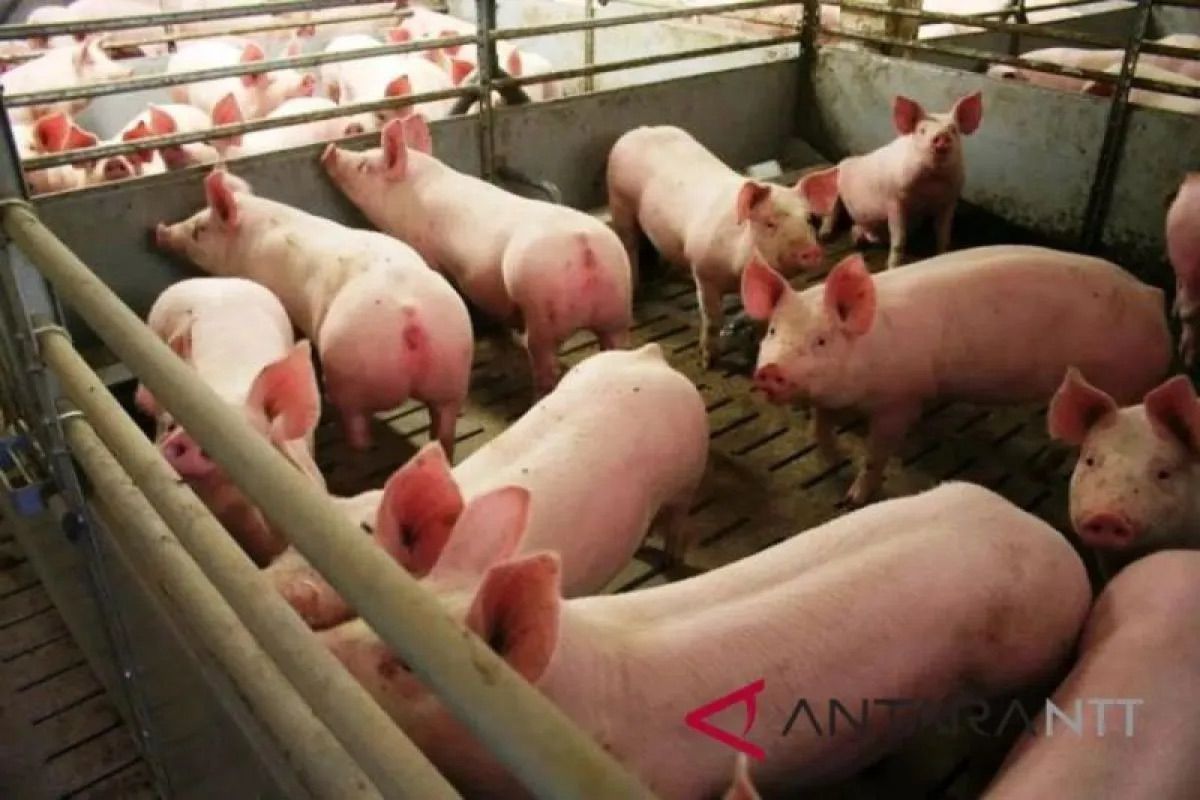
Jakarta (ANTARA) – The Agriculture Ministry, together with local authorities, is stepping up support for pig farmers in North Toraja Regency, South Sulawesi, through livestock health checks, biosecurity education and disease prevention measures to safeguard the sustainability of small-scale farming businesses.
“These efforts are intended to help farmers maintain the health of their livestock while ensuring their businesses can operate properly and sustainably,” said Hendra Wibawa, director of animal health at the ministry’s Directorate General of Livestock and Animal Health, when contacted in Jakarta on Saturday.
The support is being delivered through co-ordination among animal health officers, Animal Health Centres (Puskeswan), local government and the Maros Veterinary Centre (BBV Maros).
Activities include field verification, sample collection and testing, farmer education, and cleaning and disinfecting pens as needed.
Hendra said supporting farmers was essential to protecting livestock health and encouraging better husbandry practices.
“Every animal matters to its farmer. So when deaths are reported, our job is not only to establish the cause, but also to support farmers in protecting livestock that remain healthy and preventing similar incidents,” Hendra said.
Biosecurity can begin with simple steps carried out consistently, he said.
Farmers can keep pens clean, clean and disinfect equipment, restrict the movement of people and vehicles, and isolate new animals before putting them in the same pens as existing livestock.
“Biosecurity is not intended to make life difficult for farmers. It is the simplest way to protect their livestock and their families’ income,” Hendra said.
From May to July 2026, the ministry and local authorities took response measures after 25 pigs died in five villages in North Toraja Regency. Laboratory tests at the time confirmed African swine fever (ASF).
Follow-up measures were carried out in co-ordination with BBV Maros and the North Toraja Regency Agriculture, Plantation and Livestock Office. These included strengthening biosecurity education, disinfecting pens and monitoring livestock movements to help farmers adopt preventive measures more effectively.
In early October 2026, officers followed up a report that seven pigs belonging to a farmer in Sa’dan Ulu Salu village, Sa’dan district, had died. A field assessment was conducted, and arrangements were made to send samples to BBV Maros for laboratory testing.
The steps are intended to establish the cause accurately, so that follow-up action can be based on test results and conditions on the ground.
Dinar Hadi Wahyu Hartawan, head of BBV Maros, urged that every report of livestock deaths be investigated and that conclusions not be drawn before laboratory results are available.
“Do not speculate or make farmers more anxious. We should first establish the facts through laboratory testing. Once the cause is clear, the response must also be appropriate,” Dinar said.
He said reports from farmers helped officers determine what testing and preventive measures were needed. Farmers were therefore encouraged to contact animal health officers or a Puskeswan promptly if they found livestock sick or dead.
“We must protect small farmers. One incident should not leave them losing their entire livelihood. The government must be present early, providing information, helping with inspections and strengthening prevention,” he said.
Alongside testing, the ministry and local authorities are continuing to promote biosecurity at farm level.
Farmers are advised to maintain clean surroundings, disinfect properly, limit the movement of livestock and equipment, and take extra care when bringing in animals from outside the area.
Dinar added that farmers’ willingness to report their animals’ condition was an important part of collective efforts to protect livestock farming.
“We want to foster a culture in which reporting is nothing to fear. A prompt report is, in fact, part of protecting fellow farmers,” he said.
Through co-ordination among central and local government, animal health officers and farmers, testing and preventive measures will continue to be strengthened.
Laboratory results from the latest report will provide the basis for deciding the appropriate follow-up, helping ensure that livestock health and the sustainability of farmers’ businesses are protected effectively.
Source: jawawa.id (https://jawawa.id/newsitem/agriculture-ministry-steps-up-biosecurity-to-protect-pig-farms-in-north-toraja-1791615107)
Originally published by Antara (Indonesian) (https://www.antaranews.com/berita/5779756/kementan-perkuat-biosekuriti-lindungi-ternak-babi-di-toraja-utara), translated from Indonesian