
Agriculture Ministry Proposes Eggs for Government Food Reserve Scheme
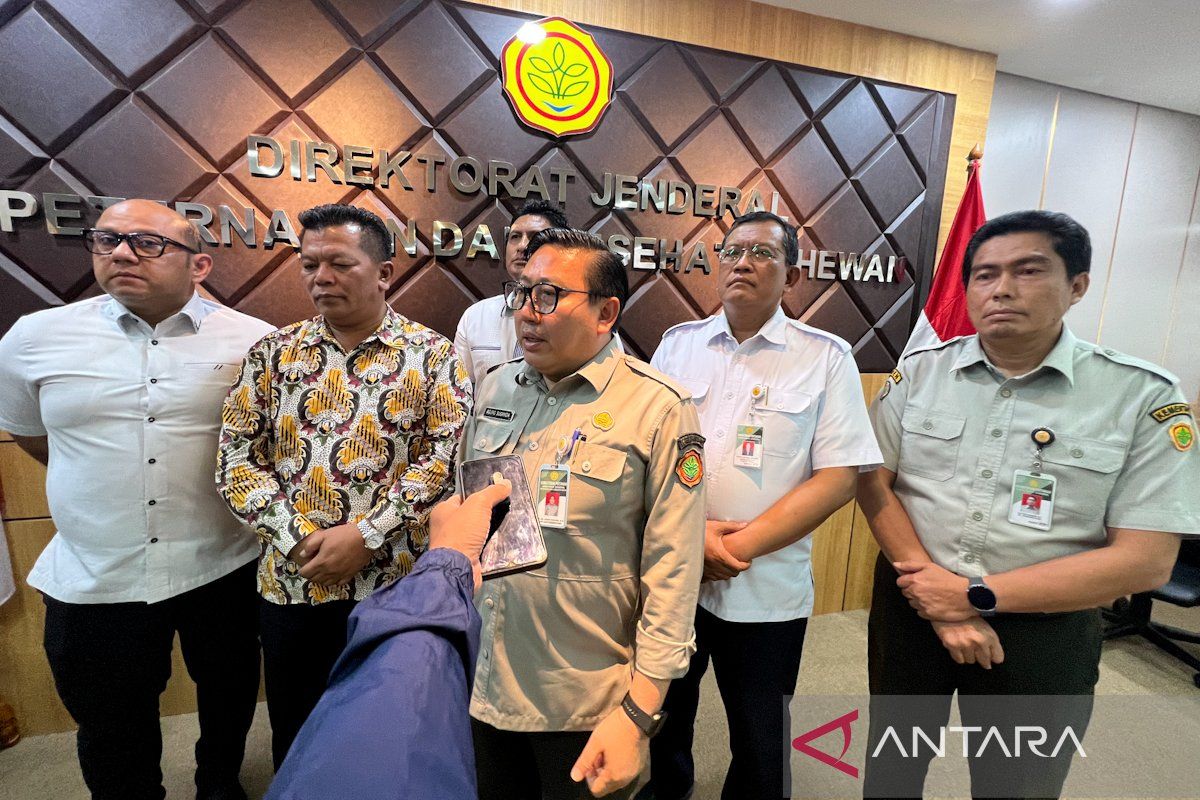
The Ministry of Agriculture (Kementan) has proposed that chicken eggs be included in the Government Food Reserve (CPP) procurement scheme as a measure to strengthen price stabilisation at the producer level and protect the business continuity of small-scale poultry farmers.
Director General of Livestock and Animal Health at Kementan, Agung Suganda, stated that the proposal follows a directive from Minister of Agriculture Andi Amran Sulaiman to reinforce protection for egg farmers. “The Minister conveyed a directive regarding the request for the government to absorb eggs through the CPP programme,” Agung said in Jakarta on Monday.
Agung explained that the directive was delivered by the Minister of Agriculture online during a Poultry Coordination and Stabilisation Meeting with farmer cooperatives, feed industry representatives, associations, and PT Berdikari held at the Ministry of Agriculture office in Jakarta.
According to Agung, the Minister of Agriculture will write to Coordinating Minister for Food Affairs Zulkifli Hasan so that the proposal to establish a Government Food Reserve for eggs can be discussed promptly through a limited coordination meeting (Rakortas). The discussion in the Rakortas is expected to produce a decision on the mechanism for absorbing eggs as a Government Food Reserve to support price stabilisation while maintaining the sustainability of small-scale poultry farmers’ businesses.
Agung explained that the egg absorption would be carried out by state-owned enterprises (BUMN) appointed by the government, using a direct purchasing mechanism through farmer cooperatives in various regions. According to Agung, this scheme can also be utilised to support the implementation of social assistance and stunting reduction programmes, in accordance with decisions made by the government through the Rakortas.
The Ministry of Agriculture hopes that the direct purchasing mechanism through cooperatives can shorten the distribution chain, allowing farmers to obtain fairer and more profitable prices.
Agung noted that national egg production continues to show an increase, with total production reaching 7.05 million tonnes, supported by a growing layer hen population and improved genetic quality. He said the layer hen population increased by approximately 17 percent, while egg production rose by around 30 percent compared to the previous year, thanks to the construction of new barns and improved cultivation management. “This is due to many new barns, good production, and improved genetic quality,” Agung revealed.
The Ministry of Agriculture is optimistic that the proposal to establish a Government Food Reserve for eggs will be able to maintain price stability, improve the welfare of small-scale poultry farmers, and strengthen national food security in a sustainable manner.