
Agriculture Ministry Exports 20 Tonnes of Farmers’ Salak to Cambodia
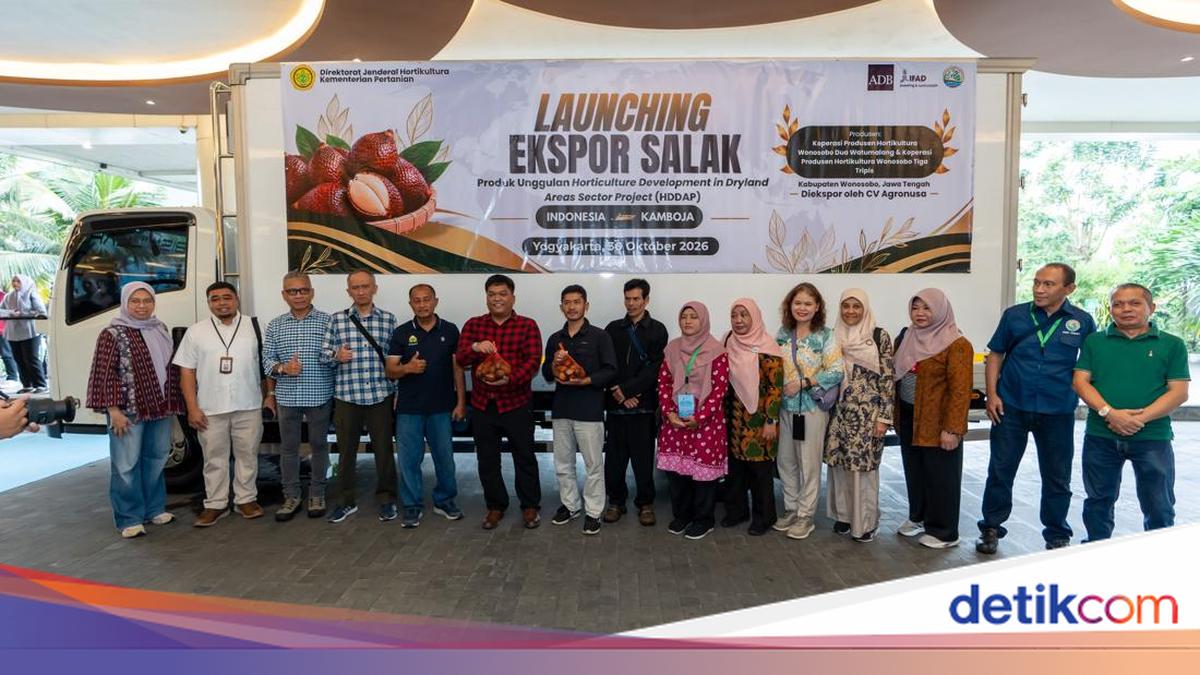
The Agriculture Ministry’s Directorate General of Horticulture is taking practical steps to help regional farmers move up the value chain. Produce from farmers supported by the programme is being sent directly overseas to cut out some of the export chain and maximise farmers’ profit margins.
The downstreaming initiative was marked by the first export of 20 tonnes of salak at The Alana Yogyakarta Hotel & Convention Center in Sleman today.
“ This salak is being exported to Cambodia. The estimated volume is around 20 tonnes,” said Freddy, director of downstream horticultural products and project director of the Horticulture Development in Dryland Areas Sector Project (HDDAP), when speaking to detikJogja on Thursday (29 October 2026).
“We want to take this step by step, like a baby learning to walk. You cannot expect to move up a level and fly straight away. This is the first shipment, still involving individual farmers and an intermediary; the important thing is that they receive cash first. If they went directly to the destination country, the costs would be high and payment delayed, which farmers usually cannot manage,” he added.
Freddy said the initiative is part of HDDAP, which aims to transform the national agribusiness system in dryland areas through a comprehensive approach from production to processing and marketing, including exports such as this one.
He said the move would shorten the export chain, which farmers have previously found difficult to navigate. They are also being taught how to meet export product standards.
“Until now, they have sold to collectors. Those collectors, in turn, sell to exporters. Some collectors specialise in exports. Exporters already know how to clean the produce, but farmers do not, because they have been working individually,” he said.
“For exports, you have to consider the packaging and the size, so we make the necessary adjustments. The Agriculture Ministry is providing support so farmers do not have to go through collectors. That is our aim: to shorten the chain and leave more of the margin with the farmer organisations,” Freddy added.
HDDAP currently covers seven provinces and 13 districts that are major dryland areas in Indonesia: Dairi, Karo, Pakpak Bharat, Sumedang, Batang, Wonosobo, Sumenep, Gresik, Lumajang, Buleleng, Ende, Enrekang and Gowa.
Each district has its own leading commodity. The salak shipped to Cambodia is a key product from Wonosobo district, Central Java.
The Pondoh Nglumut salak variety from Watumalang Clusters 1 and 2 is being supplied through a strategic partnership between the Wonosobo Dua Watumalang Horticulture Producers’ Cooperative and the Wonosobo Tiga Tripis Horticulture Producers’ Cooperative, alongside exporter CV Agronusa.
“There is durian from Buleleng, Gedong Gincu mangoes from Sumedang, plenty of Barangan bananas in Karo, and plantains in Lumajang. There is a range of products. The salak being exported is from Wonosobo,” Freddy said.
Alongside the first export, valued at Rp360 million, the parties signed an Expression of Interest (EoI) document on marketing partnerships to expand international export networks on a sustainable basis. The aim is for produce from other districts to be ready for export as well.
“Marketing is essential, and ideally it should be for export. That is why, alongside establishing the organisations, we have facilitated an export partnership. We need to help all the programme’s beneficiaries move up the value chain,” Freddy concluded.
Source: jawawa.id (https://jawawa.id/newsitem/agriculture-ministry-exports-20-tonnes-of-farmers-salak-to-cambodia-1793350240)
Originally published by detikJogja (https://www.detik.com/jogja/jogja-kerta/d-8731071/dirjen-hortikultura-kementan-ekspor-20-ton-salak-dari-petani-ke-kamboja), translated from Indonesian