
Agriculture Ministry Backs Hoya Conservation, Touts Economic Potential of Indonesia's Genetic Wealth
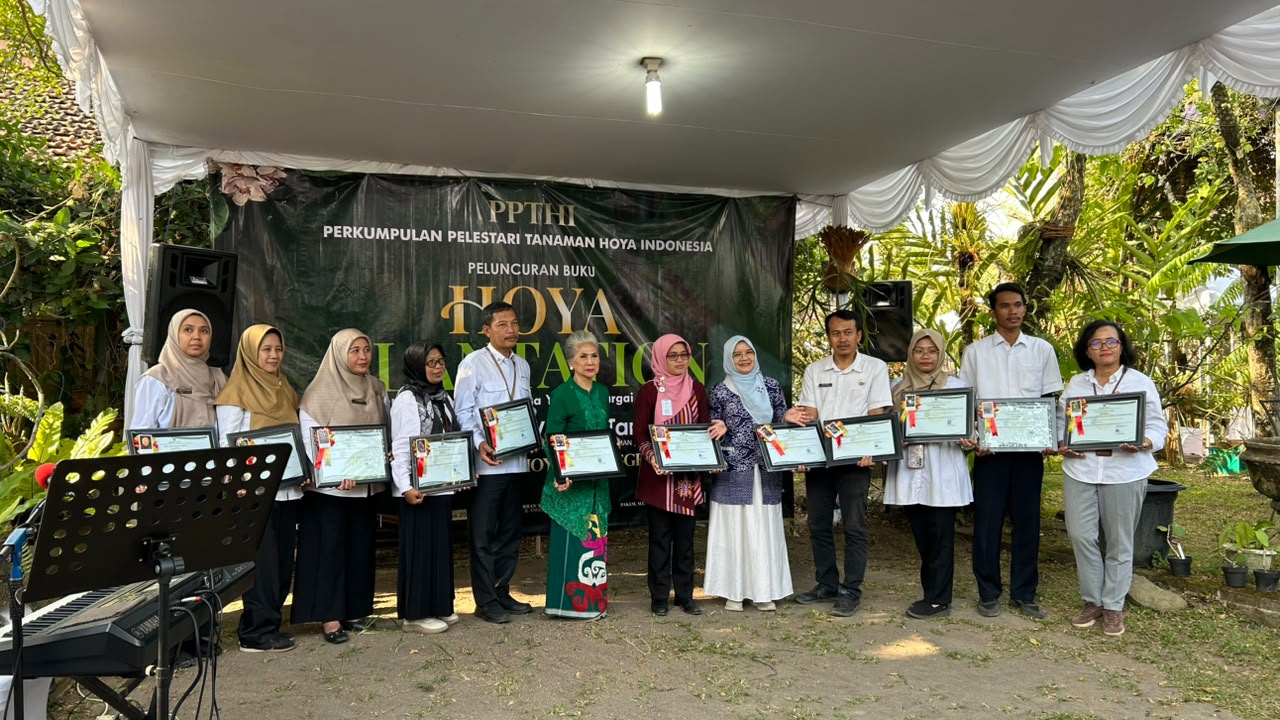
The Ministry of Agriculture is reinforcing its commitment to developing Indonesia’s genetic resources, particularly through the registration of Hoya plant varieties. This effort aims to ensure the nation’s wealth of Hoya varieties is documented, given legal identity, and can be preserved and developed sustainably. The commitment was demonstrated through the handover of Hoya Variety Registration Certificates (TDV), coupled with the launch of a book titled ‘Hoya Plantation: Plasma Nutfah Genetika yang Dihargai Dunia’ by Hervia Latuconsina Budi, and an exhibition of Hoya and orchid species organised by the Indonesian Hoya Conservation Society (PPTHI). Head of the Centre for Plant Variety Protection and Agricultural Licensing (Pusat PVTPP), Leli Nuryati, stated that variety registration is not merely an administrative or ceremonial activity, but part of an effort to document, recognise, preserve, and develop Indonesia’s wealth of plant varieties. She noted that registration marks the beginning of a responsibility to maintain the identity, existence, and sustainability of these varieties. Based on data from Pusat PVTPP, 25 Hoya Variety Registration Certificates have been issued under the name of the Regent of Sleman. Ten varieties were registered in 2024, five in 2025, and ten in 2026. The five varieties registered in 2025 are Arum Pethak, Keningar, Matasari, Re Surai, and Kembang Roket. The ten varieties registered in 2026 include Si Tangkai Merah, Juntai Pastika, Citra Manah, Patera Garib, Wangijambera, Meta Arunika, Dolipink, Katra Aruna, Manusa, and Ronsina. Leli emphasised that registered varieties must be continuously maintained, developed, and utilised sustainably to provide real benefits to the community. Beyond their conservation value, Hoya plants hold significant economic potential due to their diverse shapes, colours, leaf patterns, and flowers, making them attractive as ornamental plants. Nani Suwarni, Head of the Variety Registration and Release Group, highlighted the importance of collaboration between central and regional governments, communities, breeders, researchers, conservationists, and businesses to elevate Hoya from a mere collector’s plant to a competitive economic commodity. The PPTHI, which is a legal entity with networks across various regions, continues to conduct exploration, identification, care, and documentation of Hoya, with support from the National Research and Innovation Agency (BRIN) in the identification and documentation process. The launch of the book ‘Hoya Plantation: Plasma Nutfah Genetika yang Dihargai Dunia’ documents the richness and diversity of Hoya while serving as a tool to increase public knowledge and appreciation for the plant. The Head of the Yogyakarta Special Region Agriculture and Food Security Service stressed that genetic resources are a shared responsibility and that conservation must involve the younger generation to ensure the nation’s biological wealth endures. The regional government is also tasked with developing registered varieties to provide broader benefits, with programmes such as Jogja Benih and Tani Lestari aimed at strengthening plant and genetic resource development. Future development will not only focus on Hoya and orchids but also on other potential plants, including bananas. Through these efforts, Hoya serves as an example of how Indonesia’s biological wealth can grow from small beginnings to provide value for the nation, with registered and protected varieties representing an investment in biological wealth and knowledge for future generations.
Source: jawawa.id (https://jawawa.id/newsitem/agriculture-ministry-backs-hoya-conservation-touts-economic-potential-of-indonesias-genetic-wealth-1786618279)
Originally published by Media Indonesia (https://mediaindonesia.com/nusantara/921463/kementan-dukung-pelestarian-hoya-kekayaan-plasma-nutfah-indonesia-yang-mendunia), translated from Indonesian