
Agriculture Ministry Accelerates Pump Irrigation to Anticipate 2026 El Niño
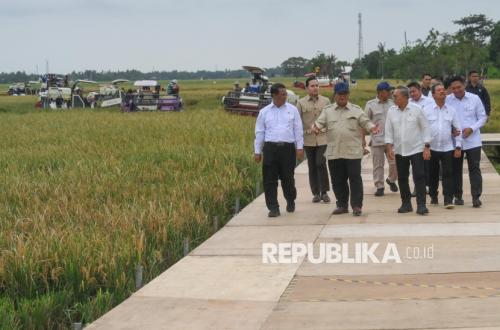
The Ministry of Agriculture is accelerating its pump irrigation programme to anticipate the impact of the El Niño phenomenon, which is predicted to occur in 2026. This move follows a forecast from the Meteorology, Climatology, and Geophysics Agency (BMKG) indicating next year’s El Niño will be in the weak to moderate category. The ministry is speeding up the distribution of water pumps, rehabilitating irrigation networks, optimising water sources, and utilising agricultural technology to ensure land remains cultivable when rainfall decreases. Early mitigation measures are being taken to safeguard the planting season and national food production.
Minister of Agriculture Andi Amran Sulaiman stated the government does not want to wait for the impact of drought to spread before taking anticipatory steps. “We must move before the drought spreads. Do not let farmers lose their planting season. That is why we are accelerating various mitigation measures, one of which is the pump irrigation movement, so that water remains available and food production stays secure,” Amran said on Friday.
Amran noted that experience in facing El Niño in previous years provided important lessons, making early mitigation essential. Beyond pump irrigation, the ministry is accelerating the rehabilitation of irrigation networks, land optimisation, and the application of agricultural technology to maintain the sustainability of food production. According to Amran, this strategy is increasingly important amidst the government’s efforts to accelerate the achievement of food self-sufficiency. He said various interventions have boosted national food production, with the government’s rice reserves now reaching approximately 5.1 million tonnes. “We must not wait for a crisis to occur. Our principle is upstream mitigation. Water must be available, irrigation must function, and farmers must be able to continue planting. That way, national food production is maintained despite climate challenges,” Amran said.
One implementation of the pump irrigation programme is taking place in Sukra District, Indramayu Regency. The Ministry’s Director General of Agricultural Infrastructure and Facilities, Andi Nur Alamsyah, handed over seven water pumps to seven farmer groups to anticipate potential drought in the area. The ministry noted that Sukra District has a potential drought area of 1,945 hectares. With the additional water pumps, the potential planting area for the next season is expected to increase to 3,445 hectares. Andi explained that the pump irrigation programme has already increased the planting area in Indramayu Regency. The initial planting area target for June 2026 of around 25,000 hectares has risen to approximately 41,000 hectares following the distribution of around 200 water pumps. “This water pump assistance represents the government’s presence to ensure farmers have access to water. This way, land potentially affected by drought can still be cultivated, so agricultural productivity and farmers’ incomes are maintained,” Andi explained. He added that pump irrigation is not merely about distributing agricultural machinery but is part of a national strategy to address climate change. By utilising various available water sources, farmers are expected to continue farming despite declining rainfall. The Ministry of Agriculture will continue to monitor climate developments across regions and accelerate anticipatory measures according to field needs. Synergy between the central government, regional governments, and farmers is expected to maintain national food production while supporting the food self-sufficiency target amidst the challenges of climate change.