
Agriculture Ministry Accelerates Pump Irrigation for Planting Season to Safeguard Food Production
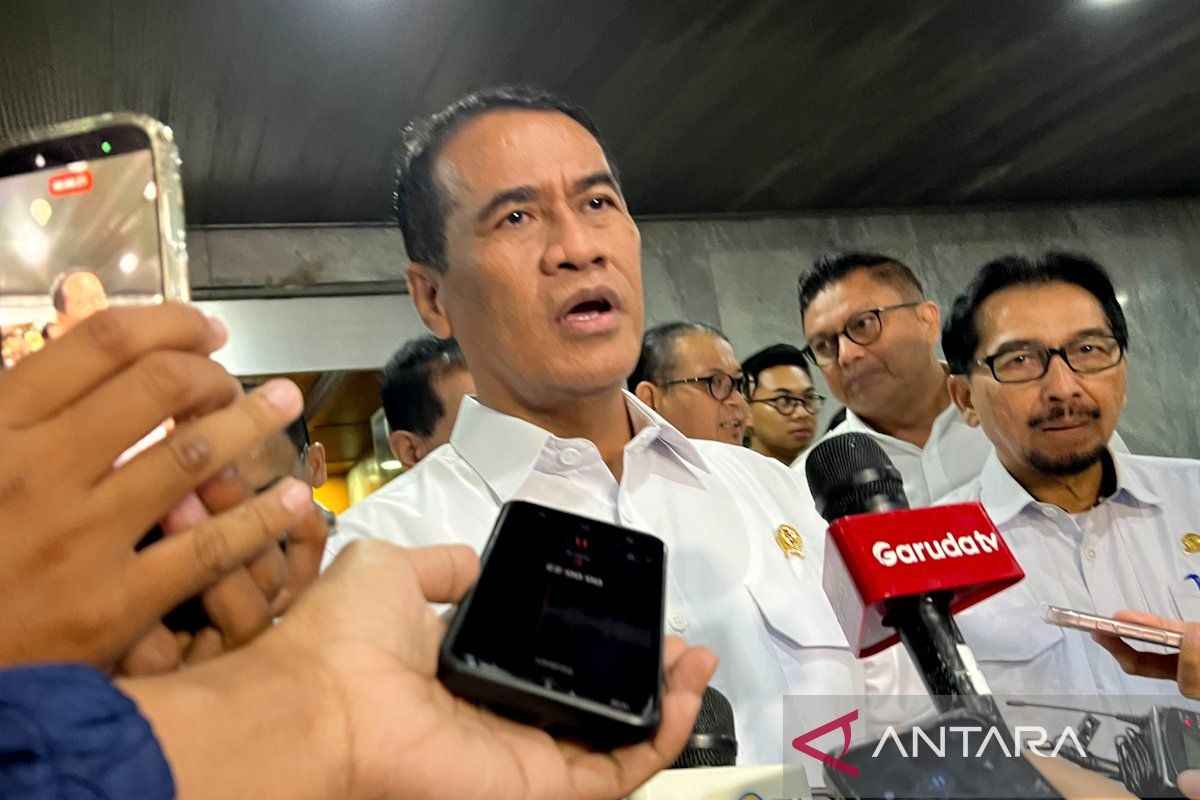
Jakarta (ANTARA) - The Ministry of Agriculture is accelerating a pump irrigation programme to maintain water availability, anticipating the impact of El Niño in 2026 to keep national food production optimal and sustainable. “We must act before the drought spreads. Farmers must not lose the planting season,” said Minister of Agriculture Andi Amran Sulaiman in a statement confirmed in Jakarta on Friday. He emphasised the acceleration of the pump irrigation programme as a primary mitigation measure against the potential El Niño phenomenon, which the Meteorology, Climatology and Geophysics Agency (BMKG) predicts will be in the weak to moderate category. Through the accelerated distribution of water pumps, rehabilitation of irrigation networks, and optimisation of water sources, the government is striving to ensure farmers can continue planting, maintain national food production, and safeguard the food self-sufficiency target. Amran stressed that the Ministry of Agriculture is taking anticipatory steps before the impacts of drought become widespread. According to him, the experience of facing El Niño in previous years serves as a crucial lesson that mitigation must be carried out early. “That is why we are accelerating various mitigation measures, one of which is the pump irrigation movement, so that water remains available and food production is secure,” he said. In addition to pump irrigation, the government is also accelerating the rehabilitation of irrigation networks, optimising land use, and utilising agricultural technology to ensure the sustainability of national food production. “We cannot wait for a crisis to occur. Our principle is upstream mitigation. Water must be available, irrigation must function, and farmers must be able to plant. In this way, national food production can be maintained even when facing climate challenges,” Amran explained. According to the Minister, climate change mitigation strategies are becoming increasingly important as the government accelerates the achievement of food self-sufficiency. Various government interventions have shown positive results, reflected in the increase in national food production. Government rice reserves have reached 5.1 million tonnes, the highest in history, and the Food and Agriculture Organization (FAO) projects Indonesia will be the country with the highest increase in rice production in the world for 2025–2026. Pump irrigation is one of the climate change adaptation strategies implemented by the Ministry of Agriculture to ensure water sources can still be utilised when rainfall decreases. Through water pumps, land potentially affected by drought can still be irrigated so that farmers do not lose their planting opportunities. The Ministry of Agriculture will continue to monitor climate conditions across all regions of Indonesia and accelerate various anticipatory measures according to field needs. Through synergy between the central government, regional governments, and farmers, the government is optimistic that national food production can be maintained and the food self-sufficiency target can be achieved despite facing increasingly dynamic climate change challenges.