
Agriculture Minister Urges Universities to Drive Innovation in Guiding Agricultural Downstreaming
The achievement of a projected national rice stock of 5 million tons must be accompanied by the active role of universities in promoting innovation and downstreaming of agricultural technology.
Jakarta (ANTARA) - Agriculture Minister Andi Amran Sulaiman has invited higher education institutions to become the engine of innovation in guiding agricultural downstreaming to increase added value, product competitiveness, and strengthen national self-reliance and food security.
“The achievement of the national rice stock projected to reach 5 million tons must be accompanied by the active role of universities in promoting innovation and downstreaming of agricultural technology,” said the Minister in a statement in Jakarta on Sunday.
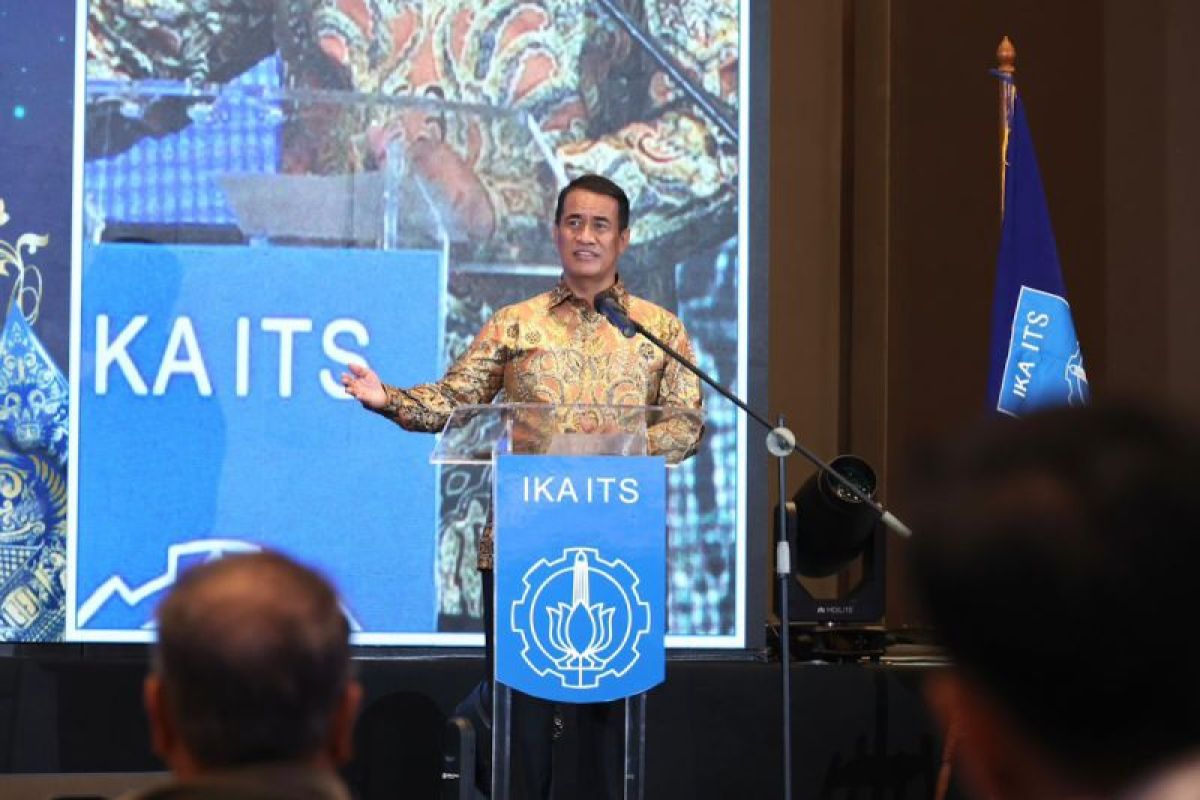
He emphasised this while attending the Eid al-Fitr FunFest 2026 event organised by the Alumni Association of the Sepuluh Nopember Institute of Technology (IKA ITS) in Jakarta.
He stated that Indonesia has achieved self-sufficiency in nine strategic foods under the leadership of President Prabowo Subianto, supported by significant national food production achievements.
“Now, this month, God willing, 5 million tons of our rice. This has never happened since Indonesia’s independence,” he said.
Amran explained that the increase in domestic rice production means Indonesia no longer relies on imports, even impacting the global market.
“Previously, we imported 7 million tons of rice. Now we don’t import. The impact is that world food prices have fallen,” he clarified.
According to him, this success is the result of collaborative efforts by all elements of the nation.
However, Amran reminded that future challenges are not only about increasing production but also about utilising innovation involving universities in a concrete manner, not just ceremonially.
“Universities must be present with real actions, not ceremonies,” he said.
He assessed that the research strength in universities is already very good, but it is still weak in terms of downstreaming and marketing innovations.
Therefore, he encouraged ITS to take a larger role in delivering technology that is truly used by the community, including agricultural machinery, electric vehicles, and various field-based innovations.
“We want in the future, the suppliers of tractors and agricultural tools to come from ITS. Definitely possible,” he asserted.
As a concrete example, he mentioned the development of ITS agricultural machinery in the form of a boat tractor that needs to be continuously refined and mass-produced.
“Tractor, what is it called? Oh, it’s already made, right? Well, this is a boat tractor. Yes, keep improving it, we’ll provide our engineering,” he said.
The Minister even emphasised that the government is ready to support and absorb domestic innovations, as long as universities dare to produce on a large scale and take responsibility for their quality.
He also stressed the importance of cross-institutional collaboration in building national self-reliance.
“We together, hand in hand. No terms like Unhas, IPB, ITS. We must collaborate, for the Red and White,” he said.
He invited all universities and alumni to move together in downstreaming based on national needs.
The Ministry of Agriculture records nine strategic food commodities that have achieved self-sufficiency, including rice, consumption sugar, large chillies, bird’s eye chillies, corn, cooking oil, chicken meat, chicken eggs, and shallots.