
Agriculture Minister Tightens Oversight of SPHP Maize Distribution and Integrators to Protect Farmers
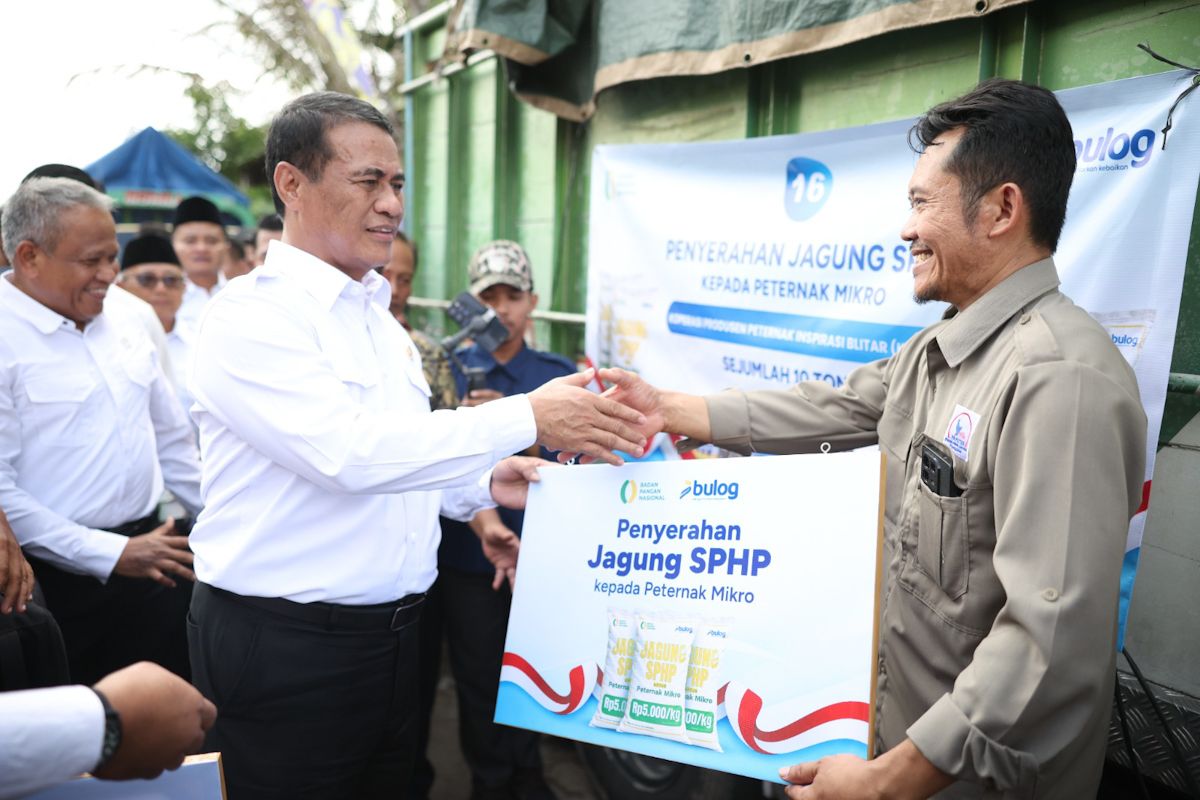
Jakarta (ANTARA) – Agriculture Minister Andi Amran Sulaiman has stressed that oversight of maize distributed under the Food Supply and Price Stabilisation (SPHP) programme and of poultry integrators will be tightened to protect small-scale farmers and strengthen governance of the national poultry industry.
“The government is strengthening protections for small-scale commercial layer farmers by overseeing poultry industry governance from upstream to downstream,” Amran said in a confirmed statement in Jakarta on Saturday.
The minister said the government distributes SPHP maize through state logistics company Perum Bulog to help reduce production costs. He said distribution needed to be properly monitored to ensure farmers benefited from the policy.
The Ministry of Agriculture is also strengthening oversight of integrators to ensure that their poultry farming and egg distribution comply with regulations.
The oversight is based on Agriculture Ministerial Regulation No. 10/2024 on the supply, distribution and supervision of commercial poultry and table eggs.
The regulation is one of the instruments for maintaining governance of the poultry industry, including setting out the roles of integrated businesses, cooperatives and farmers.
Amran said the government would not turn away from problems faced by farmers and livestock breeders. Any concerns raised would be addressed through coordination with relevant officials.
“If farmers or livestock breeders raise their voices, we never avoid them. We resolve the issue,” Amran said.
Through SPHP maize distribution, stronger cooperatives, maize production partnerships with farmer groups and oversight of integrators, the Ministry of Agriculture aims to create a more balanced poultry industry.
The government wants to ensure that crop farmers have certainty of market access, small-scale livestock breeders can obtain feed raw materials and access to markets, and all businesses operate in accordance with applicable rules.
Yesi Yuni Asuti, head of the Berkah Telur Blitar Cooperative, said SPHP maize distribution was helping farmers cope with high feed-ingredient prices. Maize outside the programme currently costs Rp7,800–Rp7,900 per kilogram, while maize obtained through Bulog costs Rp5,000 per kilogram.
“Maize bought outside the programme is already Rp7,800–Rp7,900 per kg at the moment. We buy it from Bulog for Rp5,000 per kg, so this is a great help to us,” Yesi said.
However, she said more affordable maize had not fully resolved farmers’ problems. Egg prices at farm level were also under pressure, making it difficult to cover production costs.
“Even with maize at Rp5,000 per kg, we are still losing money because egg prices are currently so low. But at least this helps us to keep going,” she said.
In addition to concerns over feed supply and prices, farmers have asked the government to ensure that integrators’ business practices comply with regulations.
Yesi said farmers had conveyed their concerns directly to Agriculture Minister Amran at a meeting with farmer representatives in Jakarta on 27 October 2026.
At the meeting, she said, Amran asked that the issues raised by farmers be discussed further with the Ministry of Agriculture’s Directorate General of Livestock and Animal Health. Yesi said the outcome of those discussions was subsequently conveyed to integrators in a letter.
“Thankfully, we were invited to Jakarta on the 27th and had the opportunity to speak directly to the minister. He then asked us to discuss this with the director general. We were given the opportunity to meet the director general and the other officials involved,” she said.
She said follow-up by the Ministry of Agriculture was important to preserve market opportunities for small-scale farmers.
She hopes independently produced eggs will retain adequate access to traditional markets, while integrators’ businesses operate within the framework of the regulations.
“If, under Ministerial Regulation No. 10/2024, the farming is intended for export, it should not be sold in traditional wet markets. Those markets should be left to eggs produced by small-scale farmers like us,” she said.
Yesi stressed, however, that policy follow-up must be accompanied by on-the-ground monitoring to ensure businesses comply with the requirements communicated to them.
Source: jawawa.id (https://jawawa.id/newsitem/agriculture-minister-tightens-oversight-of-sphp-maize-distribution-and-integrators-to-protect-farmers-1794073897)
Originally published by Antara (Indonesian) (https://www.antaranews.com/berita/5839095/mentan-awasi-ketat-distribusi-jagung-sphp-dan-integrator-demi-peternak), translated from Indonesian