
Agriculture Minister: President's Policy to Reduce Fertiliser Prices by 20 Percent Safeguards Production
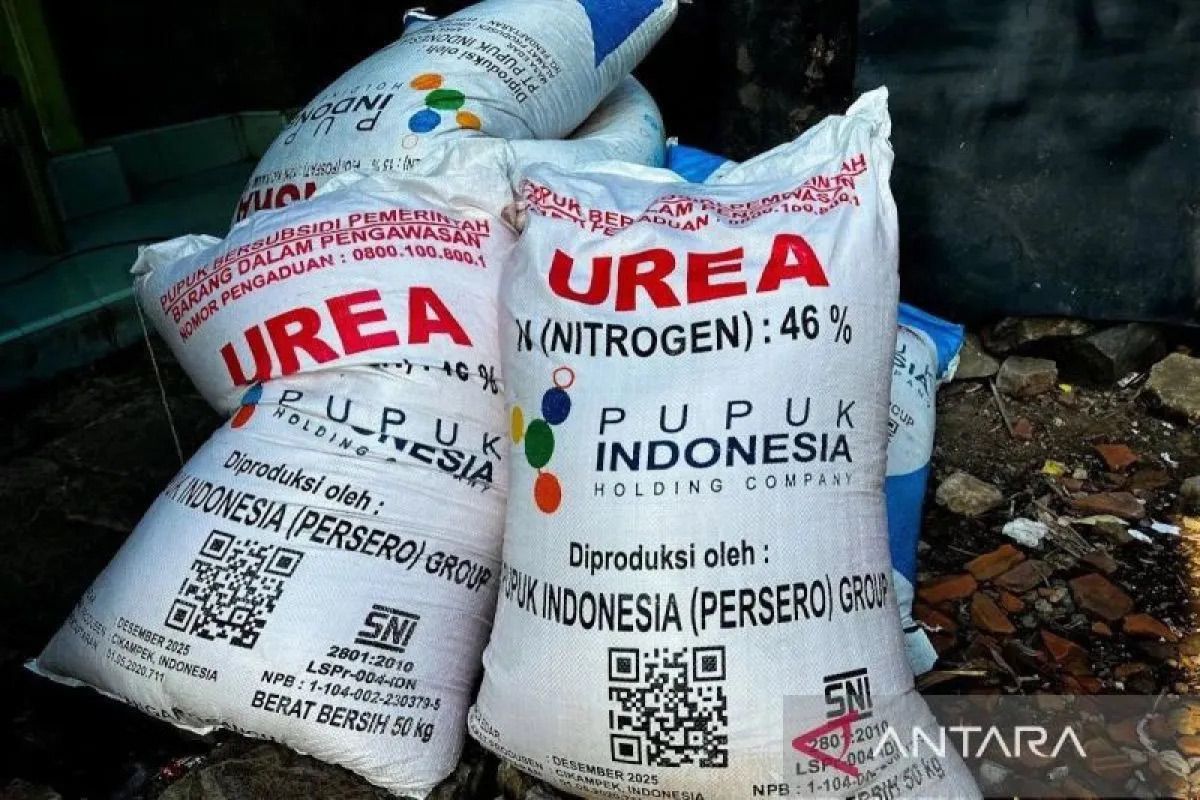
Agriculture Minister Andi Amran Sulaiman stated that President Prabowo Subianto’s policy to reduce subsidised fertiliser prices by 20 percent aims to safeguard production and respond to the potential global fertiliser crisis that is beginning to pressure many countries around the world.
“President Prabowo has been reading the world heading towards an unstable period from the start. He instructed us not to wait for the crisis to arrive, but to meet it with policy,” said the Agriculture Minister in a statement in Jakarta on Monday.
According to him, the policy represents President Prabowo’s intelligence in reading the world’s situation regarding the potential global fertiliser crisis that is starting to pressure many countries.
While global fertiliser prices have surged more than 40 percent due to supply chain disruptions, Amran continued, President Prabowo has taken a different step by lowering subsidised fertiliser prices by 20 percent to ensure the sustainability of national food production.
The policy arrives at a crucial moment. Since February 2026, conflicts in the Middle East have closed the Strait of Hormuz, a route for one-third of global fertiliser trade, while China has halted exports of major nitrogen fertilisers.
“The impact is that global urea prices have jumped more than 40 percent in a matter of weeks, and Southeast Asian countries reliant on fertiliser imports face threats of a food production crisis,” he said.
The 20 percent reduction in subsidised fertiliser prices covers all types of subsidised fertilisers used by farmers, from urea, NPK, and ZA.
The government is also preparing structural measures targeting costs, distribution, and fertiliser availability. The subsidised fertiliser price reduction maintains farmers’ planting capacity for the 2026 season amid the global price surge.
On the distribution side, Amran said, the government has cut 145 fertiliser regulations through a Presidential Instruction, accelerating distribution from the Ministry of Agriculture to PT Pupuk Indonesia and directly to farmers.
Fertiliser access is facilitated through KTP-based integration and expansion of kiosk networks to villages, with a target to reach all food production sub-districts before the 2026 dry season planting, ensuring fertiliser is available and easily accessible on time.
In addition, stock resilience is maintained through supply diversification since 2025. Dependence on a single import route is reduced, so the impact of the Strait of Hormuz closure and China’s export restrictions can be mitigated, and fertiliser supplies for the 2026 planting season remain secure.
The policy is estimated to reduce farmers’ production costs by hundreds of thousands of rupiah per hectare per planting season.
Fertiliser access is also expanded for more than 16 million farmers, while reducing the potential for shortages due to uneven distribution and strengthening bargaining positions in facing rice price fluctuations.
President Prabowo’s support for farmers does not stop at lowering fertiliser prices. Through a Presidential Instruction, the government has also cut fertiliser distribution regulations that previously hindered delivery, ensuring subsidised fertiliser truly reaches farmers’ hands on time, in the right quantity, and at the right price.
On the downstream side, the government has set a Government Purchase Price (HPP) for unmilled rice at Rp6,500 per kilogram as a guarantee that farmers do not incur losses after production.
This policy ensures the difference between production costs and selling prices remains profitable for farmers, even amid global price pressures.
Thus, the government is present at both ends of the production chain: suppressing costs upstream through fertiliser subsidies and deregulation, while safeguarding farmers’ incomes downstream through rice price guarantees.
“This upstream-downstream approach is what distinguishes President Prabowo’s agricultural policy from mere short-term responses,” he said.
The Agriculture Minister also emphasised that Indonesia’s food security is very robust amid threats of El Niño and global uncertainties affecting many countries. The government’s rice reserves currently exceed 5 million tons, the highest record in history.
“This achievement is a direct result of consistent production policies, including the pump irrigation programme, expansion of planting areas, and strengthening of unmilled rice absorption by Bulog,” Amran explained.
With such stocks, Indonesia not only maintains domestic food price stability but also holds a stronger position compared to neighbouring countries now struggling to face production pressures due to the fertiliser crisis and weather anomalies.
“This is the tangible fruit of President Prabowo’s precise vision and courage in making the right decisions for the interests of national farmers,” Amran stressed.
Therefore, the government reaffirms its commitment to maintaining the sustainability of national food production amid global uncertainties. Through measured policies and swift responses, Indonesian farmers can continue producing and remain the mainstay of national food security.
Source: jawawa.id (https://jawawa.id/newsitem/agriculture-minister-presidents-policy-to-reduce-fertiliser-prices-by-20-percent-safeguards-production-1777899212)
Originally published by Antara (Indonesian) (https://www.antaranews.com/berita/5553356/mentan-kebijkan-presiden-turunkan-harga-pupuk-20-persen-jaga-produksi), translated from Indonesian