
Agriculture Minister Explains How Food Mafia Defrauds Consumers
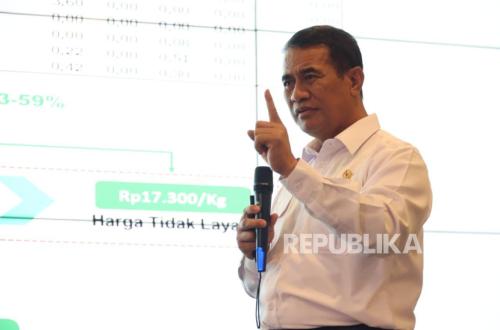
Agriculture Minister Andi Amran Sulaiman has clarified the public debate surrounding President Prabowo Subianto’s statement about a rice milling company allegedly raking in Rp 2 trillion per month. According to Amran, the figure does not represent normal business profit but is an estimate of the value of alleged fraud against consumers through the sale of premium rice that does not meet government quality standards. Amran stressed that the public should not get caught up in the Rp 2 trillion figure but must understand the substance of the issue being uncovered by the government. “Do not divert the issue from fraud to a single milling company making a profit of Rp 2 trillion. Do not focus on the calculation, focus on the crime. This is not business profit, this is fraud,” Amran said on Thursday (30/7/2026). Amran explained that the alleged fraud came to light after the Ministry of Agriculture tested 212 premium rice brands on the market. The results showed that around 86 percent of the samples did not meet premium rice quality standards. One key finding was the high level of broken grains, which should be a maximum of 14.5 percent according to regulations, but in several samples reached more than 40 percent and even close to 60 percent. Despite this, the products were still marketed and sold as premium rice at premium prices. Amran likened the practice to selling 18-carat gold while claiming it is 24-carat gold. Consumers pay a premium price, but the quality of the goods received does not match what was promised. Therefore, the government views this practice as a form of fraud that must be processed legally. Amran detailed the basis for the calculation that produced the estimated annual loss of around Rp 98 trillion. The calculation starts with the total national premium rice production, which reaches about 39.75 percent of total national rice production, or approximately 12.2 million tonnes each year. From that amount, monitoring results indicate that around 86 percent is suspected of not meeting premium quality standards, so the volume is estimated at around 10.5 million tonnes. The Ministry of Agriculture then calculated the difference in economic value paid by the public. Rice with quality below the premium standard is estimated to be worth around Rp 8,000 per kilogram, but is sold as premium rice at a price of around Rp 17,300 per kilogram. Thus, there is a price difference of around Rp 9,300 per kilogram, or about Rp 9.3 million per tonne. When this price difference is multiplied by the estimated volume of rice suspected of not meeting premium standards, the potential loss to the public reaches around Rp 97.7 trillion, rounded to approximately Rp 98 trillion to Rp 99 trillion in one year. “From the total loss of around Rp 98 trillion, there is one company that, based on our calculations, accounts for around Rp 2.08 trillion per month. But do not stop at that figure. What must be pursued is the fraud, the corruptors, and the mafia,” said Minister Amran. Amran emphasised that the Rp 2 trillion figure was not calculated based on the production capacity of a single rice milling unit, as some have debated. The value is an estimate of the gains obtained by a corporation from the practice of selling rice that does not meet quality standards. He added that the government’s concern is not the size of the business profit, but the alleged quality manipulation that harms the public. The ministry has submitted all laboratory test results and calculations to the police’s Food Task Force for legal processing. The government will continue to crack down on food mafia practices that harm farmers, consumers, and the state, in line with President Prabowo Subianto’s directive to create a fair, transparent, and pro-people food trading system.