
Agriculture Minister expands export potential of coconut and CPO to Lebanon
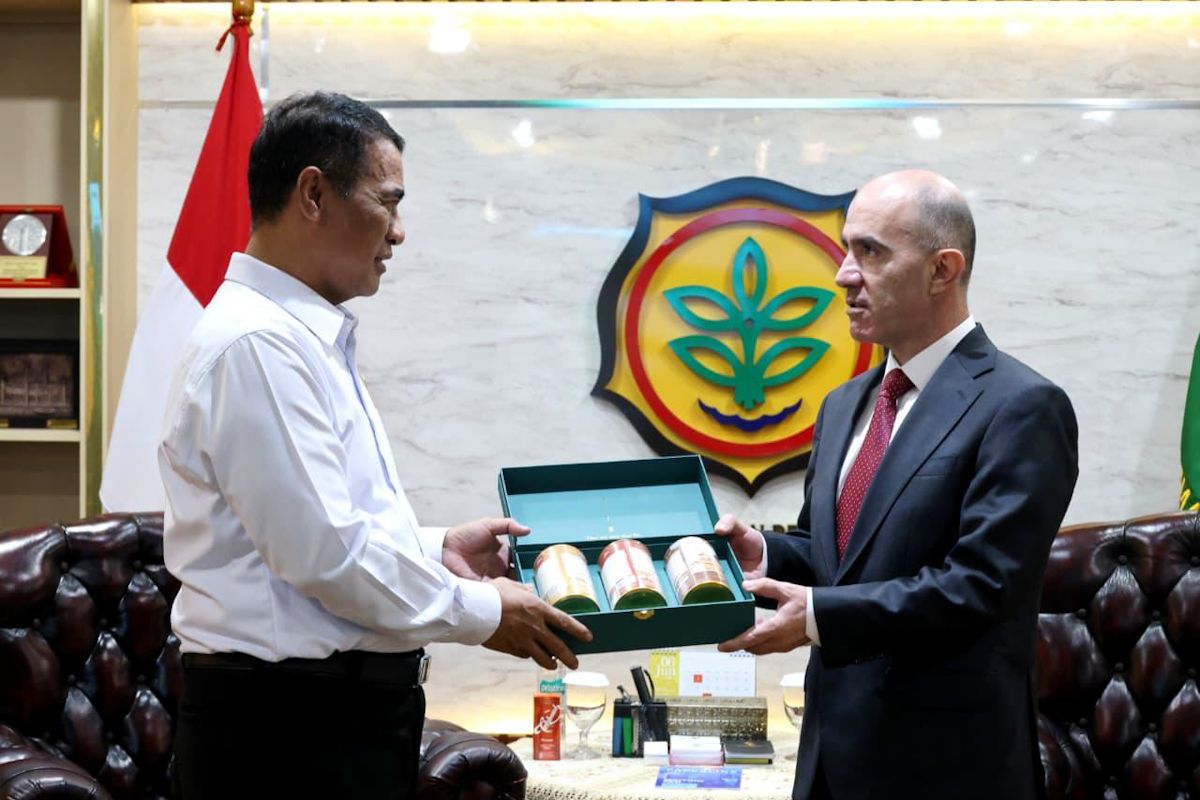
Jakarta (ANTARA) - Minister of Agriculture Andi Amran Sulaiman is expanding the export potential of coconut and crude palm oil (CPO) to Lebanon to strengthen trade and open wider access to the Middle Eastern market. The statement was made following a limited courtesy call with Lebanese Ambassador to Indonesia Salam Al Achkar at the Ministry of Agriculture’s headquarters in Jakarta. Amran emphasised that the government continues to encourage increased exports of Indonesian agricultural commodities to Lebanon, particularly coconut and CPO, as a step to expand Indonesia’s market access in the Middle East region. He did not, however, specify the potential export volume for CPO or coconut commodities. “They offered olive oil, then I requested that exports of coconut and CPO from Indonesia to Lebanon be increased,” Amran said. According to Amran, agricultural cooperation between Indonesia and Lebanon has significant prospects because the characteristics of the two countries’ agricultural sectors are complementary. Indonesia excels in tropical commodities such as palm oil, coconut, coffee, cocoa, spices, rice, and tropical fruits. Conversely, Lebanon is known as a producer of olive oil, olives, grapes, citrus fruits, apples, medicinal plants, and various high-value horticultural products. This synergy opens broad opportunities for increased trade, investment, technology exchange, agricultural research, and human resource capacity building in the agricultural sector. Indonesia itself has a very strong production capacity to meet the needs of the global market. As the world’s largest coconut producer, Indonesia has a coconut plantation area of more than 3.3 million hectares with an annual production of around 2.8 million tonnes. This potential makes Indonesia a major supplier of various coconut derivative products in the international market. In addition, Indonesia maintains its position as the world’s largest palm oil producer. National palm oil production in 2025 is estimated to reach around 56 million tonnes, consisting of CPO and palm kernel oil (PKO), making Indonesia a key player in the global vegetable oil supply chain and one of the largest foreign exchange contributors from the plantation sector. With this capacity, the Minister is optimistic that exports of plantation commodities to Lebanon can continue to be increased. Meanwhile, Lebanon is a strategic partner for Indonesia in the Middle East region. Around 65 to 80 percent of Lebanon’s food needs still depend on imports, including almost all of its wheat requirements. This condition opens opportunities for Indonesia to become a reliable food supplier while strengthening cooperation in food security. The Minister even affirmed Indonesia’s readiness to supply rice if Lebanon requires it. “If they want to request it, I will give it. We have plenty of rice,” Amran said. Various strategic programmes by the Ministry of Agriculture, ranging from accelerating planting, land optimisation, irrigation construction and rehabilitation, modernisation of agricultural tools and machinery, to simplifying fertiliser policies, have driven an increase in national food production and strengthened the government’s rice reserves. It is noted that throughout 2025, agricultural trade between Indonesia and Lebanon has shown a positive trend. Indonesia recorded an agricultural trade surplus of approximately 44.8 million US dollars in 2025. Indonesia’s main exports include coconut, palm oil and its derivative products, coffee, plantation products, and pineapples. Going forward, both countries agreed to encourage the strengthening of trade facilitation through cooperation in sanitary and phytosanitary (SPS) measures, regulatory harmonisation, business matching, and trade promotion. This step is expected to further strengthen the Indonesia-Lebanon economic partnership while opening wider opportunities for agricultural products from both countries to penetrate the international market.