
Agriculture Minister Ensures Subsidised Fertiliser Prices Remain Unchanged Despite Hormuz Closure
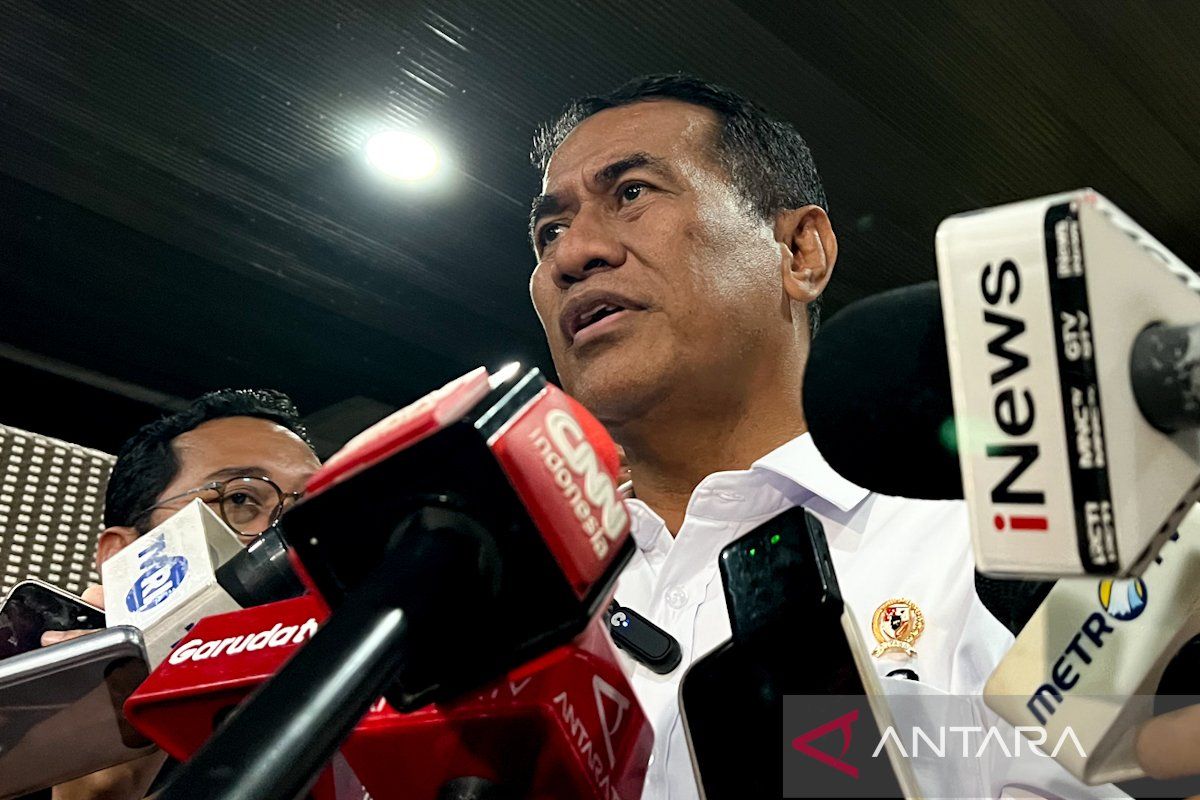
Jakarta (ANTARA) - Agriculture Minister Andi Amran Sulaiman has assured that subsidised fertiliser prices will remain stable and unchanged, even with the closure of the Strait of Hormuz in the Middle East, to ensure farmers are protected in maintaining national agricultural productivity.
“Safe, safe (fertiliser prices will not be adjusted). Why? That’s the order from Father President (Prabowo Subianto),” said the Minister to the media after a working meeting with Commission IV of the House of Representatives in Jakarta on Tuesday.
He stated that the government has taken strategic steps by reducing subsidised fertiliser prices by up to 20 per cent, an achievement described as unprecedented in the history of the Republic of Indonesia.
In addition, the government has increased the volume of subsidised fertiliser available to farmers, ensuring that production input needs are optimally met in various agricultural centres across the regions.
“That’s in the era of Father Prabowo Subianto, the President, the subsidised fertiliser prices were reduced by 20 per cent and the quantity increased. That’s extraordinary,” said the Minister.
The volume of subsidised fertiliser prepared by the government to boost national agricultural productivity throughout 2026 reaches 9.8 million tonnes, targeting 14.1 million farmers across Indonesia.
The Minister emphasised that this fertiliser price stabilisation policy is a direct directive from the President, ensuring it remains intact to support the sustainability of the agricultural sector amid global challenges.
Meanwhile, the President Director of PT Pupuk Indonesia (Persero), Rahmad Pribadi, assured that national fertiliser stocks are unaffected amid the conflict in the Strait of Hormuz in the Middle East, which could disrupt global trade routes.
“Alhamdulillah, stocks are safe, we have 1.29 million tonnes in stock, and all factories are operating well. This means we will continue to maintain it at this level, no problems,” said Rahmad in the meeting.
He noted the importance of the Strait of Hormuz as the main distribution route for global fertiliser, contributing around 30 per cent of monthly global fertiliser trade.
However, Indonesia is not significantly impacted thanks to the long-established self-sufficiency in the national fertiliser industry.
“Up to today, even though the world is in turmoil, Indonesian fertiliser can actually serve as a saviour for the global food ecosystem,” he explained.
He mentioned that several major countries such as Brazil, India, Australia, Thailand, and the United States are starting to be affected by global fertiliser supply disruptions. Meanwhile, Indonesia remains in a safe and stable condition.
Previously, during a working meeting with Commission XI of the House of Representatives in Jakarta on Thursday (2/4/2026), Rahmad also assured that the highest retail price (HET) for subsidised fertiliser will not increase, despite the unrest in the Strait of Hormuz, ensuring domestic supply and stability are maintained.
“The HET (for subsidised fertiliser previously) has already dropped by 20 per cent, there are no plans to increase it back, meaning the HET will remain,” said Rahmad.