
Agriculture Minister: Claims Papua Land Was Bought for Rp100,000 per Hectare Are Slander
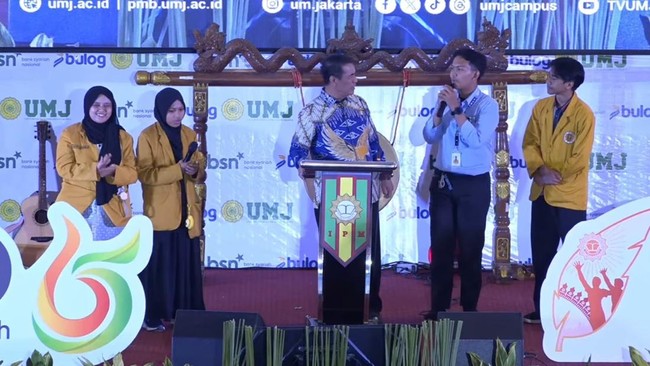
Agriculture Minister Andi Amran Sulaiman has clarified various pieces of information he considers slanderous regarding agricultural development in Papua, including narratives claiming that community land was valued at less than Rp100,000 per hectare.
The statement was delivered by Minister Amran in response to a question from a participant at the th anniversary celebration and National Working Meeting of the Muhammadiyah Students’ Association (IPM), themed “Resonansi Algoritma Pelajar Berdampak”, at the Universitas Muhammadiyah Jakarta on Saturday (18/7).
During the dialogue session, Muhammad Tamim Setiaji, an IPM delegate from South Tangerang, Banten, raised the circulating information that land in Papua was allegedly being taken improperly at prices below Rp100,000 per hectare. He also asked for an explanation so that the younger generation could view the issue rationally amid widespread information.
In response, Amran affirmed that the information was slander that did not reflect conditions on the ground.
“This slander is everywhere. One example is the claim that land costs Rp100,000 per hectare. That is extremely cruel slander against the government, including those of us running the programme. In fact, the reality is entirely different,” Amran stated in an official release on Monday (20/7).
Amran explained that the land development programme in Papua does not involve taking over community land ownership. On the contrary, the government builds rice paddies that belong entirely to local communities, complete with infrastructure support and agricultural machinery.
According to Amran, the government has so far built approximately 137,000 hectares of agricultural land in Papua. All of the land remains the property of local communities, while the government provides various facilities free of charge to boost farmers’ productivity and welfare.
“The paddies belong to the people. Nothing becomes state property. We provide agricultural machinery free of charge. We build the irrigation. The assistance provided is worth trillions of rupiah. All of it is for the community,” he said.
Amran added that the government has also dispatched hundreds of pieces of farming equipment, formed Food Brigades, built irrigation networks, and supported the development of commodities suited to local wisdom such as sago and coconut. He revealed that the negative narratives in circulation were contrary to reality on the ground, with many Papuan communities having directly benefited from the programme through increased incomes and the opportunity to manage their own land independently.
Amran cited the testimony of farmers who received 3 to 4 hectares of land to cultivate and were able to earn net incomes of more than ten million rupiah per month.
“The farmers there said themselves that they received land to manage and their income rose to around Rp15 million to Rp20 million per month. The tractors belong to them as well. This is the fact on the ground,” he said.
Amran also revealed that during a working visit to Papua, he received aspirations from communities requesting that the rice paddy printing programme be expanded to their areas.
“When I was at the airport about to fly home, people stopped me — not to reject the programme, but to request thousands more hectares of paddy land. They want to share in the benefits of this programme. That is a fact I experienced first-hand,” he remarked.
According to Amran, the success of agricultural development in Papua not only has the support of local communities but is also part of the government’s effort to achieve equitable national development, in line with President Prabowo Subianto’s directives. He therefore urged the younger generation not to be easily influenced by unverified information, particularly narratives that could divide national unity.
“I invite all of you to look at the facts. Do not immediately believe narratives or films that may not reflect reality. Let us verify directly and listen to the communities receiving the benefits,” he said.
On the same occasion, Amran also encouraged IPM cadres to become a productive generation by making use of every available plot of land, including in urban areas. Answering another participant’s question about urban farming, Amran explained that the Ministry of Agriculture has various community empowerment programmes, one of which is the Sustainable Food Home Area (KRPL) programme, which encourages the use of household yards to grow daily food needs.
“If you want to start, just plant chillies in five pots at home. By using your yard, a family’s chilli needs can be met independently. The important thing is to start small and never leave land idle,” he advised.
Before around 2,000 IPM cadres, Minister Amran also called on the younger generation to cultivate a strong work ethic, never give up easily, and turn every challenge into motivation for achievement.
“Never surrender. Keep learning, keep working, and make every challenge a stepping stone to success. Indonesia needs a generation that is productive, critical, yet grounded in facts,” Amran concluded.
Source: jawawa.id (https://jawawa.id/newsitem/agriculture-minister-claims-papua-land-was-bought-for-rp100-000-per-hectare-are-slander-1784519469)
Originally published by CNBC Indonesia (https://www.cnbcindonesia.com/news/20260720093626-4-752103/mentan-isu-tanah-papua-dibeli-rp100-ribu-per-hektar-adalah-fitnah), translated from Indonesian