
Agriculture Minister: Bioethanol Development Potential to Create 8 Million Jobs
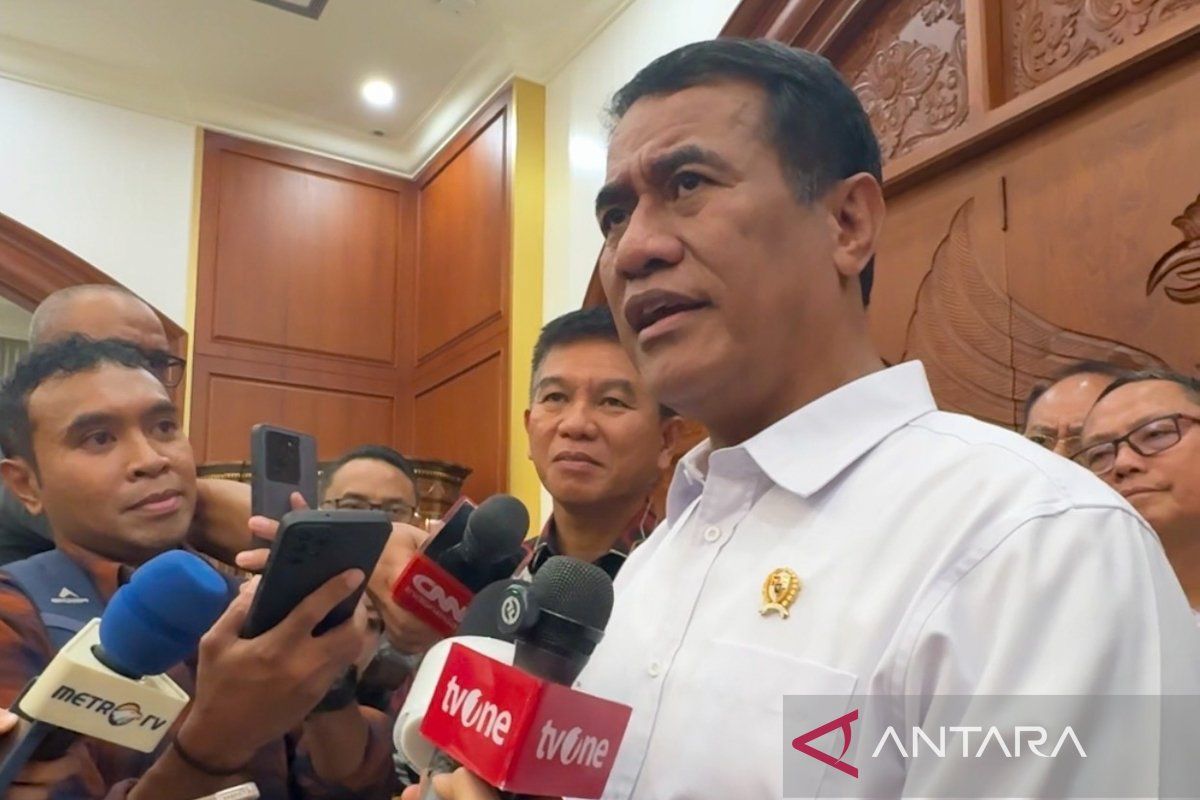
Jakarta (ANTARA) - The Minister of Agriculture, Andi Amran Sulaiman, stated that the national development of bioethanol has the potential to create around eight million jobs through the development of energy production areas based on agricultural commodities.
“We are moving towards energy independence; if this happens, it is equally important that at least eight million permanent jobs are created. Isn’t that great? Indonesia is very vast, and we are optimistic we can achieve this,” said Amran following a Coordination Meeting on the Acceleration of Bioethanol Development with 44 regents from various production centre regions in Jakarta on Monday.
The Minister noted that bioethanol development aims not only to strengthen national energy independence but also to open new economic opportunities for the community through the agricultural sector.
According to him, the bioethanol programme will create employment through various stages, ranging from the provision of raw materials and the management of agricultural areas to the energy processing industry.
Amran explained that bioethanol development will be carried out by utilising three strategic commodities, namely sugarcane, cassava, and maize, as the primary sources of raw materials.
The involvement of local governments is directed towards accelerating land preparation, mapping regional potential, and developing commodities that meet the needs of the bioethanol industry.
The Minister revealed that the development of bioethanol areas requires approximately 1 million to 2 million hectares to ensure the sustainable availability of raw materials.
He emphasised that the government will prioritise the use of available and suitable land for the development of energy crops while maintaining environmental considerations.
Furthermore, Amran stated that the construction of the bioethanol industry will involve State-Owned Enterprises (SOEs) and the private sector through investment cooperation to accelerate programme implementation.
He assessed that land certainty is a crucial factor to ensure that bioethanol industry investments can proceed and provide economic benefits to the wider community.
In addition to job creation, the programme is expected to strengthen the position of the agricultural sector as a primary supporter of the national energy transition.
Amran ensured that the government continues to encourage the development of agriculture-based energy as a step towards energy sovereignty while reducing dependence on imported energy sources.
He is optimistic that collaboration between the central government, regional governments, SOEs, and the private sector can accelerate the realisation of a national bioethanol industry.
“We print sugarcane, plant sugarcane, plant cassava, plant maize, and turn them into ethanol. Previously, biodiesel B50 has become a reality, we are not importing diesel now, are we? God willing, in the future, E50,” Amran asserted.
Through the development of bioethanol based on local commodities, the government hopes that the growth of the energy and agricultural sectors can proceed hand-in-hand to increase the welfare of the Indonesian people.