
Agriculture Minister: Bioethanol Development Could Save Rp500 Trillion in Foreign Exchange Annually
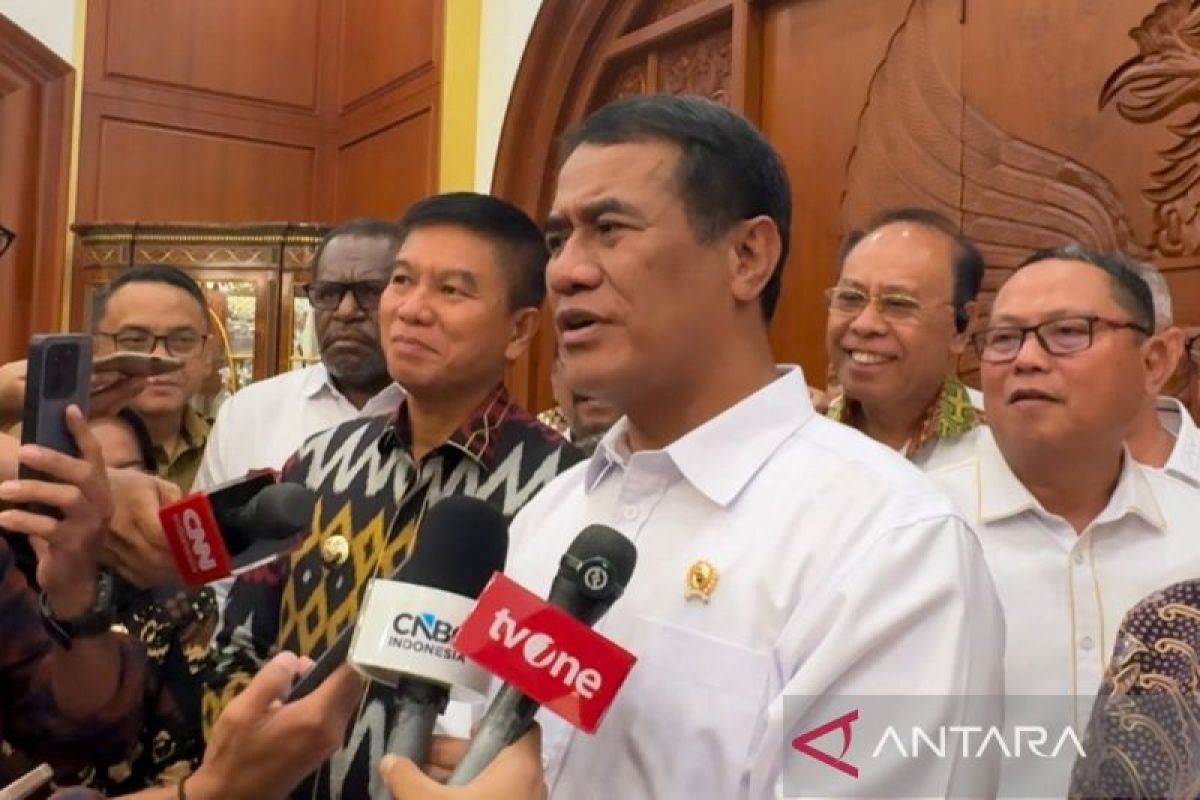
Jakarta (ANTARA) - The Minister of Agriculture, Andi Amran Sulaiman, stated that the development of national bioethanol has the potential to save foreign exchange reserves by up to approximately Rp500 trillion annually.
These savings would stem from developing bioethanol as a renewable energy source that is currently produced by other countries, thereby ensuring that the economic value circulates within the domestic economy.
“The most important thing is that ethanol is currently produced by other nations; that value represents energy, or biofuel, worth Rp500 trillion. If this Rp500 trillion circulates among Indonesian farmers,” said the Minister following a Coordination Meeting on the Acceleration of Bioethanol Development with 44 regents from various production centres in Jakarta on Monday.
The Minister noted that the government is encouraging bioethanol development based on three strategic agricultural commodities: sugarcane, cassava, and maize, which will serve as the primary raw materials for energy.
To support this programme, the government is preparing the development of 1 million to 2 million hectares of land, which will serve as the production base for national bioethanol raw materials.
Amran explained that the development of bioethanol regions requires collaboration between the central government, regional governments, State-Owned Enterprises (BUMN), and the private sector to accelerate programme realisation.
Amran emphasised that the government will prioritise the utilisation of available land, such as land that has already been released and areas suitable for the development of energy crops.
Furthermore, the government will involve both SOEs and the private sector in the construction of the bioethanol industry through investment schemes that support the accelerated development of these regions.
“The budget might consist of 30 per cent from SOEs and 70 per cent from the private sector, and the private sector will certainly be interested because the land is being prepared by the state; they will surely flock to it,” said Amran.
He assessed that bioethanol development is the next step following the strengthening of the food and protein sectors to achieve national energy sovereignty through Indonesia’s agricultural potential.
“The essence is how we achieve sovereignty in energy, food, and protein. God willing, Indonesia will become a great nation, a superpower in the future. Now that food is being addressed and protein is being addressed, now we shall pursue ethanol,” concluded Amran.