
Agriculture Minister Amran Uncovers Alleged 600-Tonne Rice Scheme, with SPHP Rice Repackaged as Premium
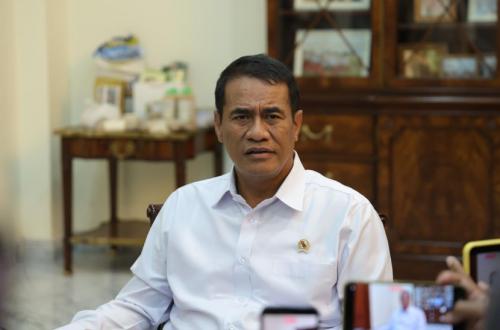
JAKARTA — Agriculture Minister Andi Amran Sulaiman has uncovered the alleged large-scale misuse of rice from the government’s Food Supply and Price Stabilisation (SPHP) programme in East Jakarta. Rice that should have been sold to the public at Rp12,500 per kilogram was allegedly mixed or repackaged as premium rice and marketed for as much as Rp17,000 per kilogram. Initial findings involve around 600 tonnes, while the government suspects the practice may extend across a wider distribution network.
The case came to light during a surprise inspection by Amran and police officials at the Kayumanis Rice Shop/Warehouse on Jalan Kayumanis X, Pisangan Baru, Matraman, East Jakarta, on Wednesday (28 October 2026). The investigation is tracing the rice’s origin, its repackaging process and the sales channels allegedly used to exploit the government’s food-stabilisation programme for illicit gain.
Amran said the case should mark the beginning of a comprehensive crackdown on food mafias. He said stronger national rice production and reserves gave the government more scope to regulate the trade without facing the pressure of supply shortages. He urged police not to stop at the findings at one location, but to investigate those potentially involved throughout the distribution chain.
“There is clearly a food mafia. It is clear there is a mafia. But people are still asking questions — quickly, write that the mafia has been found,” Amran said, showing reporters rice suspected of being linked to the misuse of the SPHP programme.
His strong remarks followed a report alleging that subsidised rice had been diverted and turned into a product marketed as premium quality. He said this harmed the public because rice supplied by the government to keep prices affordable could instead be resold at a higher price.
Amran said the government must not allow anyone to profit from a food programme intended to protect people’s purchasing power. Misuse of SPHP rice could also undermine the effectiveness of government efforts to stabilise market prices.
He praised the swift action of the National Police, particularly the East Jakarta Metro Police and police intelligence officials, in uncovering the alleged irregularities. Amran said cooperation between the ministry and law enforcement was an important part of the government’s commitment to cleaning up the food trade.
“I would especially like to thank the National Police Chief. On behalf of Indonesia’s farmers — 115 million rice farmers — we offer our deepest gratitude. This is real work and the result of collaboration under the President’s instructions. This is reprehensible behaviour,” he said.
Amran said he hoped the investigation would go beyond those at the location and reach any network suspected of organising the rice supply, repackaging and sales.
Price difference of Rp4,500 per kilogram
The alleged misuse of SPHP rice has drawn attention because of the substantial difference between the programme’s price and the price charged for the product sold as premium rice. In the case disclosed by Amran, SPHP rice was supposed to sell for Rp12,500 per kilogram but was allegedly resold for Rp17,000.
The difference is Rp4,500 per kilogram. Applied to a large volume, it could generate significant additional revenue for those selling the rice. However, the price difference cannot be treated as the perpetrators’ net profit or the state’s loss; both require calculations based on transaction records and the investigation’s findings.
Initial information received by Amran indicates that around 600 tonnes of rice may be involved. That is equivalent to 600,000 kilograms. The volume cited by the minister must still be verified through examination of the evidence, distribution records and stock movements.
If the Rp4,500 price difference were hypothetically applied to all 600,000 kilograms, it would amount to Rp2.7 billion. This is only an illustration of the price difference, not an audited figure for illegal profits or a state loss established by investigators.
Alleged blending and repackaging
During the inspection in Kayumanis, Amran found indications that SPHP rice intended to be distributed through the government programme had been diverted and marketed as premium rice. Field reports said the site held unbranded medium-grade rice and SPHP packaging.
The methods being investigated include the possible blending of rice with other products, as well as repackaging SPHP rice in bags that make it appear to be premium rice. Investigators still need to establish whether all the rice was mixed or whether some was simply transferred into different packaging before being resold.
The distinction matters when determining the nature of any alleged offence. Rice blending, misuse of distribution channels, misrepresentation of quality and sales above the stipulated price may involve different facts and legal grounds. Physical examination of the rice, transaction documents and statements from those involved will therefore be needed before the full method can be established.
Amran also asked officials to investigate possible involvement by others in the distribution network, including anyone from government institutions or companies responsible for managing rice stocks. He said there would be no tolerance for employees found to have taken part in misusing the food programme.
Source: jawawa.id (https://jawawa.id/newsitem/agriculture-minister-amran-uncovers-alleged-600-tonne-rice-scheme-with-sphp-rice-repackaged-as-premium-1793235083)
Originally published by Republika (https://ekonomi.republika.co.id/berita/tnn5k3451/mentan-amran-bongkar-dugaan-mafia-beras-600-ton-sphp-disulap-jadi-premium), translated from Indonesian