
Agriculture Minister Amran: SPHP Rice Repackaging Shows Food Mafia Still Exists
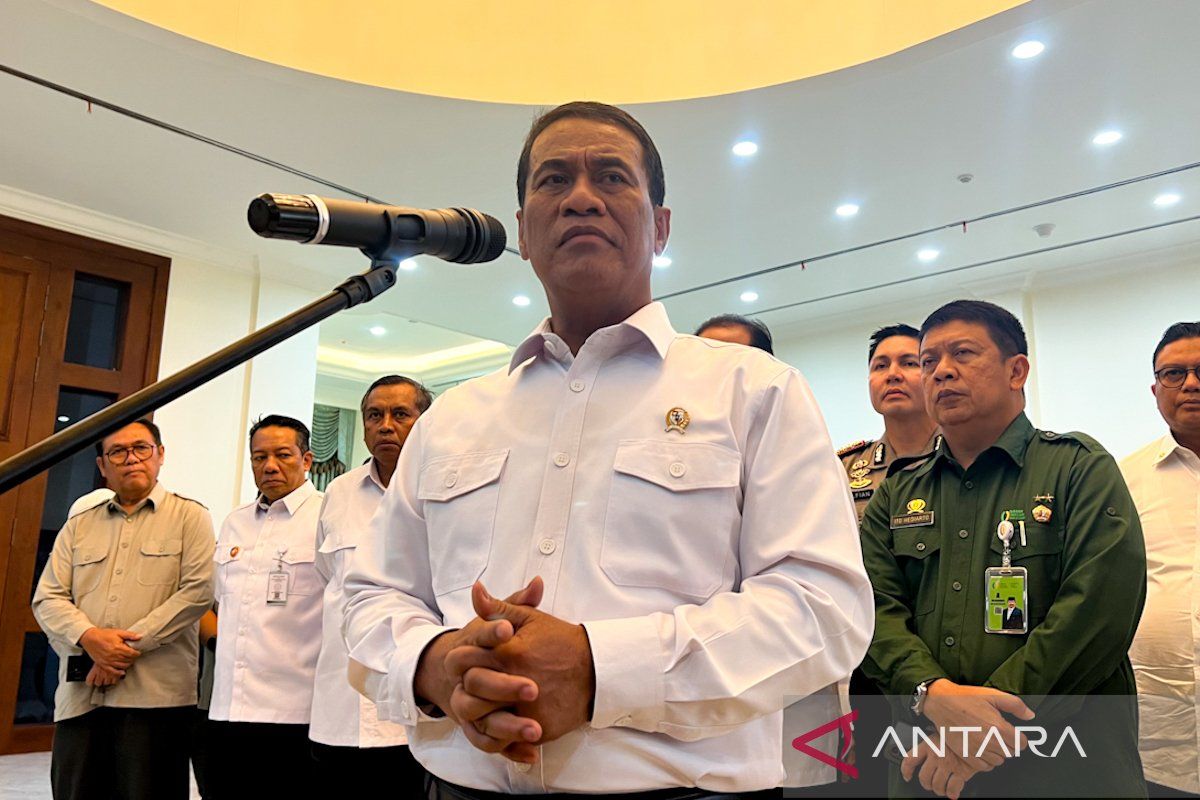
Semarang, Central Java (ANTARA) – Agriculture Minister Andi Amran Sulaiman said the discovery of alleged repackaging of rice distributed under the Food Supply and Price Stabilisation (SPHP) programme as premium rice showed that food-mafia practices still existed and must be dealt with firmly.
Amran urged those who had questioned the existence of food mafias to take note of suspected misappropriation of SPHP rice discovered in Matraman and at the Cipinang Rice Main Market (PIBC).
“Tell those who say there is no mafia: there it is. Hey, wake up! Don’t defend another country and fail to defend your own,” Amran said in Semarang, Central Java, on Friday.
According to Amran, the findings, which are now being followed up by law-enforcement authorities, are important evidence in the government’s efforts to uncover suspected irregularities in SPHP rice distribution and protect the public’s rights.
Amran urged those who did not believe the allegations to see the evidence of the suspected misappropriation for themselves. He also said the case answered critics who had questioned the existence of food mafias.
The minister stressed that the government would not compromise with anyone who manipulated food supplies and harmed the public.
However, Amran said criticism of the government remained necessary if it was constructive and based on facts. He said he welcomed input to improve food policy and governance, but warned that criticism should not be driven by resentment or disregard the national interest.
“If the criticism is constructive, I salute it and we are proud of it. But if it comes from resentment, well, that is something that needs to be counselled,” he said.
Amran said food was a strategic commodity directly connected to people’s lives, economic stability and national politics. The government therefore provided substantial support for agricultural production while seeking to keep prices affordable for consumers.
He said manipulating the distribution of subsidised food ran counter to the purpose of the policy. “Food is a strategic commodity, even a political one. If it is shaken, our politics will be shaken. If it has problems, our country could have problems,” he said.
Amran highlighted suspected misappropriation of SPHP rice uncovered during a surprise inspection on Wednesday (28 October). The government is following up allegations that the rice was repackaged and sold as premium rice, or mixed with other rice to generate greater profits.
The minister said the initial reported amount was about 600 tonnes, but cautioned that the figure needed further investigation, as similar practices could potentially be more widespread. Further inquiries are needed to establish the volume, those involved and the distribution routes.
Amran said the alleged method involved buying SPHP rice through state logistics agency Bulog, opening its packaging and transferring the rice into other sacks. It was then sold as premium rice or adulterated before being marketed at a higher price.
“This is a crime. It is unmasked, then turned into premium rice or adulterated—mixed with poor-quality rice,” he said.
Amran explained that SPHP rice was part of a government intervention to keep food affordable, particularly for people in need. He said the retail price to consumers was 12,500 rupiah per kilogram, while the price to companies, as he had stated, was 11,500 rupiah per kilogram.
In his view, the misuse of subsidised rice was not merely a breach of trading rules; it could also deprive people of the benefits they were meant to receive from government policy. “This is intended to help our less well-off fellow citizens, but they take away their entitlement and manipulate it. This is clearly a crime,” he said.
Source: jawawa.id (https://jawawa.id/newsitem/agriculture-minister-amran-sphp-rice-repackaging-shows-food-mafia-still-exists-1793336042)
Originally published by Antara (Indonesian) (https://www.antaranews.com/berita/5821043/mentan-amran-temuan-beras-sphp-dioplos-bukti-mafia-pangan-ada), translated from Indonesian