
Agriculture Minister Amran prepares corn procurement scheme to reduce feed costs
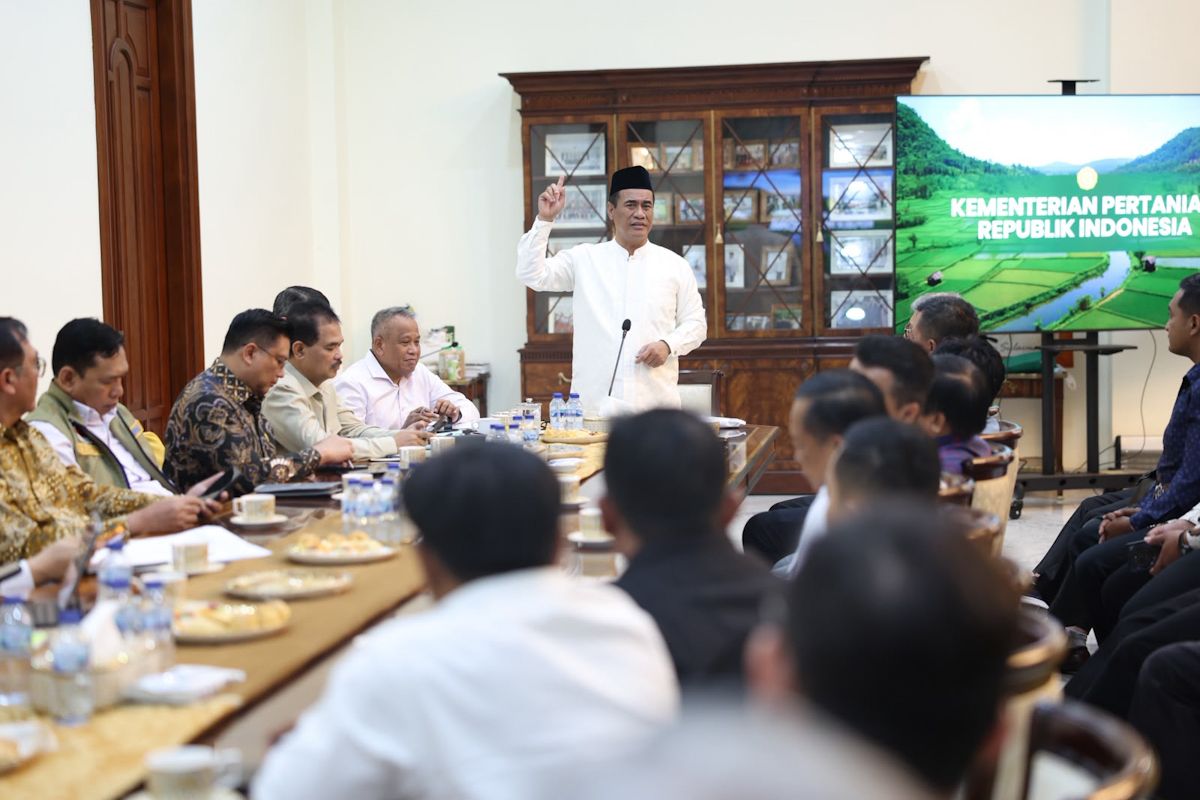
Jakarta (ANTARA) – Agriculture Minister Andi Amran Sulaiman is preparing a scheme to procure corn during the main harvest to reduce livestock farmers’ feed costs, maintain prices for crop farmers and strengthen national supplies.
“The government wants to ensure that farmers receive a fair price during the main harvest, while livestock farmers can obtain corn at a more affordable price for feed,” Amran said at a meeting with livestock producers’ representatives in Jakarta on Friday.
He stressed that balancing these two interests was important so that crop farmers continued to make a profit and livestock businesses could operate sustainably. “Livestock farmers must not lose money. If they do, the country also loses,” he said.
Amran is therefore encouraging corn procurement when production is abundant and prices are relatively low. The corn purchased would then be stored through cooperatives for use when livestock farmers need supplies, including when market prices rise. “The state should buy when it is cheap; it should not make things difficult when prices are high,” he said.
The minister said the procurement scheme was intended to help livestock farmers obtain feed ingredients at more affordable prices. Under the mechanism, they would take in corn during the main harvest, when prices are relatively low, while Perum Bulog would provide the financing and cooperatives would store the stocks.
The scheme is expected to maintain a balance in prices for farmers while easing the feed-cost burden on livestock producers.
The meeting took place amid concerns over feed costs, one of the complaints raised by livestock farmers, including during a protest at the House of Representatives. One of their demands concerned the high price of feed for laying hens, which they said was putting pressure on their businesses and causing losses.
Amran said an ecosystem was needed to link the procurement of farmers’ harvests with livestock producers’ corn requirements, financing and storage, so feed supplies could be secured throughout the year. “I want a system for feed. You take in the corn; Bulog pays,” he said.
Under the scheme, livestock farmers would take in corn during the main harvest, Bulog would provide financing, and cooperatives would store the stocks. This would ensure that farmers’ harvests were bought and that livestock producers had more reliable access to feed ingredients.
Amran said about 40,000 tonnes of corn were currently part of the supply being discussed under the scheme. The government would continue procurement while taking account of its capacity and making the best use of available corn. “There are 40,000 tonnes at present, and procurement will continue. The state has limitations. For now, we have the 40,000 tonnes of corn available,” he said.
He asked Bulog to recalculate the budget needed to make the mechanism effective. Decisions on distribution priorities should also take account of corn availability and livestock farmers’ needs on the ground. “This is the best solution to help livestock farmers make a profit,” he said.
At the meeting, a livestock farmers’ representative from Lampung, Kasmani, said South Lampung was one of the country’s corn-producing centres. However, livestock farmers still faced difficulties obtaining corn at prices suited to their businesses.
He said corn bought from farmers or middlemen cost around Rp8,400 per kilogram. Differences in moisture content were another obstacle to procurement.
Corn from West Nusa Tenggara (NTB), for example, was said to have a moisture content of about 16–17 per cent, while Bulog requires corn it procures to have a moisture content of 14 per cent.
In response, Amran stressed the importance of strengthening storage and drying facilities so corn from producing areas could be procured and meet the required standards. He said President Prabowo Subianto had allocated Rp5 trillion to strengthen Bulog’s warehouse infrastructure.
“The President has set a Rp5 trillion budget for Bulog warehouse packages. Equip them with dryers,” Amran said.
He called for warehouses to be built and upgraded with drying equipment, particularly in areas with strong corn-production potential such as NTB and Gorontalo. The facilities are important for preserving corn quality, addressing moisture-content issues and facilitating the procurement of harvests.
Through procurement during the main harvest, Bulog financing, cooperative storage and stronger drying and warehouse facilities, the government is seeking to create a more sustainable supply system for feed corn. The measures are expected to help farmers secure fair prices, ease feed costs for livestock producers and support the sustainability of the national livestock industry.
Source: jawawa.id (https://jawawa.id/newsitem/agriculture-minister-amran-prepares-corn-procurement-scheme-to-reduce-feed-costs-1791532567)
Originally published by Antara (Indonesian) (https://www.antaranews.com/berita/5778341/mentan-amran-siapkan-skema-serap-jagung-untuk-tekan-biaya-pakan), translated from Indonesian