
Agriculture Minister Amran prepares 2 million hectares for bioethanol development
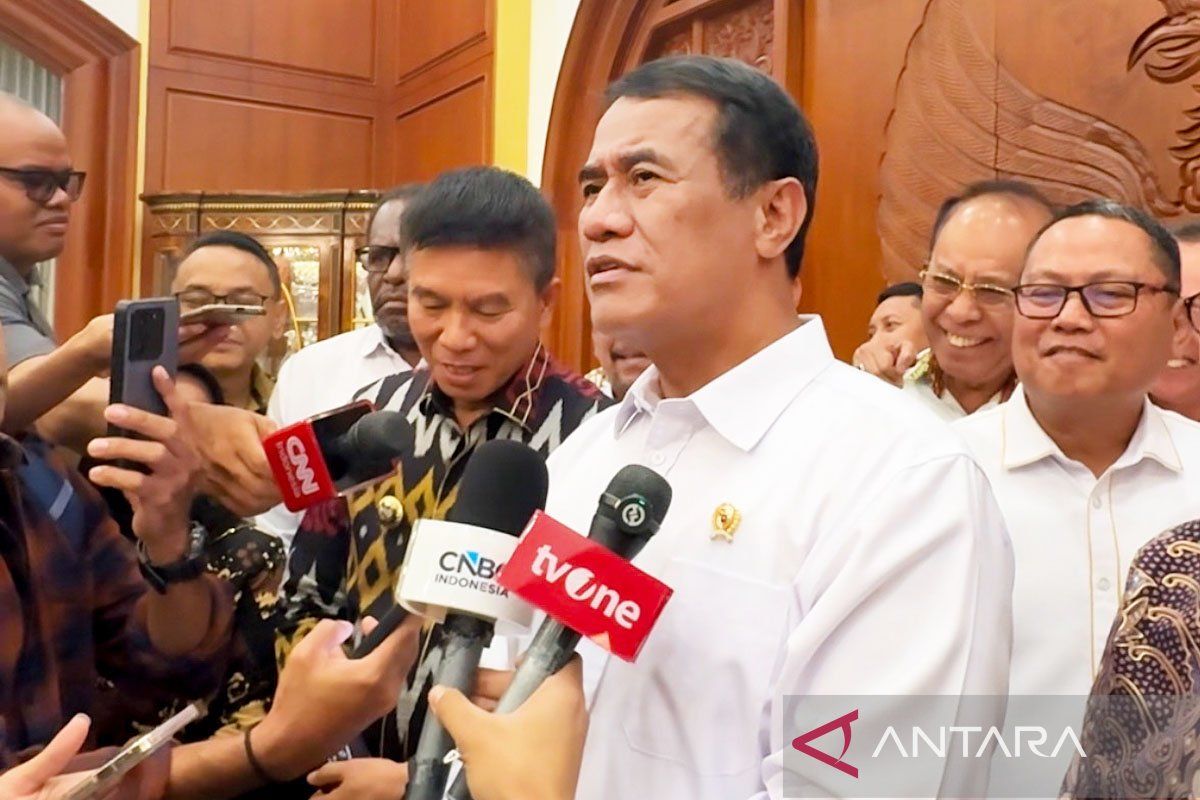
Jakarta (ANTARA) - Minister of Agriculture Andi Amran Sulaiman is preparing the development of up to 2 million hectares of land to strengthen the national bioethanol industry as a foundation for achieving Indonesia’s energy independence.
Amran stated that the ministry is beginning to mobilise bioethanol development based on three main commodities: sugarcane, cassava, and maize.
“The government is preparing the development of up to 2 million hectares of land as a foundation for building the national bioethanol industry and as a step to strengthen energy independence,” said the Minister, following a Coordination Meeting on the Acceleration of Bioethanol Development with 44 regents from various production centres in Jakarta on Monday.
He explained that developing bioethanol requires more than just building factories. The government must first ensure the availability of raw materials through the development of large-scale agricultural areas integrated with processing industries.
“This ethanol requires 1 to 2 million hectares using three strategic commodities. God willing, we will build the factories and mobilise them massively across Indonesia,” he said.
These three commodities will be developed according to the potential of each region. Sugarcane is a primary focus due to its significant potential as a raw material, while cassava and maize will be developed in areas with suitable land and high productivity.
“We will plant sugarcane, cassava, and maize. We will turn them into ethanol,” the Minister emphasised.
According to Amran, certainty regarding raw materials is a vital foundation for attracting investment into the bioethanol industry. Therefore, the government will undertake land consolidation and prepare production areas before large-scale industrial construction takes place.
He estimated that the financing for industrial development could involve State-Owned Enterprises (SOEs) and the private sector. The government will play a role in preparing the areas, while industrial investment can be strengthened through private sector involvement.
“The budget might consist of 30 per cent from SOEs and 70 per cent from the private sector, and the private sector will certainly be interested because the land is being prepared by the state,” Amran explained.
He emphasised that bioethanol development must also provide direct benefits to the community. Consequently, the government will encourage partnership schemes so that local people can participate in the growth of the agricultural and industrial areas being established.
“This must not be a monopoly; at least 30 per cent must involve the people. Therefore, the people can enjoy the benefits. It cannot be below 20 per cent now; it must be 30 per cent for the people. We must grow together if the nation is to be strong,” Amran asserted.
Furthermore, the government is encouraging the involvement of regional entrepreneurs so that bioethanol development does not only create industry but also establishes new economic growth centres in the regions.
In the initial stage, the Ministry of Agriculture will strengthen maize development through pilot projects in regions that express readiness. The Minister noted that initial support could be provided for 500 to 1,000 hectares per regency, expanding to 1,500 hectares for areas that demonstrate high production yields.
“We will monitor the results. 1,000 hectares for every regent who attended. If we see the maize is good and production is high, I will increase the maize acreage in January,” he explained.
Support in the form of agricultural tools and machinery (alsintan) will also be prepared to boost productivity and accelerate area development. For sugarcane, the government is preparing even larger-scale development.
“The most important is sugarcane. We need 1 million hectares. The Director General of Forestry Planning and the Deputy of SOEs were present. We will move together,” Amran said.
In preparing the land, the government will prioritise areas that are technically suitable and have legal certainty. Furthermore, Amran emphasised that bioethanol development will not be carried out at the expense of the environment.
The government will first assess various available land sources, including areas that can be directed towards agroforestry or food crops, as well as released land. The release of forest areas remains a last resort.
“Ultimately, we will protect the environment, but we will also achieve energy self-sufficiency and energy sovereignty,” he concluded.
Source: jawawa.id (https://jawawa.id/newsitem/agriculture-minister-amran-prepares-2-million-hectares-for-bioethanol-development-1790010037)
Originally published by Antara (Indonesian) (https://www.antaranews.com/berita/5751881/mentan-amran-siapkan-2-juta-hektare-untuk-pengembangan-bioetanol), translated from Indonesian