
Agriculture Minister Amran: Indonesia Is Strong as 33 Countries Prepare Emergency Food Supplies
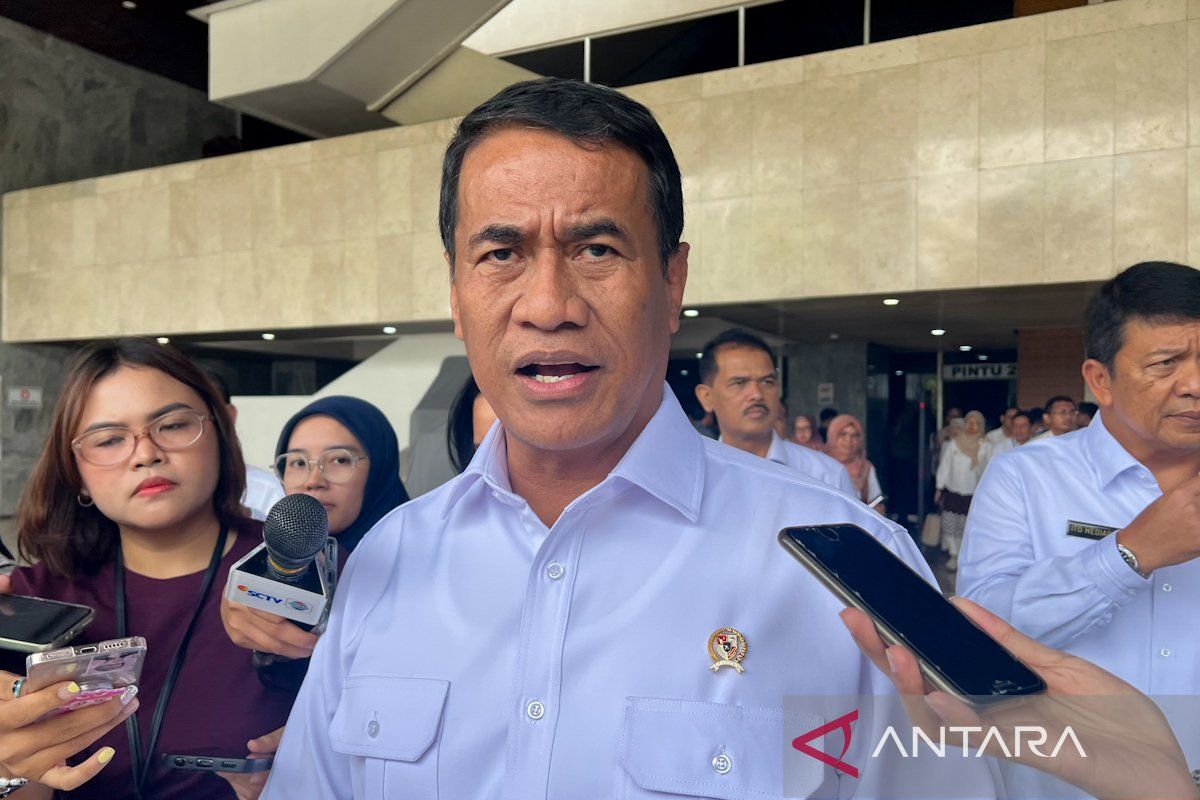
Jakarta (ANTARA) – Agriculture Minister Andi Amran Sulaiman said Indonesia’s stock position remained strong, supported by domestic production and adequate government reserves, as 33 countries around the world prepared emergency food supplies.
Amran said that amid rising global geopolitical tensions, which could disrupt supply chains and trigger a global food crisis, Indonesia should be grateful that its national food situation was relatively secure.
“When at least 33 countries are encouraging their populations to prepare supplies of food, drinking water, medicines and other basic necessities for emergencies, Indonesia has the strength of domestic food production and robust rice reserves,” Amran said in Jakarta on Sunday.
He said this situation was the result of farmers’ hard work, government support and strategic policies to strengthen production and achieve national food self-sufficiency.
In his view, a country’s ability to meet its own food needs was particularly important amid global uncertainty.
“Thank God, we should be grateful. At a time when the world is facing geopolitical tensions, the threat of a food crisis and supply-chain disruptions, Indonesia’s food situation is relatively secure,” he said.
“Indonesia has domestic production and reserves, and continues to strengthen its ability to meet its own food needs. This is what we must protect,” Amran added.
Preparedness for possible crises has become a concern for many countries. At least 33 have advised their populations to keep basic necessities at home, including non-perishable food, drinking water, medicines and emergency supplies.
Several countries recommend households keep enough essential supplies for at least 72 hours as a precaution against possible disruptions.
The United Kingdom and Japan are among the countries reinforcing such advice. The UK Government is encouraging every household to have enough food and drinking water for at least three days.
Japan has also urged people to improve their preparedness by keeping basic supplies for at least three days, or up to a week if possible.
These measures are intended to prepare for a range of risks, from geopolitical conflicts, natural disasters and extreme weather to cyber-attacks that could disrupt infrastructure, as well as interruptions to supply chains and the distribution of essential goods.
The situation shows that food security and the availability of basic necessities are serious concerns for many countries amid global uncertainty.
Amran said Indonesia had strong resources to cope with such uncertainty. As of 26 October 2026, government rice reserves (CBP) managed by the state-owned logistics company Perum Bulog stood at about 4.5 million tonnes.
There was also an estimated 10 million tonnes of potential rice from standing crops ready for harvest, as well as around 10 million tonnes of stocks in the hotel, restaurant and catering (horeka) sector.
Overall, national rice availability was estimated at about 25 million tonnes, while national demand was around 2.5 million tonnes a month.
“If we calculate it, Bulog has about 4.5 million tonnes, standing crops account for around 10 million tonnes, and the horeca sector has around 10 million tonnes. That is about 25 million tonnes in total. Meanwhile, our needs are around 2.5 million tonnes a month. This means our availability is very strong, making us better prepared to face various global shocks,” he said.
He stressed that Indonesia’s success in maintaining rice self-sufficiency without imports was an important foundation for national food security.
The Government does not want Indonesia to remain dependent on food supplies from other countries, particularly when conflicts and tensions between nations could disrupt international trade at any time.
According to Amran, food security is not only a matter of stock availability but also of national sovereignty. Countries able to produce their own food have greater scope to protect their populations from price volatility and global supply disruptions.
“We must not depend on other countries for food. Imagine if a major conflict broke out and trade routes were disrupted, countries withheld their exports, and we were still dependent on imports. The risks would be enormous. That is why self-sufficiency is a source of strength and protection for the nation,” he said.
To sustain production, the Ministry of Agriculture is continuing to strengthen a range of strategic programmes, including land optimisation, water-pumping schemes, irrigation network repairs, the provision of high-quality seeds and efforts to raise agricultural productivity.
Preparations are also continuing to address the threats posed by climate change and potential drought, so that food production can be maintained.
Amran said Indonesia’s relatively secure food situation should be appreciated and protected collectively. The Government would continue to strengthen domestic production, ensure food reserves were available and protect farmers as the front line of national food security.
“Thank God, we should be grateful that Indonesia’s food supply is secure. But we must not be complacent. Production must continue to increase, reserves must be strengthened and farmers must be protected. This is thanks to farmers’ hard work and a Government that is present,” he said.
Source: jawawa.id (https://jawawa.id/newsitem/agriculture-minister-amran-indonesia-is-strong-as-33-countries-prepare-emergency-food-supplies-1793519492)
Originally published by Antara (Indonesian) (https://www.antaranews.com/berita/5824743/mentan-amran-indonesia-kuat-saat-33-negara-siapkan-pangan-darurat), translated from Indonesian