
Agriculture Minister Accelerates Five Drought Mitigation Strategies to Face El Niño
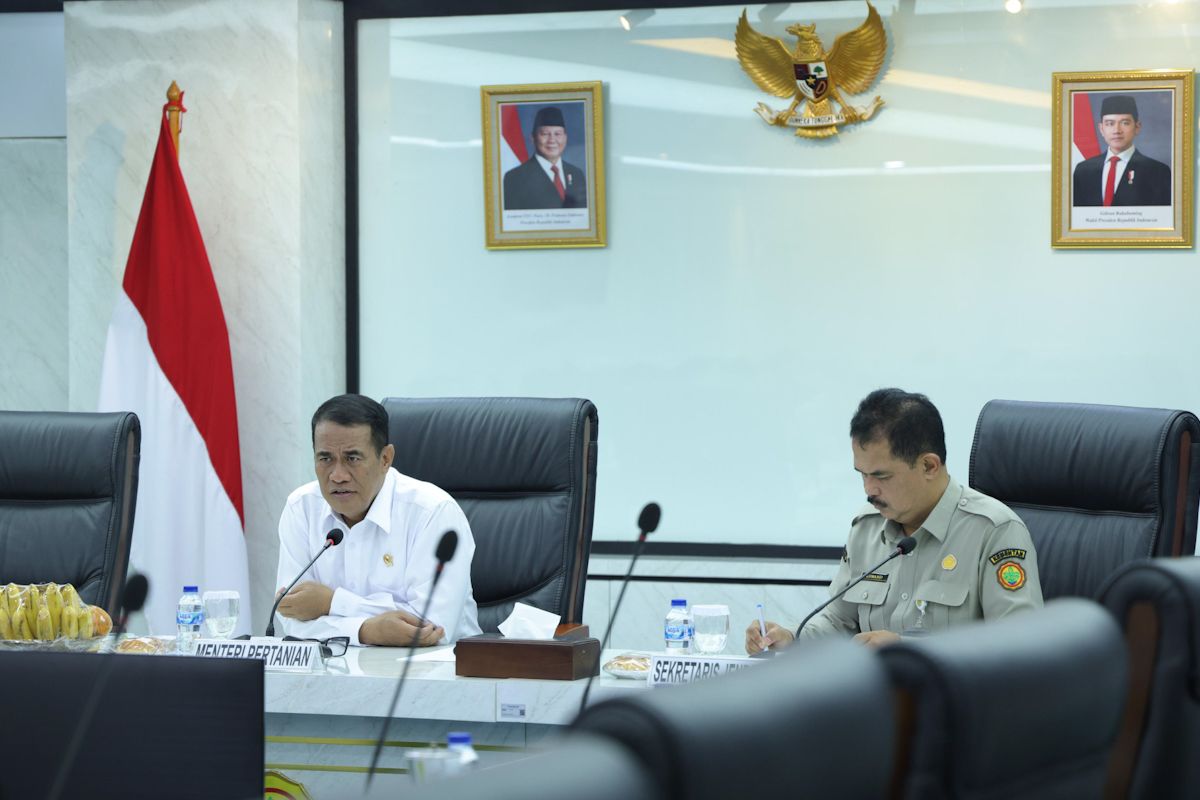
Jakarta (ANTARA) - Agriculture Minister Andi Amran Sulaiman is accelerating mitigation measures to counter the potential El Niño through the implementation of five main strategies in the field, ensuring rice production remains stable while safeguarding food self-sufficiency achievements.
Amran stated that these steps are focused on the critical drought threat period from April to June 2026 to maintain food production stability amid changing climate conditions.
“In line with the BMKG’s warning of an El Niño, which is quite concerning, we need to take strategic steps and accelerations,” said the Minister during the Coordination Meeting on Anticipating the 2026 Dry Season at the Ministry of Agriculture’s Central Office in Jakarta on Thursday.
To address this, the Ministry of Agriculture is accelerating five main strategies. First, mapping drought-prone areas and strengthening early warning systems so that anticipatory measures can be taken more quickly and accurately.
Second, optimising water management through the rehabilitation of irrigation networks, utilisation of reservoirs, and strengthening of pump irrigation, including pumping systems and piped irrigation in various regions.
Third, accelerating planting in areas that still have water potential, particularly in Central Java, East Java, and West Java, as well as encouraging the use of superior drought-resistant and short-duration varieties.
Fourth, optimising land utilisation, including swamp lands and newly constructed paddy fields, to be planted immediately without delay to meet production targets.
Fifth, strengthening coordination and synergy between the central government, regions, TNI, and all stakeholders to ensure accelerations are effectively implemented in the field.
Amran emphasised the importance of these mitigation accelerations. From mobilising swamp land optimisation (oplah), created paddy fields, pumping systems, to pump irrigation (irpom), including deep and shallow wells.
“We should utilise the ongoing rainy season, especially in Central Java, East Java, and West Java. Please accelerate in areas where there is still rain,” said Amran.
“Then, swamp land optimisation should be accelerated, created paddy fields that have been built should be planted immediately, pumping systems and irpom should be mobilised,” added Amran.
He stressed that these various steps should be implemented concretely in the field through accelerated planting in areas with available water, land optimisation and created paddy fields, as well as strengthening pumping systems and irpom in various regions.
To support these accelerations, the Minister also urged local governments to immediately propose needs so that budget adjustments can be made quickly.
“Even regions throughout Indonesia that still need irpom should propose now via online. District heads should propose quickly so we can shift budgets. Those needing pumps, please monitor,” he explained.
Amran also emphasised that the success of these efforts is highly determined by the speed of action in the field, especially during the critical period of April to June 2026, which will determine production stability amid climate challenges.
“What determines it is April-June. If we pass the target, insya Allah, food self-sufficiency will be sustainable. The critical points are April, May, June,” stated the Minister.
He is optimistic that through solid collaboration between the central and local governments, TNI support, active roles of extension workers, and the hard work of farmers in the field, food self-sufficiency can be maintained consistently.
Cross-sectoral synergy is seen as the key to strengthening national food resilience, maintaining production stability amid climate challenges, and promoting sustainable improvements in farmers’ welfare.
“I believe self-sufficiency is achieved because of all of you. This is our collective hard work. This is our pride at a time of global economic crisis, where agriculture steps up to mitigate risks, stabilise food, and improve farmers’ welfare,” said the Minister.
Amid these potential threats, the government continues to strengthen anticipatory measures to maintain national food availability, including through stock strengthening and accelerated production in various regions.
“Our current achievement, our stock (rice) today is 4.4 million tonnes, insya Allah this month it can reach 5 million tonnes. This is thanks to all our hard work,” said the Minister.