
Agricultural Waste Utilisation as Renewable Energy Source Continues to Be Strengthened
The use of bioenergy to support the agricultural sector continues to be strengthened through the utilisation of agricultural waste and residues as a renewable energy source. The move is not only aimed at supporting energy needs but also opens opportunities for agricultural by-products to have higher economic value for the community. The strengthening is carried out by building a biomass ecosystem that connects the agricultural and energy sectors through a supply chain from upstream to downstream. Farmers, farmer groups, business entities, regional governments, and various stakeholders are involved to increase production, quality, and sustainability of biomass supply.
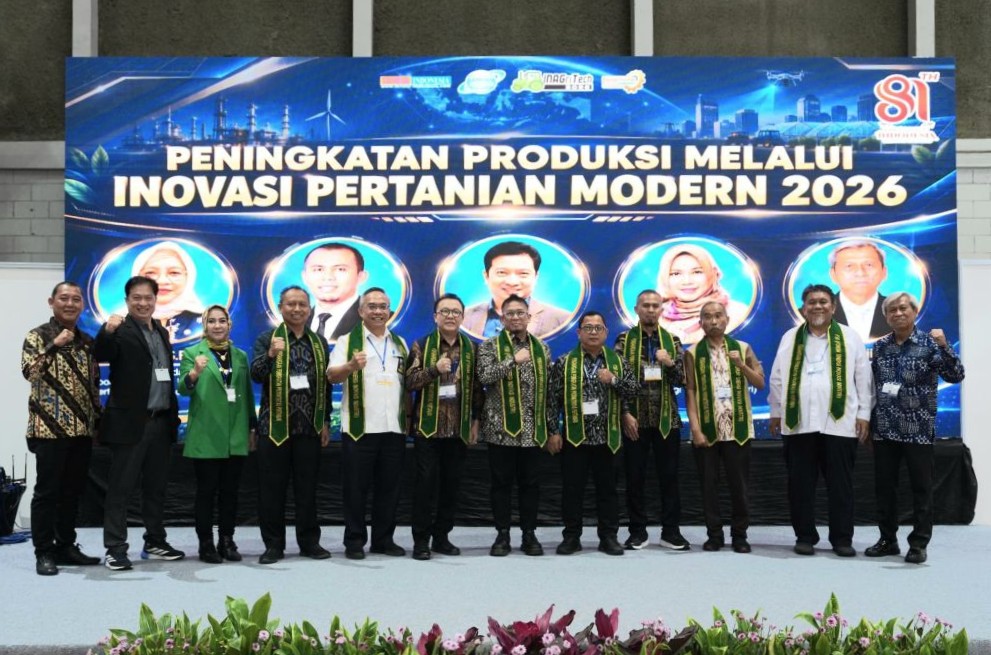
Efforts to integrate bioenergy with agricultural sector empowerment have received appreciation through the FSII Innovation Award 2026. Director of Biomass at PT PLN Energi Primer Indonesia (PLN EPI) Hokkop Situngkir received the Excellence Leadership in Energy Transition Through Biomass Acceleration Development Program award for his leadership in driving the acceleration of biomass development to support the national energy transition.
The award was presented during The 12th Inagritech 2026-Indonesia International Agriculture Technology Expo based on observations and assessments by the Forum Sinergi Inovasi Industri (FSII). At the event, Hokkop became one of the national figures receiving the FSII Innovation Award 2026-Agricultural Productivity for Food & Bioenergy alongside stakeholders from government, academia, and associations.
The appreciation was given for efforts to encourage biomass production and absorption to support the cofiring programme at coal-fired power plants (PLTU). The utilisation of agricultural waste and residues as alternative fuel is considered capable of bringing together the interests of the agricultural and energy sectors in one value chain.
In addition to helping meet fuel needs for power generation, biomass utilisation also provides opportunities for agricultural by-products that were previously underutilised to become a new source of income for the community.
PLN EPI is strengthening this approach through the development of an integrated biomass supply chain. Partnerships are built with farmers, farmer groups, business entities, regional governments, and various related parties to ensure the availability of biomass with the quality and volume required. The model also encourages the formation of a circular economy in the agricultural sector. Waste and residues previously viewed as by-products can be utilised as energy raw materials, thereby generating added value while reducing potential waste.
PLN EPI Corporate Secretary Mamit Setiawan said the award received by Hokkop is a form of appreciation for leadership that encourages the connection between bioenergy development and agricultural sector empowerment.
“The agricultural sector not only plays a role in maintaining food security but is also capable of becoming an important part in strengthening national energy security. Through the utilisation of agricultural waste and residues, PLN EPI continues to build a biomass ecosystem that provides added value for the community, strengthens the primary energy supply chain, and supports the acceleration of the transition towards cleaner and more sustainable energy,” said Mamit.
According to Mamit, biomass development requires cross-sector collaboration to run sustainably. Government, businesses, academia, associations, and the community all have roles in creating innovation and ensuring its implementation provides tangible benefits on the ground.
The collaboration is in line with the agricultural modernisation agenda, which not only focuses on increasing food productivity but also encourages the utilisation of agricultural potential as a source of renewable energy raw materials.
“This award serves as encouragement for PLN EPI to continue expanding the development of the national biomass ecosystem. Going forward, PLN EPI will continue to strengthen partnerships with farmers, farmer groups, regional governments, and business actors so that biomass is not only a renewable energy solution but also capable of improving community welfare while strengthening national energy security,” added Mamit.
Through the utilisation of agricultural waste as biomass fuel for the PLTU cofiring programme, the agricultural and energy sectors can support each other in building a sustainable value chain. The development of bioenergy is expected not only to contribute to accelerating the energy transition towards Net Zero Emissions (NZE) but also to increase the economic value of agricultural by-products, open income opportunities for the community, and strengthen national energy security.