
Agricultural Exports Surge, Imports Decline, Supported by Increasingly Solid Performance
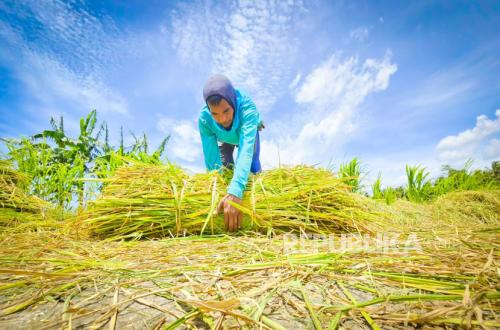
Indonesia’s agricultural sector continues to exhibit an increasingly strong and comprehensive trend. Marked not only by a surge in exports and a decline in imports, various other strategic indicators also confirm that the national agricultural transformation is proceeding effectively and yielding tangible impacts.
Based on data, the value of agricultural exports (fresh and processed) rose by Rp 166.71 trillion, or 28.26%, while imports fell by Rp 41.68 trillion, or 9.66%.
This performance indicates that Indonesia’s agricultural sector is becoming increasingly competitive in the global market while reducing dependence on foreign products.
Agriculture Minister Andi Amran Sulaiman emphasised that this achievement stems from a comprehensive, integrated strategy from upstream to downstream.
“This is not the work of a single programme but a grand orchestration. Our production is rising, exports are increasing sharply, and we are suppressing imports. This means our agricultural foundation is becoming stronger and more independent,” said Minister Amran on Friday (17/4/2026).
This strengthening is further evident from the significant increase in agricultural sector income. The total income rise reached Rp 437.25 trillion, derived from increased production of rice, maize, non-food commodities, and export contributions. Moreover, in terms of foreign exchange efficiency, Indonesia managed to save up to Rp 34 trillion on imports.
This success is also reflected in the national production surge. Indonesia’s rice production increased by 4.07 million tonnes, or 13.29%, enabling the country to achieve food self-sufficiency in just one year. This accomplishment also strengthens Indonesia’s position in the ASEAN region as the largest rice producer.
On the food reserves side, the Government Rice Reserve (CBP) reached 4.8 million tonnes in April 2026, with projections for the end of the month to surpass 5 million tonnes—the highest in history. This condition serves as a strategic buffer in maintaining national food supply and price stability.
“Our reserves are the highest in history. This is not just about numbers, but about security for the Indonesian people. 4.8 million tonnes now, 5 million tonnes by the end of April—it’s already visible. We ensure sufficient stocks, stable prices, and benefits for farmers,” asserted Minister Amran.
Positive performance is also seen in terms of farmer welfare. The Farmers’ Exchange Rate (NTP) reached 125.35, the highest in the last 34 years, indicating a significant improvement in farmers’ purchasing power and income.
The agricultural sector also recorded impressive economic growth. The agricultural sector’s GDP in 2025 grew by 5.74%, the highest in the last 25 years, making it one of the main pillars of national economic growth.
Further strengthening comes from the global perspective. World rice prices have actually fallen by up to 44.2%. However, amid this pressure, Indonesia has managed to hold firm and even halt rice imports, demonstrating the increasing resilience of the national production system.
In addition, the transformation towards modern agriculture has had a significant impact. Production cost efficiency has been reduced by up to 50%, while productivity has increased by up to 100%. This is driven by the use of superior seeds, mechanisation (farm machinery), as well as massive pump irrigation and land optimisation programmes.
On the downstream side, the development of strategic commodities such as coconut, cocoa, coffee, and palm oil continues to be strengthened. This programme not only enhances the added value of products but also opens up investment potential worth hundreds of trillions of rupiah and absorbs millions of workers.
Minister Amran emphasised that this success is also supported by massive structural reforms, including the deregulation of hundreds of policies and the eradication of food mafias that have previously hindered distribution and production.
“We’ve sorted it out from upstream to downstream. We’ve simplified regulations, cracked down on mafias, and improved distribution. The results are now tangible: our agriculture is growing, farmers are prosperous, and Indonesia is stronger,” he asserted.
With these increasingly comprehensive achievements, Indonesia’s agricultural sector is not only a pillar of national food security but also an engine of the economy, a creator of jobs, and a source of foreign exchange for the country.
Looking ahead, the Ministry of Agriculture is optimistic that this positive trend will continue, making Indonesia sustainably self-sufficient and pursuing the aspiration to become the world’s food barn as well as a new force in the global agricultural trade landscape.