
Agrarian Reform Law Passed, PDIP Presents Nine Key Notes
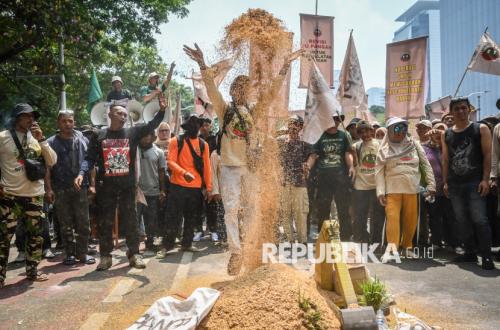
The House of Representatives (DPR RI) passed the Bill on Agrarian Reform Regulation into law during a Plenary Session on Tuesday (22/09/2026). Following the ratification, the PDI Perjuangan faction within the Legislative Body (Baleg) of the DPR presented nine notes regarding the implementation of agrarian reform, ranging from the regulation of land control to the protection of the community.
The Chairperson of the PDI Perjuangan Faction Group in the DPR Legislative Body, I Nyoman Parta, delivered these nine notes during the Level I Decision-Making Plenary Meeting for the Agrarian Reform Regulation Bill at the DPR Building on Monday (21/09/2026). At that time, the Legislative Body and the government agreed on the Bill to proceed to the ratification stage.
In the view of the PDI Perjuangan faction, Parta stated that agrarian reform should be positioned not merely as an administration of land matters, but as a policy concerning the control, ownership, use, and utilisation of land.
“Land is not just an asset; land is a living space. Agrarian reform regulation must be placed as an expression of state sovereignty and an instrument of social justice to guarantee the economic, social, and cultural rights of the people, particularly smallholder farmers, farm labourers, traditional fishermen, and indigenous communities,” he stated in a press release on Wednesday (23/09/2026).
The first note concerns the limitation of land control and ownership by corporations or affiliated business entities. Under the regulation, the government is given the authority to determine the minimum and maximum limits of land control and ownership, considering factors such as equity, the availability of productive areas, population density, environmental carrying capacity, and regional area size.
These provisions also cover the cumulative control, ownership, utilisation, and use of land by a single business entity and/or affiliated business entities. The maximum limit excludes State-Owned Enterprises (BUMN), Regional State-Owned Enterprises (BUMD), and cooperatives.
In determining the limits of land control and ownership, several indicators must also be considered, such as the Gini ratio of land control and ownership, land availability, population density, poverty rates, environmental conditions and functions, as well as the limitations of provincial or regency/city areas.
Secondly, the PDI Perjuangan faction requested that the mapping of Agrarian Reform Objects (TORA) be conducted based on factual field conditions. Mapping is deemed necessary to be carried out transparently and accurately so that the determination of agrarian reform objects aligns with the conditions and needs of the community.
Thirdly, the PDI Perjuangan faction proposed a mechanism for the restoration of land rights for parties who have lost rights due to agrarian conflicts. The restoration of rights is positioned as one of the conflict resolution mechanisms, alongside the granting or legalisation of new rights.
Fourthly, Parta highlighted the provisions regarding exemptions for Agrarian Reform Objects. According to the faction’s view, exemptions must have clear boundaries to remain aligned with the objectives of agrarian reform, including when related to national defence and security interests.
Fifthly, the PDI Perjuकरणा faction emphasised that decisions made by the Agrarian Reform Implementing Agency must be binding upon ministries, agencies, local governments, BUMN, and BUMD.
Parta also highlighted the implementation mechanism of such decisions. In the faction’s view, if a decision is not implemented within 60 days, the decision remains valid and must be recorded in land administration.
Sixthly, the PDI Perjuangan faction requested legal protection guarantees for the community, witnesses, reporters, and advocates fighting for land rights. This protection is aimed at ensuring the process of resolving agrarian issues can proceed without threats or intimidation.
Seventhly, the PDI Perjuangan faction reminded that agrarian reform should not be understood solely as a programme for asset legalisation or certification. According to the faction, certification is merely an administrative instrument, whereas agrarian reform encompasses the restructuring of land control, ownership, use, and utilisation, as well as land redistribution.
Eighthly, the PDI Perjuangan faction emphasised that the primary beneficiaries of agrarian reform include smallholder farmers, landless farm labourers, traditional fishermen, indigenous communities, the urban poor, and marginalised groups.
Ninthly, the PDI Perjuangan faction supports the establishment of an Agrarian Reform Implementing Agency that is directly responsible to the President. This agency is expected to perform functions of planning, implementation, monitoring, evaluation, and the resolution of agrarian conflicts.
In general, the ratified Agrarian Reform Regulation Law regulates the arrangement and limitation of land control and ownership, the resolution of agrarian conflicts, land redistribution, the protection of land rights, and support for redistribution recipients. The government also identified farmers, cultivators, farm labourers, fishermen, indigenous peoples, women, and the poor as priority groups.
Source: jawawa.id (https://jawawa.id/newsitem/agrarian-reform-law-passed-pdip-presents-nine-key-notes-1790214796)
Originally published by Republika (https://ekonomi.republika.co.id/berita/tlueyw416/uu-reforma-agraria-disahkan-pdip-sampaikan-sembilan-catatan), translated from Indonesian