
Agrarian Reform Law Expected to Resolve Fundamental Conflicts
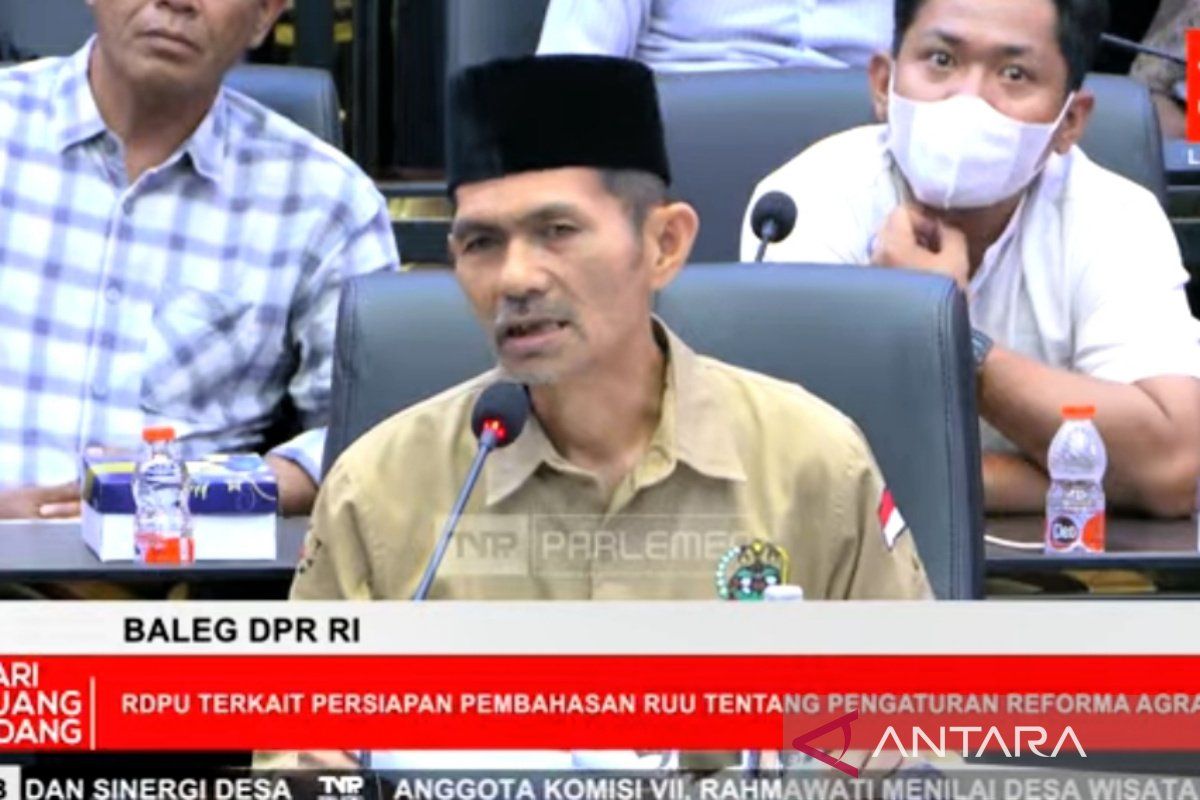
Jakarta (ANTARA) - The Indonesian Farmers Union (Serikat Petani Indonesia) hopes that the Law on Agrarian Reform Regulation can resolve fundamental and long-standing agrarian conflicts.
“We maintain our stance that this law must serve as a regulation for agrarian reform, rather than merely being a mechanism for resolving agrarian conflicts,” said the General Chairperson of the Indonesian Farmers Union, Henry Saragih, in Jakarta on Monday.
According to him, the Agrarian Reform Regulation Bill must be able to resolve fundamental conflicts, such as returning land seized during the colonial era to the rightful communities.
He explained that if these prolonged conflicts cannot be resolved through the implementation of this law, then the legislation will be futile.
However, Henry noted that the framework of the Agrarian Bill currently under discussion and intended to become law is already quite good, though certain articles require amendment or refinement.
“For instance, Article 30 regarding the objects of agrarian reform. This must be expanded, not limited to just 20 per cent. This is because agrarian injustice, inequality, and conflicts have already occurred. Therefore, that land must be returned to the people—first to the state, and then returned to the people. Since we are an independent nation, we are returning that land to the state, and the state returns it to the people,” he said.
Meanwhile, the Chairperson of the House of Representatives’ Legislation Committee (Baleg DPR), Bob Hasan, stated that the Agrarian Reform Bill is about the re-establishment of rights of control, management, ownership, and so forth.
“However, by adding regulation, we address legal vacuums and achieve legal unification, incorporating rules that were previously non-existent,” he said.
He added that the Agrarian Reform Law is a product of legal reform, not legal revolution.
“That is the important part. Restoring rights to our format, the 1945 Constitution, and the Fifth Principle of Pancasila: Social Justice for All Indonesian People,” he added.