
Agrarian Reform Bill viewed as a gift for conflict resolution
A good gift means there is a specialised institution where the people can resolve their agrarian conflicts.
Banda Aceh (ANTARA) - The Agrarian Reform Update Consortium (KPA) considers the Draft Law to be a positive gift because it creates a specialised institution for the people to resolve their agrarian conflicts.
“A good gift means there is a specialised institution where the people can resolve their agrarian conflicts,” said KPA Secretary General, Dewi Kartika, in a statement received in Banda Aceh on Wednesday.
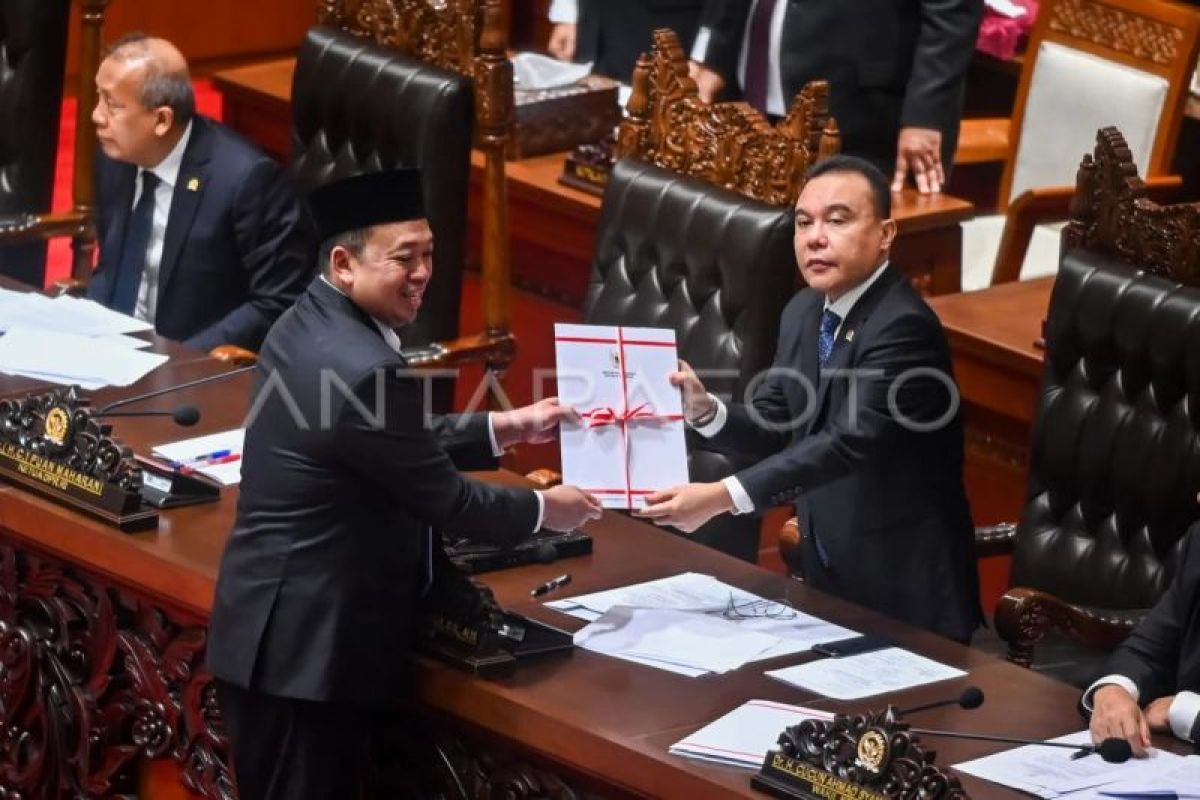
Previously, the House of Representatives (DPR RI) officially approved the Draft Law on Agrarian Reform Regulation to become law, agreed upon during a plenary session on Tuesday (22/9).
KPA welcomes this ratification as a significant momentum in the long struggle for Agrarian Reform in Indonesia. This ratification is a step forward towards achieving true agrarian reform in the country.
Furthermore, it serves as a positive gift for farmers, indigenous communities, fishermen, women, labourers, the urban poor, and other marginalised groups who have long faced inequalities in land ownership and agrarian conflicts.
With the existence of a specialised institution, there will eventually be a place where smallholder and landless farmers can obtain land and agrarian resources, and where the territories of indigenous peoples can be restored.
“Furthermore, it will be a place where village fishermen and their fishing grounds can be protected, and where women in both rural and urban areas can achieve equal rights to land. It will also be a place where labourers in villages and cities can obtain land or decent housing,” she said.
However, on the other hand, Dewi stated that a good gift is not merely the birth of a law. Rather, it depends on the extent to which the Agrarian Reform Regulation Law is implemented and its ability to bring real change to the people.
She explained that this law contains several important and strategic regulations for the implementation of agrarian reform. These include guarantees for the fulfilment, restoration, and recognition of people’s rights to land and agrarian resources.
The law includes the designation of Priority Locations for Agrarian Reform (LPRA), the regulation of agrarian reform objects and subjects, and the formation of a specialised agrarian reform implementing institution that operates under and is accountable to the President.
Additionally, it regulates the mechanism for resolving agrarian conflicts and restoring land rights, land redistribution, the empowerment of agrarian reform subjects, and legal protection for people defending their land rights.
“Another important aspect is the arrangement, control, and limitation of land ownership and possession to prevent the concentration and re-concentration of land control, by both state and private corporations,” she said.
Furthermore, Dewi added, the Agrarian Reform Regulation Law strengthens community participation in agrarian reform, establishes a supervisory board, builds a data and reporting system for agrarian reform, and regulates funding and criminal provisions.
Moreover, the birth of this law is expected to be a momentum to correct large-scale land concentration by corporations, while simultaneously correcting the policies and decisions of state institutions that have historically marginalised people’s rights to land and agrarian resources.
“It must be sharp towards corporations, law enforcement, or public officials who have discriminated against farmers’ rights and committed violence that has hindered the Agrarian Reform process thus far,” she asserted.
Therefore, the ratification of the Agrarian Reform Regulation Law is not the end of the struggle. This is a new chapter for Agrarian Reform. The next challenge is to ensure that the entire mandate of the law is implemented consistently.
“Agrarian reform institutions must be formed and operational, agrarian conflicts must be resolved, land must be distributed to the people, land ownership inequality must be corrected, and people’s organisations must be strengthened,” concluded Dewi Kartika.