
Agrarian Reform Bill Passed, KPA Highlights Concerns Over Implementing Agency
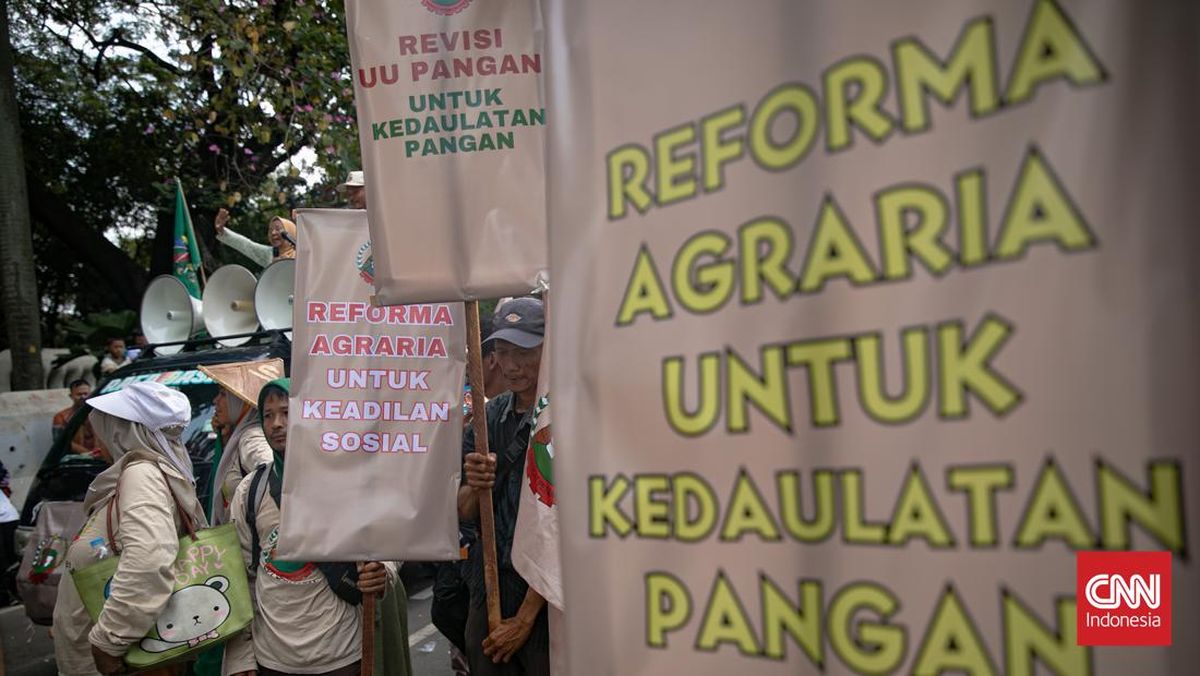
The Agrarian Reform Consortium (KPA) has stated that it will monitor the implementation of the Agrarian Reform Regulation Bill, which was recently passed during the DPR RI Plenary Session on Tuesday (22/9).
In a meeting led by Deputy Speaker of the House Sufmi Dasco Ahmad, all eight factions in the House of Representatives unanimously agreed that the Bill should take effect immediately.
Responding to the ratification, the KPA highlighted several prominent points within the new law. These include the designation of Agrarian Reform Priority Locations (LPRA) and the formation of a special agency to manage Agrarian Reform, which will operate under and be accountable to the President.
“The measure of success is the extent to which the Agrarian Reform Regulation Law is truly implemented and capable of bringing real change to the people,” stated KPA Secretary General Dewi Kartika in an official statement on Tuesday afternoon.
“This Law contains several important and strategic regulations for the implementation of Agrarian Reform. These include guarantees for the fulfilment, restoration, and recognition of people’s rights to land and agrarian resources; the designation of Agrarian Reform Priority Locations (LPRA); the regulation of Agrarian Reform objects and subjects; and the formation of a special agency for Agrarian Reform implementation that is under and accountable to the President,” she added.
She noted that the next challenge is ensuring all mandates of the Law are executed consistently, particularly regarding the resolution of agrarian conflicts, the distribution of land to the people, and the correction of land ownership inequality.
“Agrarian Reform must ultimately strengthen the position and sovereignty of the people over land and agrarian resources. Farmers and the public must have increasing space to build robust organisations, manage their land and agrarian resources, develop the people’s economy, and realise agrarian justice and food sovereignty,” said Dewi.
When contacted, KPA Head of Campaign and Knowledge Management, Benni Wijaya, emphasised the need for oversight to ensure the law’s implementation proceeds correctly.
“The important thing is how this implementation can function. This certainly requires monitoring and collective pressure from all civil society, farmer organisations, people’s organisations, indigenous communities, fishermen, and others,” Benni told CNNIndonesia.com on Tuesday evening.
He stated that oversight of the Agrarian Reform Regulation Bill is vital to ensure that agrarian reform is realised, adding that the public should be free from monopolies and land disputes.
“To ensure justice in the control of land and agrarian resources, so that there is no monopoly or control by large corporations, and to trigger economic growth in locations where conflicts are resolved or land is redistributed through agrarian reform,” Benni said.
Regarding the proposed agrarian reform agency, Benni stated that the KPA agrees with its formation as it aligns with public aspirations. Previously, the Agrarian Reform Task Force (GTRA) failed to function effectively due to sectoral egos between relevant ministries and agencies.
Therefore, Benni said the KPA supports the establishment of the Agrarian Reform Implementing Agency to overcome cross-sectoral obstacles.
“That is why this special body needs to be formed; it requires cross-sectoral authority to break through the obstacles that have occurred so far,” said Benni.
Previously, the Agrarian Reform Regulation Bill was officially passed into law during the 6th Plenary Session of the DPR for the 2026-2027 Session Period I. All eight factions in the DPR unanimously approved the Bill’s immediate implementation. The ratification meeting was led by Deputy Speaker Sufmi Dasco Ahmad.
The ratification took place one day after all factions reached an agreement during a plenary meeting in the DPR Legislative Body (Baleg).
The Chairperson of the Agrarian Reform Bill Working Group, Ahmad Iman Sukri, explained that the Bill covers 14 key discussion points. These include the establishment of an agrarian reform supervisory body, conflict resolution rules, land arrangement, funding, and criminal provisions.
The DPR agreed on a list of problems (DIM) submitted by the government. This list consisted of 164 fixed DIMs, 54 editorial DIMs, 57 substantive change DIMs, 295 deleted DIMs, 3 added DIMs, and 3 repositioned DIMs.
According to the final draft of the Agrarian Reform Regulation Bill as of 21 September, the Agrarian Reform Implementing Agency will be under the direct responsibility of the President. Additionally, there will be a supervisory board for the implementation of agrarian reform.
Furthermore, the objects of agrarian reform will be regulated through Presidential Regulations. The Bill also regulates Agrarian Reform Priority Locations (LPRA).