
Agrarian Reform Bill: Government Proposes Deletion of 297 Items in List of Issues
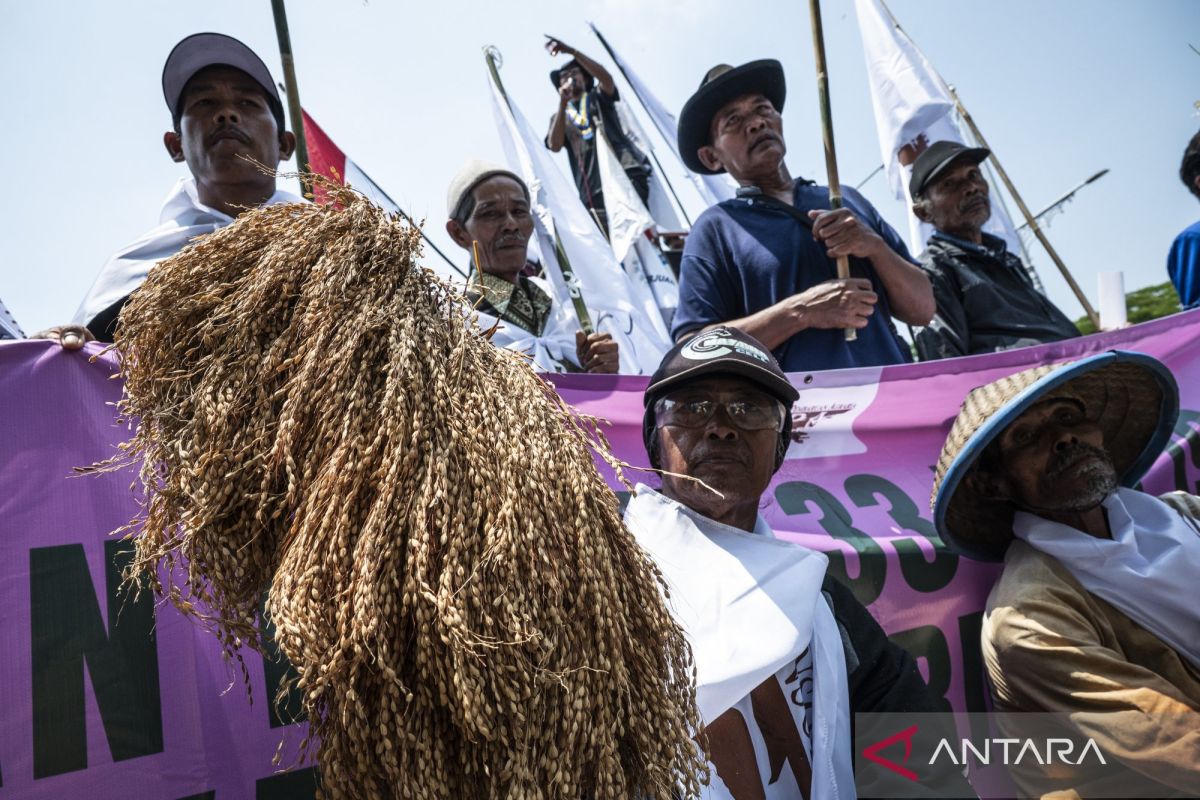
Jakarta (ANTARA) - Abi S. Nugroho, a researcher at the DesaRaya Foundation, believes that the Agrarian Reform Regulation Bill is necessary to strengthen the legal foundation for resolving cross-sectoral agrarian issues.
Speaking during an online discussion held in Jakarta on Friday, Abi stated that agrarian reform is directly related to the mandate of Article 33, paragraph (3) of the 1945 Constitution regarding the utilisation of the earth, water, and natural resources for the greatest prosperity of the people.
These remarks were made during a discussion titled “The Urgency of the Agrarian Reform Regulation Bill: Upholding People’s Sovereignty and Ensuring the Mandate of Article 33, Paragraph (3) of the 1945 Constitution,” organised by the DesaRaya Foundation.
According to Abi, the implementation of agrarian reform has faced fundamental problems because it has focused more on land administration aspects rather than changes in land ownership structures.
He also emphasised the importance of public oversight during the Bill’s deliberation to ensure that long-standing issues of ownership inequality and agrarian conflicts obtain a resolution framework through legislation.
Meanwhile, Hendro Subiyantoro, Coordinator of Expert Staff for the Legislative Body (Baleg) of the Indonesian House of Representatives (DPR RI), outlined the progress of the Agrarian Reform Regulation Bill discussions in the DPR.
He stated that the draft Bill, consisting of 70 articles, has been established as a DPR-initiated Bill and has entered the 2026 Priority National Legislation Programme (Prolegnas).
In discussions with the government, Hendro noted that there are differing views regarding several substances of the Bill.
He stated that the government, through a presidential letter, submitted 598 items in the List of Issues (DIM), 297 of which propose the deletion of provisions within the draft Bill.
Hendro also detailed two main issues in the Bill’s deliberation, one of which concerns the institutionalisation of the National Agrarian Reform Agency (BRAN).
The DPR has proposed the formation of BRAN, which would operate directly under the President and possess the authority to coordinate agrarian reform policies across ministries and agencies, including exercising a corrective function over sectoral policies.
According to Hendro, the government initially questioned the formation of this agency in relation to provisions regarding government institutions.
The DPR, he said, is maintaining the proposal to form BRAN, arguing for the need for a clear institutional mandate within the law.
Another issue relates to the resolution of land conflicts involving State-Owned Goods (BMN) and State-Owned Enterprise (BUMN) assets.
The DPR has proposed provisions that would allow problematic assets to be released as objects of agrarian reform by providing legal certainty for the process.
Hendro noted that during discussions, the government also proposed several exceptions to agrarian reform objects, including those related to National Strategic Projects (PSN), SOEs, Management Rights (HPL), and defence areas.
Dewi Kartika, Secretary General of the Agrarian Reform Consortium (KPA), stated that BRAN needs to possess adequate authority and not merely function as a coordination forum.
“BRAN must have strong authority to coordinate conflict resolution and ensure that the implementation of agrarian reform proceeds across sectors. Agrarian reform is not just a matter of asset legalisation, but also concerns justice and the sustainability of people’s livelihoods,” she said.
Dewi also encouraged civil society to monitor the Bill’s deliberations transparently and ensure that public aspirations are part of the legislative process.
By way of background, the DPR Plenary Session on 8 September 2026 approved the Agrarian Reform Regulation Bill as a DPR-initiated Bill. The Bill consists of 16 chapters and 70 articles, including provisions for the formation of BRAN, which would be directly responsible to the President.
The DPR Legislative Body subsequently formed a Working Committee for the Agrarian Reform Regulation Bill for Level I discussions with the government on 16 September 2026.