
Agrarian Reform Bill Enters Crucial Stage as Government Proposals Face Scrutiny
The discussion regarding the Agrarian Reform Regulation Bill has entered a crucial phase after the government submitted its List of Problem Inventories (DIM) to the Legislative Body (Baleg) of the Indonesian House of Representatives (DPR RI). Various civil society groups have highlighted that many substantive elements of the DPR’s draft are being proposed for alteration or deletion by the government.
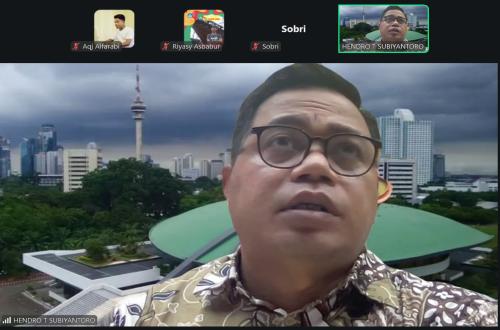
Hendro Subiyantoro, Coordinator of Expert Staff for the DPR Legislative Body, stated that the government submitted 598 points of the List of Problem Inventories during the bill’s deliberation. According to Hendro, 297 of these points contain proposals to delete formulations previously drafted by the DPR. “This means that approximately 49.7 per cent of the DPR’s initiative draft is being rejected or targeted for reduction by the government,” Hendro said during a public online discussion titled “The Urgency of the Agrarian Reform Regulation Bill: Upholding People’s Sovereignty and Ensuring the Mandate of Article 33 Paragraph (3) of the 1945 Constitution,” on Friday, 18 September 2026.
The discussion, organised by the DesaRaya Foundation, featured Hendro, the Secretary General of the Agrarian Reform Consortium (KPA) Dewi Kartika, and Al Hafiz Kurniawan from the PBNU Board of Scholars. The Ministry of State Apparatus Empowerment and Bureaucratic Reform noted that the submission of the DIM was carried out by Deputy Minister of Law Edward Omar Sharif Hiariej during a Level I discussion meeting at the DPR. The meeting also reached an agreement on the discussion mechanism and the formation of a Working Committee for the Agrarian Reform Regulation Bill.
Government and DPR Begin Clashing over Formulations
The Agrarian Reform Regulation Bill is an initiative of the DPR. The Legislative Body approved the draft on 8 September 2026, after all factions provided approval to proceed with the discussions. One significant substance offered by the DPR is the establishment of a National Agrarian Reform Agency (BRAN), which would operate directly under the President.
The Legislative Body argues that a new institution is necessary because agrarian conflict resolution is currently scattered across various ministries and agencies. Legislative Body member Aria Bima stated in a public hearing on Monday, 14 September 2026, that the draft is aimed at strengthening the implementation of agrarian reform while providing legal certainty in resolving agrarian conflicts.
While the government expressed support for the overarching goals of agrarian reform during the submission of the DIM, differences have emerged during the article-by-article deliberation. According to Hendro, one of the most significant points of debate is the institutional form of agrarian reform. The DPR draft intends for BRAN to be positioned directly under the President, granting it cross-ministerial authority to resolve conflicts.
The idea of forming BRAN is indeed included in the draft prepared by the Legislative Body. Furthermore, the Chairman of Commission II of the DPR, Muhammad Rifqinizamy Kertanegara, stated on Tuesday, 15 September 2026, that the proposed structure would also place governors as the heads of BRAN at the provincial level.
Hendro noted that the government questioned the creation of a new agency mandated directly by law. This debate pertains to the regulation of government institutions and the President’s authority to form executive organisations. For the DPR, an agency with strong authority is seen as vital because agrarian reform is often hindered when conflicts involve the jurisdictions of multiple ministries.
Conflicts Over State Assets Become a Point of Contention
The next debate concerns land that has long been controlled or cultivated by the community but is administratively recorded as state assets, state-owned enterprise (SOE) assets, or located within areas managed by specific institutions. According to Hendro, the DPR proposed a mechanism so that land involved in long-standing conflicts could be released as objects of agrarian reform without automatically implicating officials or directors of state enterprises in issues of state losses.
This issue is considered critical because many agrarian conflicts occur in areas that overlap with SOE assets, state plantations, forestry areas, or land with state property status. Hendro stated that in the DIM, the government proposed several exceptions to the objects of agrarian reform, including land related to National Strategic Projects (PSN), SOEs, Management Rights (HPL), and defence areas. Hendro noted that several of these proposed exceptions were not accepted during the Working Committee discussions.
Detailed information regarding the final formulation of these articles awaits the results of the Working Committee’s discussions. The legislative process is ongoing, and formulations may change before reaching a Level I agreement or final ratification in a plenary session.
KPA Fears Agrarian Reform May Return to Being Merely Administrative
KPA Secretary General Dewi Kartika believes the Agrarian Reform Regulation Bill must be able to break the old pattern, which her organisation argues focuses too heavily on asset legalisation. She distinguished agrarian reform from the mere issuance of land certificates.
For the KPA, agrarian reform must mean a correction of the imbalanced structure of land control and ownership, the resolution of agrarian conflicts, and the redistribution of land to communities that currently lack or are short of land. A similar definition emerged in the DPR’s official discussions. Legal news reports on Thursday, 17 September 2026, noted that the bill’s discussions position agrarian reform as a policy to restructure the control, ownership, use, and utilisation of agrarian resources, rather than solely as asset legalisation.
Dewi assessed that the formation of BRAN would lose its meaning if the agency becomes merely a coordination forum without executive authority. “BRAN must be independent from technical ministries, possess executive ‘teeth’, and orchestrate post-reform programmes, ranging from seeds and irrigation to production technology,” said Dewi.
Source: jawawa.id (https://jawawa.id/newsitem/agrarian-reform-bill-enters-crucial-stage-as-government-proposals-face-scrutiny-1789743225)
Originally published by Republika (https://news.republika.co.id/berita/tljyf6451/ruu-reforma-agraria-masuk-babak-krusial-dim-pemerintah-disorot), translated from Indonesian