
Agrarian Reform as the Foundation for Indonesia's Economic Transformation
A nutritious meal received by a child at school may seem unrelated to land conflicts in a village. A cooperative established in a village appears far removed from debates regarding the maximum limits of land ownership.
Agricultural processing factories are also often viewed as investment matters separate from the lives of smallholder farmers. However, if viewed as a single integrated chain, a new direction for Indonesia’s development becomes apparent.
Land provides the place for production. Farmers, livestock breeders, and fishermen produce food. Cooperatives collect, finance, store, and distribute. The Free Nutritious Meal programme creates large-scale and sustainable demand.
Downstreaming processes process production results so that added value does not stop at raw materials. Food security, therefore, will no longer stand as a slogan regarding stock levels, but will grow from the people’s ability to control production sources, organise businesses, access markets, and enjoy added value.
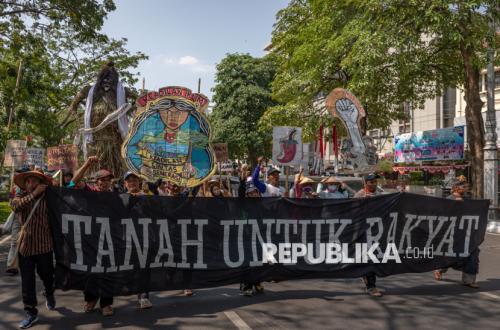
Within this sequence, the Agrarian Reform Regulation Bill finds its strategic position. It should not be drafted merely as a land law, but as a potential legal foundation for the economic transformation being built by President Prabso Subianto: development that originates from villages, strengthens the capacity of the grassroots, and returns national resources to their constitutional purpose: the greatest possible prosperity for the people.
To date, rural development issues have often been addressed in isolation. When farmers lack land, the government provides certificates or distributes plots.
When production is low, fertiliser and agricultural equipment assistance is provided. When prices drop, market operations are conducted. When farmers face capital difficulties, credit schemes are launched.
When distribution chains are too long, new institutions are formed. Each policy may be correct within its own scope, but they do not always form a complete transformation.
As a result, farmers may obtain land but lack capital. They may increase production but lack certainty of buyers. They may possess certificates, but are forced to use them as collateral just to survive.