
Agrarian Nation, Yet Farmers Remain Impoverished
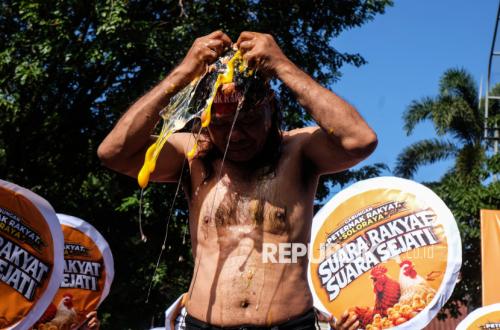
The answer is not that they are unable to sell the eggs. Rather, they must sell them so cheaply that they can no longer afford to buy feed. The theatrical action by farmers at the Gladag roundabout in Solo recently was a critique of a paradox: an agrarian nation that fails to bring prosperity to its own food producers.
This paradox is not unique to poultry farmers. We have also witnessed it with chilli, shallot, tomato, and even coconut farmers. When the harvest is abundant, prices collapse. When production is low, prices soar and consumers complain. In both situations, the primary producers are the ones who lose out. This means our problem is not merely food production, but rather the government’s management of food.
For decades, agricultural development in Indonesia has been measured largely by increases in production. Self-sufficiency became a symbol of success, with productivity as the main indicator. However, production success does not always correlate with producer welfare. In the case of poultry farming, production costs have risen due to expensive feed, while the price of live chickens and eggs has fallen below the basic cost of production. When these two pressures meet, profit turns into loss. Increased production is no longer synonymous with increased income for farmers. This paradox shows that the main issue is no longer how to increase production, but how to ensure that the economic value of production is distributed more fairly.
Basic economic textbooks often depict the market as an efficient mechanism, with prices reflecting the balance between supply and demand. However, Joseph Stiglitz (1989) reminded us that market mechanisms only work optimally when information, access, and power among actors are relatively balanced. When there is an imbalance of power, the outcome is not necessarily efficient, let alone fair. Small-scale farmers face precisely this situation. They buy inputs at prices they can hardly negotiate and sell their output to a market they do not control. They bear the production risk themselves, but prices are beyond their control. In this position, farmers resemble decision-takers rather than market drivers.
Food prices are never purely the result of market mechanisms. They are always influenced by state policies, industry structures, distribution networks, access to financing, and the power relations among economic actors. Anne Krueger (1974) showed that any economic policy can create opportunities for rent-seeking, which is the effort to gain profit through control of access to policy, rather than through increased productivity. George Stigler (1971) also reminded us that regulators can face pressure from groups with greater economic resources. Therefore, the quality of governance is highly determined by transparency, accountability, and the state’s ability to safeguard the public interest. This framework is not intended to accuse any food policy of deviation, but to remind us that institutional reform is just as important as price intervention.
The government has responded to the farmers’ crisis by setting reference prices, postponing feed price increases, supervising distribution, and absorbing production through the Free Nutritious Meals programme. These policies are important to relieve the short-term pressure faced by farmers. However, the state should not only be obliged to act as a rescuer when a crisis has already occurred. The state must build institutions that prevent crises from recurring. Douglass North stated that sustainable economic growth is determined more by the quality of institutions than by the magnitude of temporary interventions. Good institutions create rule certainty, reduce transaction costs, and improve the bargaining position of weak economic actors. In the context of small-scale farming, such institutions could take the form of strong cooperatives, transparent production information systems, affordable financing, livestock business insurance, and competition policies capable of maintaining a healthy market structure.
Lessons from various countries show that protecting producers does not always have to be done through price controls. Thailand emphasises logistical efficiency and market access. Malaysia combines healthy competition with direct support for producers. The United States has built insurance systems and surplus purchase mechanisms when prices fall. Each uses different instruments, but all seek to reduce the risk borne by primary producers. We do not need to copy any one model entirely. However, the experience of these countries shows that the success of food development cannot be measured solely by the volume of production or the stability of consumer prices. What is equally important is the sustainability of the livelihoods of those who produce the food.
The food issue is not just an economic issue, but also an ethical one. A nation cannot claim to have successfully built food security if its food producers live in constant uncertainty. Food is not merely a traded commodity; it is the result of human labour, with families depending on each planting season and each production cycle. The farmers’ demonstration in Solo should be understood as a reminder that economic progress cannot be separated from social justice.