
AGO Reveals Reasons for Pre-Dawn Raid on Ex-Deputy Head of National Nutrition Agency Lodewyk
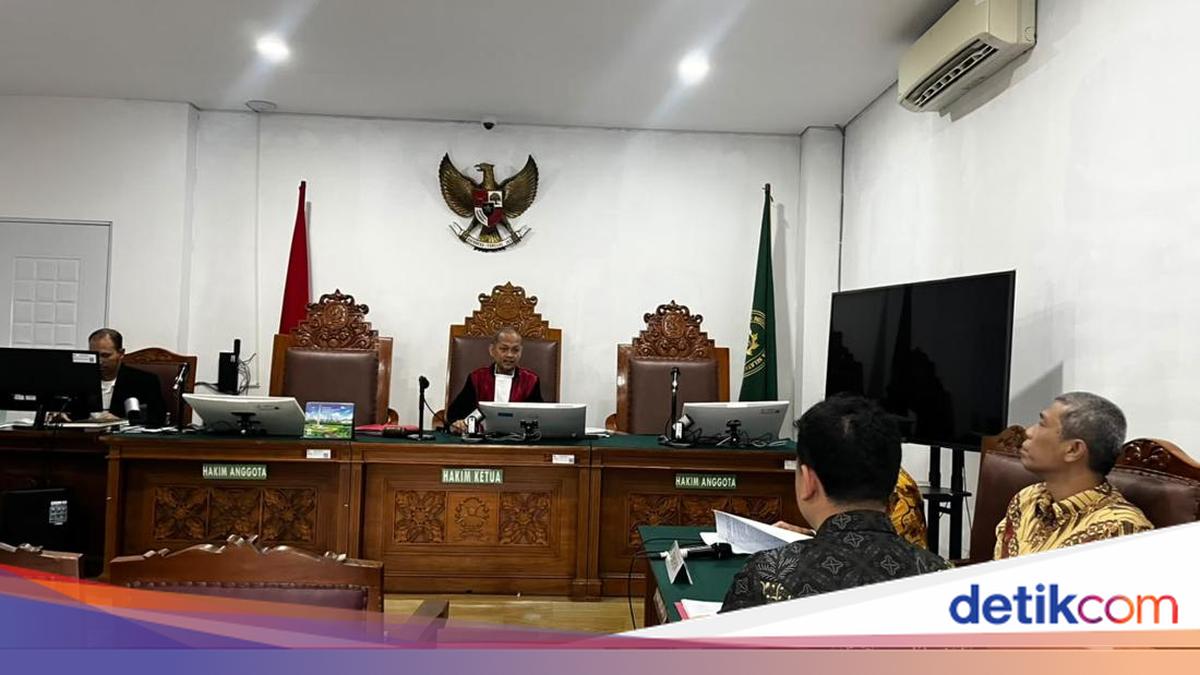
The Attorney General’s Office (Kejagung) has responded to the pre-trial lawsuit filed by Lodewyk Pusung, former Deputy Head of the National Nutrition Agency (BGN). The Office explained the reasoning behind the search of Lodewyk’s residence carried out in the early hours of the morning.
The statement was made at a pre-trial hearing at the South Jakarta District Court on Tuesday (28/7/2026), presided over by sole judge Abdul Affandi.
In its response, the Attorney General’s Office, as the respondent, considered the petitioner’s argument questioning the timing of the search to be unfounded, asserting that the action had a solid legal basis.
“The petitioner’s argument challenging the execution of the search in the early hours is also baseless. The search was carried out based on urgent circumstances as referred to in Article 113 paragraph 4 of Law Number 20 of 2025 concerning the Criminal Procedure Code,” a prosecutor read from the response.
The prosecutor said the search was conducted to secure evidence so that it would not be lost or destroyed.
“In order to secure evidence and prevent it from being lost, moved, or damaged,” the prosecutor continued.
Furthermore, the Attorney General’s Office explained that the search was part of an investigative strategy. At the time, searches were carried out simultaneously at three different locations to prevent communication between the parties involved.
“The search was conducted simultaneously at three locations, namely the petitioner’s residence and two other locations belonging to other parties who were later also named suspects,” the prosecutor stated.
The Attorney General’s Office considered the simultaneous searches legally valid in order to safeguard the effectiveness of the investigation.
“As part of a lawful investigative strategy to maintain the effectiveness of the investigation process and prevent coordination between the parties,” the prosecutor said.
Four pieces of evidence
At the hearing, the prosecutor also revealed that investigators held four valid pieces of evidence to name Lodewyk a suspect, findings deemed sufficient to form the basis of his designation as a suspect.
“The petitioner was named a suspect after investigators obtained four pieces of evidence, namely witness statements, expert testimony, electronic evidence, and documentary evidence,” the prosecutor said.
“Based on this evidence, the petitioner’s involvement was found in the alleged criminal act of corruption in the governance of the Free Nutritious Meals programme at the National Nutrition Agency in 2025-2026,” the prosecutor continued.
The prosecutor explained that the electronic evidence held by investigators included recordings of conversations between Lodewyk and other parties, including his wife. These conversations substantially revealed Lodewyk’s role in the alleged corruption of the flagship programme.
“The respondent obtained evidence in the form of electronic evidence, namely conversations between the petitioner and other parties, including the petitioner’s wife, from which information was substantially obtained regarding the petitioner’s role in the alleged criminal act concerning the governance of the MBG programme,” the prosecutor said.
In its response, the prosecutor also revealed the existence of state losses underpinning the investigation. The prosecutor said the irregular governance by the suspects resulted in budget waste of up to Rp 10.5 trillion per year.
“In the special-purpose audit working paper on the governance of the MBG programme by the BPKP (Finance and Development Supervisory Agency), it was stated that waste occurred in the Free Nutritious Meals programme at the National Nutrition Agency amounting to Rp 10.5 trillion per year,” the prosecutor concluded.