
AGO Names Three Suspects in Illegal Export of Indonesia's Rare Earth 'Treasure'
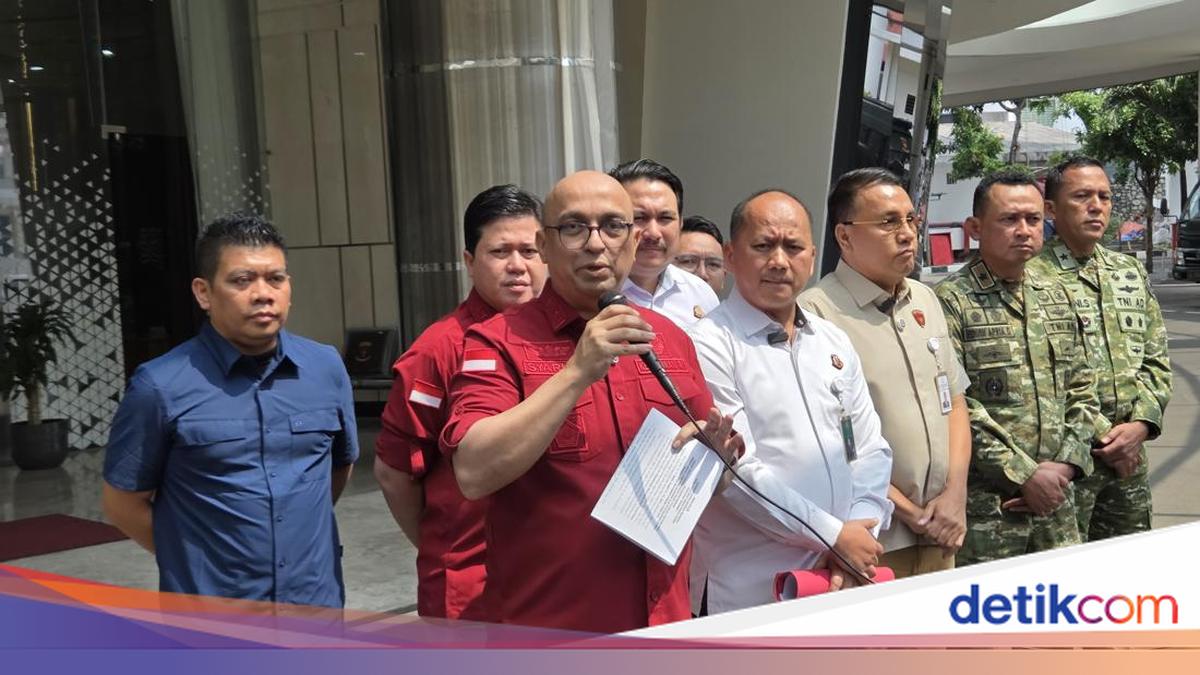
The Attorney General’s Office (Kejagung) has named three suspects in a case of alleged illegal export of rare earth minerals in Batam, Riau Islands. The suspects were identified following a series of investigations.
“After conducting a series of examinations, the investigation team named three suspects: IS (Iwan Setiawan), a representative of PT PMM; GP (Gian Prabuharto), Head of the Pangkalpinang Service Unit of PT Sucofindo; and JK (Junanto Kurniawan), Head of the Pangkalpinang Type C Customs and Excise Service and Supervision Office,” said Director of Investigation for the Deputy Attorney General for Special Crimes, Syarief Sulaeman Nahdi, during a press conference in South Jakarta on Wednesday (8/7/2026).
Syarief stated that the investigation was carried out jointly with the Forest Area Control Task Force (Satgas PKH). He explained that the three suspects are believed to have facilitated the export of this national “treasure” by manipulating laboratory test results and issuing export documents.
The case began when Iwan requested that Gian not conduct a comprehensive examination of ilmenite samples. Ilmenite is a major source of titanium and is abundant in Indonesia. After a check by the Satgas PKH, it was discovered that the jumbo bags, which were declared to contain only ilmenite, actually contained rare earth minerals. Syarief did not specify which rare earth minerals were found.
“The aim was to ensure that the rare earth mineral or metal content, which is on the list of strategic minerals prohibited for export, was not included in the laboratory test report that could be used as the basis for issuing export documents,” he explained.
Syarief said Iwan allegedly asked Gian to report the laboratory test results as ilmenite so the goods could be exported. Iwan also allegedly requested that the report on the rare earth metals found in the laboratory test be omitted. “And asked the laboratory that reported the rare earth metals not to include them in the laboratory test report, as they are goods prohibited for export,” he clarified.
Syarief stated that Gian fulfilled Iwan’s request by only testing the top part of the cargo in the jumbo bag. This caused the rare earth mineral content to go undetected during the laboratory test for the issuance of export documents. “Saudara GP knew that these rare earth minerals have very high economic and strategic value and are included in the list of strategic minerals prohibited for export. However, to fulfil Saudara IS’s request, Saudara GP unlawfully did not conduct a comprehensive test on the sample sent by Saudara IS,” he said.
Furthermore, Junanto, as the Head of the Pangkalpinang Customs Office, is suspected of issuing export documents despite knowing that PT PMM’s goods contained rare earth minerals. Junanto allegedly approved the incomplete inspection of the 390 tonnes of material containing rare earth minerals. “And the act of Saudara JK, who abused his authority by not conveying the results of the analysis regarding the presence of rare earth minerals at the request of Saudara IS, allowed PT PMM to illegally export soil containing rare earth minerals totalling approximately 390 tonnes,” he added.
Previously, the Forest Area Control Task Force inspected 25 containers of rare earth minerals in Batam, Riau Islands. The task force suspected legal violations related to the export of these minerals. For context, the Geological Agency of the Ministry of Energy and Mineral Resources explains that rare earth minerals are a group of metals with unique and essential properties for various modern technological applications. The term “rare” refers to their scarcity in nature. The rare earth elements are a group of transition metals in the periodic table, comprising 15 elements in the lanthanide series, plus scandium and yttrium, making a total of 17 elements.