
AGO Implements Plea Bargaining, Attorney General Discusses Social Restoration
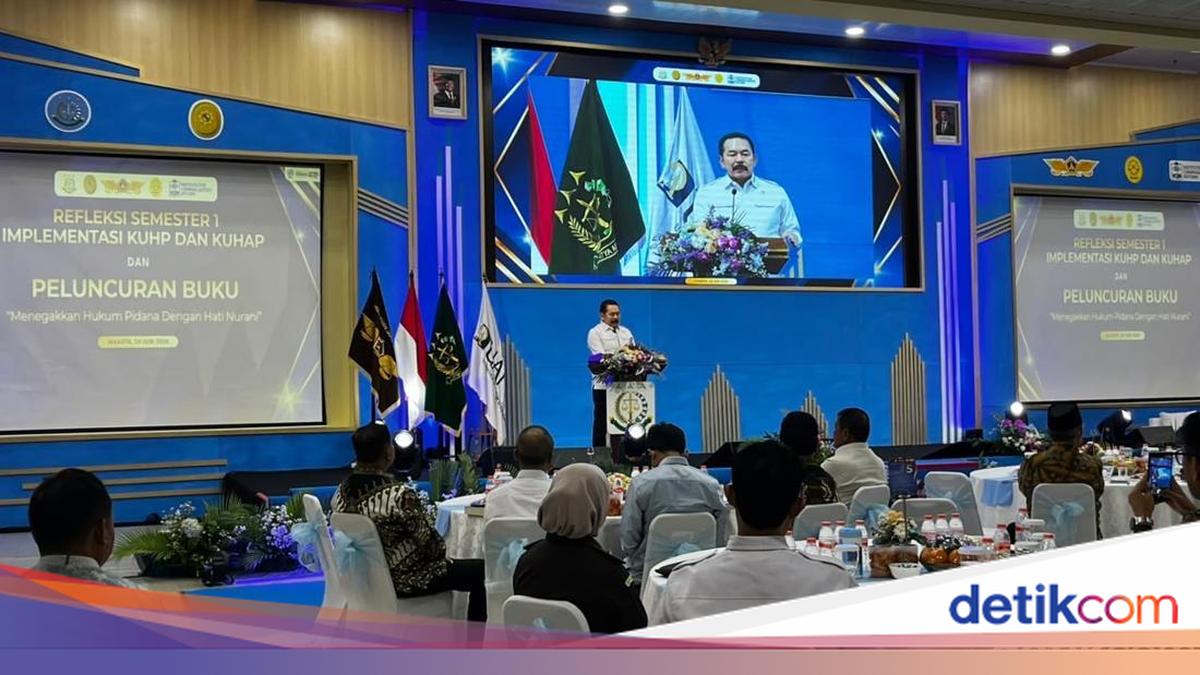
Attorney General ST Burhanuddin has issued technical regulations regarding the mechanism for plea bargaining within the new criminal justice system. The step was taken to ensure the implementation of various alternative case resolutions proceeds in harmony.
Burhanuddin conveyed this during a National Seminar on ‘Six-Month Reflection on the Implementation of the Criminal Code and Criminal Procedure Code’ at Al Azhar University Indonesia in South Jakarta. He stated that these technical guidelines are crucial given that the standard rules in the new Criminal Code (KUHP) and Criminal Procedure Code (KUHAP) do not yet comprehensively cover all aspects.
“To ensure the implementation of various alternative case resolutions runs uniformly and accountably, 17 letters from the Junior Attorney General for General Crimes (Jampidum) have been issued relating to various substances and mechanisms of the new KUHAP and KUHP,” Burhanuddin said in his presentation on Wednesday (24/6/2026).
Burhanuddin explained that one of the main reference rules is Jampidum Letter Number B-1192 dated 10 March 2026. This regulation governs in detail the mechanisms for restorative justice, plea bargaining, and deferred prosecution agreements (DPA).
“This implementation has given birth to best practices previously unknown in the national criminal justice system, such as plea bargaining as a mechanism for admission of guilt, or DPA for corporations as a case resolution instrument that prioritises restoration,” Burhanuddin clarified.
He stressed that the application of plea bargaining and DPA is not merely a procedural change, but a shift in legal paradigm. Burhanuddin asserted that the primary goal of law today is no longer solely to retaliate against the perpetrator’s actions, but rather restoration.
“The new KUHP shifts the criminal law paradigm from merely an instrument of retaliation towards corrective, restorative, and rehabilitative justice. Restoring social balance and reforming offenders become the main objectives, not merely punishing,” he explained.
Meanwhile, the DPA mechanism is prioritised specifically for cases involving corporations. The aim is for case resolution to remain fair and efficient without neglecting public interest and economic continuity.
Since the enactment of the new KUHAP and KUHP from January to May 2026, Jampidum has implemented six of the nine new mechanisms prepared, which have been successfully applied in 605 cases.
Despite showing positive achievements, he urged his staff not to become trapped in complicated administration. Burhanuddin requested all prosecutors to prioritise the essence of justice without ignoring the interests of victims.
“We must also avoid convoluted bureaucracy and administration. Do not let complicated procedures hinder the achievement of restorative justice, which is the main goal of law enforcement,” Burhanuddin stated.
Although already underway, Burhanuddin acknowledged that a major challenge remains: the absence of implementing regulations or Government Regulations (PP) detailing the rules of the new KUHP and KUHAP. Therefore, his office still relies on internal technical guidelines to fill this regulatory vacuum.
“The Prosecutor’s Office is not merely an implementer of new provisions, but the driving force behind the transformation of the national criminal justice system. We are agents of change accelerating the paradigm from a retributive orientation towards a restorative and humanistic judiciary,” he concluded.