
Agincourt Resources develops mycorrhizal bioagents to boost mine land reclamation
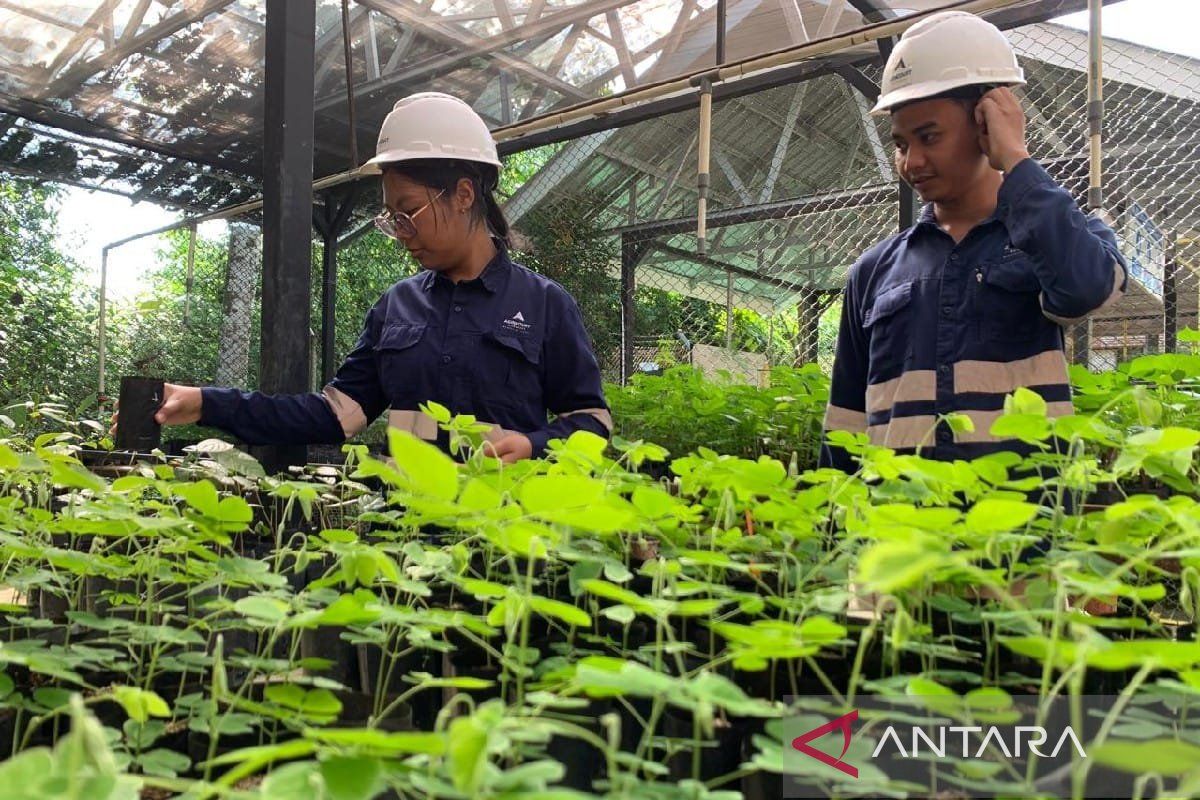
PT Agincourt Resources (PTAR) is developing research on mycorrhizal bioagents as an effort to improve the success of land reclamation and restoration in the operational area of the Martabe Gold Mine, South Tapanuli Regency, North Sumatra.
Agincourt Resources’ Biodiversity & Environmental Strategic Development Manager, Syaiful Anwar, in Batang Toru on Friday, said mycorrhiza is being developed to help plants absorb nutrients and improve their ability to grow, especially on soil media with limited nutrition.
“The use of these bioagents is considered important given the land characteristics and environmental conditions around the mining area,” he said.
He said the research team sourced mycorrhiza from soil and plant roots in the natural forest of the Batang Toru area, then carried out isolation and spore enrichment.
From this process, spore density, which was initially less than 100 spores per 100 grams of soil, could be increased to around 400–1,000 spores or more per 100 grams through the enrichment process.
“The team then conducted response tests by comparing plants given mycorrhizal inoculum and plants without mycorrhiza,” he said.
Testing was then carried out to observe plant growth while ensuring mycorrhizal colonisation on the roots. Cultures showing good growth response and colonisation were subsequently declared suitable for propagation.
According to him, the mycorrhiza development is directed at supporting the nursery of local plants used in reclamation and restoration.
PTAR has currently developed around 76 types of local plants to support ecosystem recovery, including species that serve as food sources for wildlife in the forest area.
“This programme is not only aimed at making ex-mining land green again, but also at forming an ecosystem that has species diversity and is able to support flora and fauna habitats,” he said.
In addition to reclamation, he continued, mycorrhiza development is also being prepared to support the restoration of preservation areas as well as environmental remediation research.
The research team is currently studying the potential of certain mycorrhizal types in helping plants cope with metal-contaminated soil conditions and environments with certain acidity levels.
He said the development of these bioagents is still in the research and development stage, including identification of mycorrhizal species through morphological observation and planned molecular or DNA analysis.
“The research results are expected to produce the right formula to support plant growth while reducing dependence on fertiliser use in land recovery,” he said.