
Aggression, Oil, and Money: Reading Iran in the Shadow of Global Empire
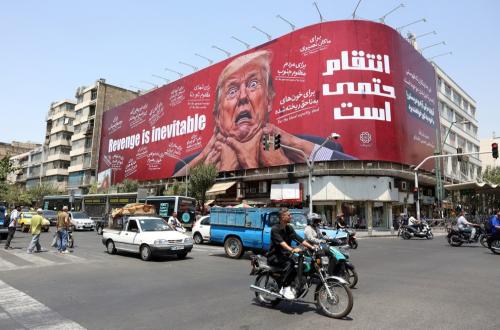
There are times when a war does not truly begin on the battlefield, but much earlier—in meeting rooms, behind economic charts, and within the design of the global monetary system. The sound of bombs is merely the final echo of silent decisions that have long been orchestrated.
The conflict between the United as States, Israel, and Iran is one of the clearest examples of this reality. This is not merely a matter of regional security. When viewed through the lens of economist Michael Hudson, this conflict changes face: from a military war to a systemic war for control over the world economy. Here, we must pause and ask objectively: is this truly about bombs, or about who controls oil prices and the value of money?
To understand Iran today, we must go back to 1979—the year that changed the course of Middle Eastern history. Before that, Iran was not an enemy of the United States; rather, it was a key ally. Alongside Saudi Arabia, Iran was part of America’s ‘two-pillar’ strategy in West Asia. Under the Shah’s rule, Iran was a bastion of Western interests—politically, militarily, and economically.
However, everything changed when the Iranian Revolution erupted. The revolution was not merely a change of regime; it was a rejection of external dominance. It was a declaration that a nation wished to stand on its own feet—managing its own resources and determining its own political direction. In the logic of empire, this was not just disobedience; it was the loss of a strategic asset. Since then, the relationship has shifted from partnership to hostility, and Iran has become a target.
New Empire: Not Territory, But the Financial System
According to Michael Hudson, we live in a form of imperialism different from the past. While empires once controlled territory physically, today they rule through the global financial system. The key is the dollar. The dollar is not just a currency; it is a global transaction tool, a world foreign exchange reserve, and the standard for energy trade.
This system is reinforced by what is known as the petrodollar—the agreement that the world’s oil is traded in dollars. This means all countries need dollars to purchase energy; all countries, indirectly, depend on the American system. This is what Hudson calls ‘super imperialism’—an empire that does not need to colonise directly because the world voluntarily sustains it.
In this context, Iran is not merely an American ‘problem nation.’ It is an anomaly in the system. Why? Because Iran is attempting to sell oil outside the dollar, forging ties with China and Russia, and supporting a multipolar system. In other words, Iran is disrupting two things simultaneously: the global energy system and the global monetary system. In a world built upon the dollar system, such disruptions cannot be ignored by the United States.
Before direct invasion, the primary tool used is economic sanctions. These sanctions are not merely diplomatic pressure; they represent the severance of access to the global financial system, trade restrictions, and economic isolation. From Hudson’s perspective, the primary goal is not just to weaken Iran, but to send a message to the world: do not exit the dollar system. In essence, Iran is being made an example.
Israel: Ally or Pillar of the System?
In many analyses, Israel is positioned as America’s primary ally in the region. However, within Hudson’s framework, this relationship is more structural. Israel is not just an ally; it serves as a military base, a point of power projection, and part of the regional control architecture. In the conflict with Iran, the interests of Israel and America converge: Israel views Iran as a security threat, while America views Iran as a systemic threat. These two perspectives reinforce each other, creating a complex and layered conflict dynamic.
If the world were a body, the Strait of Hormuz would be one of its main arteries. Approximately 20% of global oil passes through this narrow passage. When Iran threatens or controls access to this strait, the impact is not just regional, but global. Oil prices rise, transportation costs increase, and food prices are driven up. Inflation spreads worldwide. This is where local conflicts transform into global crises, revealing that whoever controls energy routes ultimately holds influence over the world economy.
One of the most interesting developments is Iran’s effort (alongside China) to reduce dollar dominance. If oil begins to be traded in yuan or other currencies, the demand for the dollar will decrease, weakening American financial dominance. This is what Hudson refers to as the beginning of a ‘multipolar oil market.’ However, we must be objective; this process is ongoing, and the dollar remains dominant as long as the old system has not collapsed. We are in a phase of transition, not a completed revolution, as both the Yuan and the dollar are both fiat money.
Statements by former NATO General Wesley Clark regarding plans to overthrow several countries post-9/11 are often cited as evidence of a grand imperial design. Indeed, some countries on that list have experienced intervention: Iraq, Libya, Syria. However, reality on the ground does not always follow the plan. Some interventions have instead resulted in chaos, instability, and prolonged conflict. This shows that even great powers are not entirely able to control the outcome. Empires are not always orderly; sometimes, they are chaotic.
Endless War: Controlled Stability
One thing that often escapes attention is that the primary goal is not always total victory. Often, what is desired is controlled tension, unresolved conflict, and continued dependency. Why? Because in such conditions, nations still require protection, markets remain dependent on the old system, and dominance is maintained. This is a form of stability.