
Aftershocks in NTT Reach 1,624 Times, BMKG Records 23 Quakes Above M5
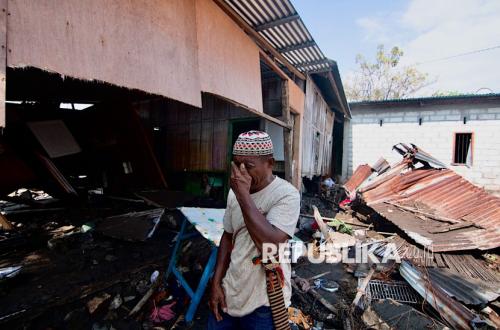
Seismic activity is still ongoing in East Nusa Tenggara (NTT) after the M7.7 Flores earthquake on 15 August 2026. The Meteorology, Climatology, and Geophysics Agency (BMKG) recorded 1,624 aftershocks until Monday (17/8/2026) at 11.00 WIB, with magnitudes ranging from M1.3 to M6.2. Of this number, 23 aftershocks were recorded with a magnitude greater than M5. BMKG is still monitoring aftershock activity while evaluating the impact of the earthquake and tsunami in the affected areas.
Director of Earthquakes and Tsunamis at BMKG, Wijayanto, explained that the main earthquake occurred in the Flores region on 15 August 2026 at 04.58 WIB with updated parameters of M7.7. The shallow earthquake was triggered by tectonic activity in the Flores Back-Arc with an upward movement mechanism and triggered a tsunami in several areas.
BMKG issued Early Warning 1 at 2 minutes 16 seconds after the earthquake with threat status of SIAGA (0.5 - 3 metres) and Waspada. The tsunami early warning covered several areas, including northern Manggarai, northern Ngada, Ende, East Flores, and Jeneponto with Siaga status. Meanwhile, East Flores, Bima, Dompu, and Wajo were placed under Waspada status. The tsunami early warning was later declared over at 07.30 WIB, or 2 hours 31 minutes 37 seconds after the earthquake.
Observations from tidal stations showed that a tsunami was detected at 16 locations spread across four provinces, namely NTT, West Nusa Tenggara (NTB), South Sulawesi, and Southeast Sulawesi. The highest tsunami height was recorded in Pota, East Manggarai, NTT, at 05.03 WIB at 1.605 metres, while the lowest was recorded in Bakalang, Alor, NTT, at 05.41 WIB at 0.14 metres.
Based on temporary monitoring and field information, the M7.7 Flores earthquake caused 53 deaths and 137 injuries. Damage was also reported in several areas, especially West Manggarai, Manggarai, East Manggarai, up to Sikka and Maumere, with varying degrees of damage from light to severe.
BMKG has deployed a joint team from headquarters and technical implementation units to conduct a damaging earthquake survey, including macroseismic surveys, microtremor and MASW measurements to determine the characteristics and response of soil to shaking, aftershock monitoring, and verification of tsunami impacts in the field. The survey is being carried out to support post-disaster recovery and reconstruction. The results will also be used for post-earthquake microzonation mapping, evaluation of affected area conditions, and the preparation of mitigation and reconstruction recommendations.
BMKG is prioritising surveys in areas that experienced moderate to severe damage and comparing them with locations that were relatively undamaged. This step is being taken to determine the characteristics of the area and the response of the soil to earthquake shaking. In addition to technical monitoring, BMKG is conducting socialisation and education for affected communities to provide information about post-earthquake conditions. The public is also reminded to remain alert to aftershock activity.
Wijayanto urged the public to avoid buildings that are cracked or damaged due to the earthquake and to be aware of aftershocks that are still occurring.
Source: jawawa.id (https://jawawa.id/newsitem/aftershocks-in-ntt-reach-1-624-times-bmkg-records-23-quakes-above-m5-1787760004)
Originally published by Republika (https://news.republika.co.id/berita/tjwlbq416/gempa-susulan-di-ntt-capai-1624-kali-bmkg-catat-23-gempa-di-atas-m5), translated from Indonesian