
After Writing to Prabowo, Chinese Businesspeople Lodge Complaints with Purbaya and Bahlil
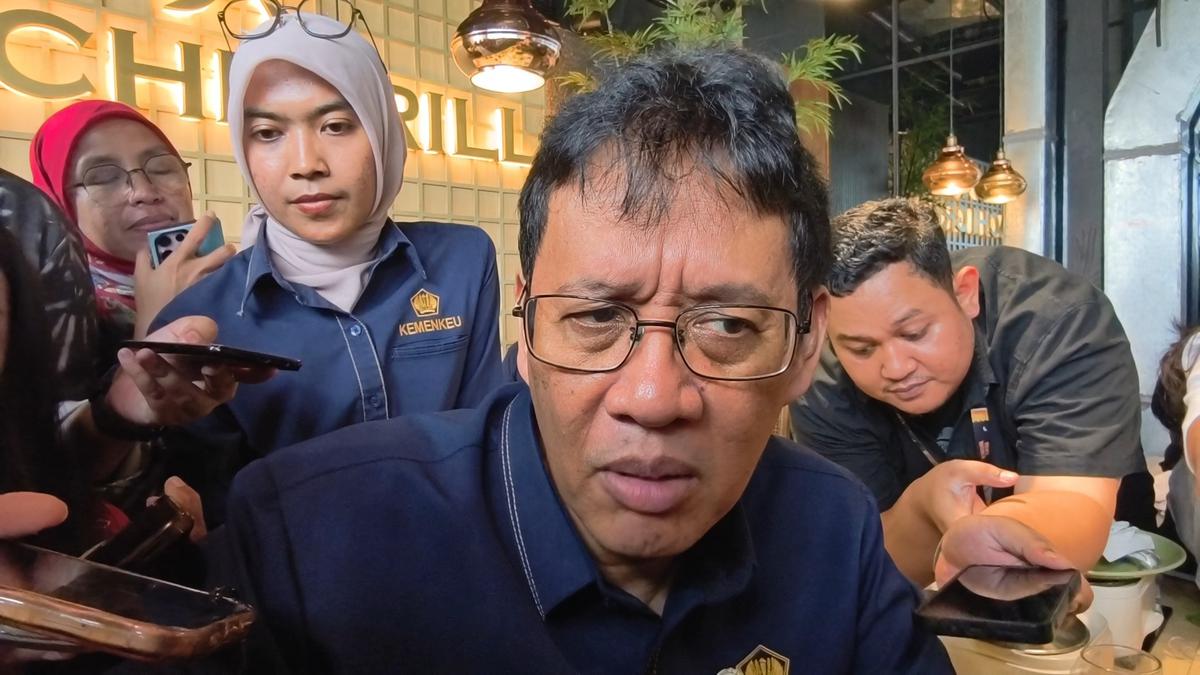
Liputan6.com, Jakarta - The government has listened to complaints from a number of Chinese businessmen about obstacles facing the business environment in Indonesia. Finance Minister Purbaya Yudhi Sadewa, together with Energy and Mineral Resources Minister Bahlil Lahadalia, attended as government representatives.
Following the meeting held at the Office of the Ministry of Energy and Mineral Resources on Tuesday 19 May 2026, Purbaya described a brief discussion with the Chinese businessmen.
‘This is with the Chinese businessmen, identifying the problems they face, their complaints. Alright, we listen, if we can solve them, we’ll solve them,’ Purbaya said.
Purbaya noted that some complaints had also been conveyed through the China Chambers of Commerce in Indonesia (CCCI) or the China Chamber of Commerce. ‘There are many; the China Chamber is sending letters to the President,’ he said.
Also present at the same venue, Bahlil said the meeting was attended by the Minister for Investment and Downstreaming and Head of the Investment Coordinating Board (BKPM) Rosan Roeslani, along with several investors from the People’s Republic of China.
‘We conducted a coordination meeting on all the issues they face. We want companies to survive, and the state also needs to secure revenue. So today we spoke to around 30 companies,’ Bahlil said.
Bahlil said that the majority of the Chinese businesspeople present came from the mining sector. ‘The sector is mainly in mining,’ he said.
China Chamber of Commerce Lays Letter to Prabowo
Earlier, the China Chambers of Commerce in Indonesia (CCCI) or China Chamber of Commerce had sent a letter to President Prabowo Subianto regarding the investment and operating climate in Indonesia.
In the letter, the Chinese investors in Indonesia voiced concerns ranging from regulatory tightening, foreign exchange regulations on export earnings (DHE), to a reduction in nickel ore quotas.
According to a copy of the letter circulating, the investors still view the investment outlook in Indonesia as positive. However, they say they face challenges that hamper business operations.
Six main issues were highlighted: first, increases in various taxes and levies, including mineral resource royalties and penalties and taxes deemed too high; second, obligations to place export earnings (DHE) of natural resources in the national banking system, potentially affecting liquidity; third, a reduction in nickel ore quotas by up to 70%, around 30 million tonnes, impacting downstream industries such as electric vehicles and stainless steel; fourth, overly tight enforcement of forest laws, with the Special Task Force for Forest Management in Indonesia imposing a record USD 180 million fine on a Chinese investment company for lack of valid forest use area approval; fifth, the halting of large projects due to floods, including hydroelectric projects built by Chinese firms; sixth, work visa rules viewed as increasingly strict with high costs and stringent requirements, hindering mobility of Chinese technical personnel to Indonesia.
Additionally, the China Chamber of Commerce criticised plans for new export duties, reductions in tax incentives in special economic zones (KEKs), and the removal of some electric vehicle incentives. Investors also pointed to the rise in the Nickel Reference Price (HPM) and a pricing formula that now includes cobalt, iron and other by‑products. The policy is seen as pushing nickel ore production costs up by as much as 200%.
‘As investors and the largest operators in Indonesia’s nickel industry, Chinese investment companies are now facing sharp increases in production costs, expanding operating losses, and imbalances across the entire supply chain,’ the letter read.