
After weeks of silence, President Xi speaks out on the Middle East conflict: Why now?
analysis East Asia
After weeks of silence, President Xi has spoken up on the Middle East conflict. Why now?
From unveiling a peace proposal to calling for the Strait of Hormuz to stay open, Xi’s direct remarks on the Middle East conflict signal Beijing’s recalculation as the crisis drags on, analysts say.
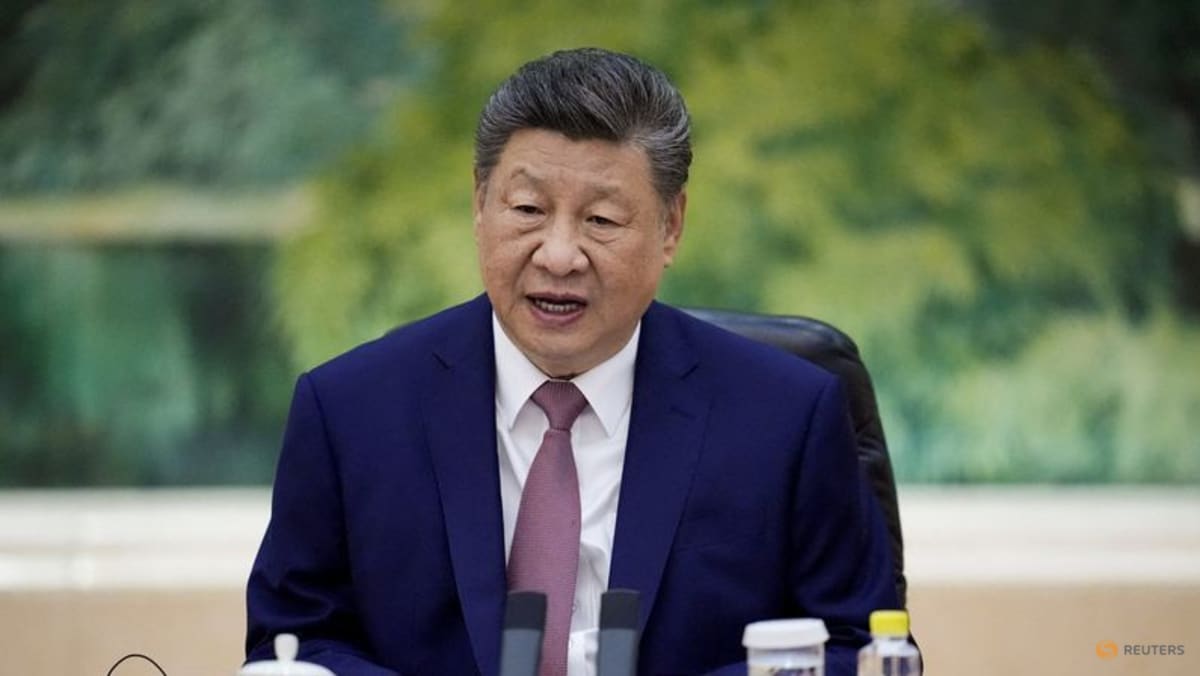
BEIJING: From public silence to speaking out twice within a week, Chinese President Xi Jinping’s more direct messaging on the Iran war reflects mounting pressure from energy risks as the conflict drags on, and a push by Beijing to project greater diplomatic influence, say analysts.
While Chinese officials have previously spoken out, Xi’s remarks on Apr 14 - and again on Monday (Apr 20) - were his first on the war that’s now in its eighth week. Experts say this signals Beijing’s recalculation on a conflict it initially expected to end more quickly.
“I think China was content to let things unfold but as the situation changed, China now feels it needs to play a more proactive and prominent role,” Dylan Loh, an associate professor at Nanyang Technological University’s (NTU) School of Social Sciences, told CNA.
Experts said that speaking out more forcefully allows China to signal its stake in de-escalation and strengthen its broader negotiating leverage as a summit between Xi and United States counterpart Donald Trump inches closer.
Yet the risk is that Beijing’s rhetoric begins to outpace its ability or willingness to influence events on the ground, they added.
“Generically calling for the Strait to open and expressing support for good neighbourliness in the Gulf is meaningless unless Beijing takes action to curtail Iran’s aggression and threats to the security of its neighbours,” Drew Thompson, a senior fellow at the S Rajaratnam School of International Studies (RSIS), told CNA.
BREAKING THE SILENCE
Xi made his first public remarks on the Middle East conflict on Apr 14.
During a meeting with Abu Dhabi’s Crown Prince Sheikh Khaled bin Mohamed bin Zayed Al Nahyan, he put forward a four-point proposal on promoting Middle East peace - centred on peaceful coexistence, respect for sovereignty, upholding international law, and regional coordination in development and security.
The Chinese supremo weighed in again on the conflict on Apr 20, during a phone call with Saudi Arabia’s Crown Prince Mohammed bin Salman.
“The Strait of Hormuz should remain open to normal passage, as this serves the common interests of regional countries and the international community,” Xi told the Saudi leader.
China advocates an immediate and comprehensive ceasefire, and insists on resolving conflicts in the Middle East through political and diplomatic channels, state news agency Xinhua cited Xi as saying.
A key factor driving China’s more visible diplomacy is its growing exposure to the conflict, said Pan Guangyi, a lecturer in international political studies at the University of New South Wales (UNSW) Canberra.
Around half of China’s crude oil imports and roughly 30 per cent of its liquefied natural gas imports transit the Strait of Hormuz, according to data by Columbia University’s Center on Global Energy Policy.
The strategic waterway that usually carries a fifth of the world’s oil and liquefied natural gas has been effectively throttled since the war began, even as a fragile ceasefire - now extended indefinitely by Trump - holds.
“Recent incidents involving Chinese vessels have raised the stakes considerably,” Pan told CNA.
While some Chinese ships have transited the strait, others have not been successful amid a volatile back-and-forth, with Iran imposing restrictions and at times closing the waterway, while a US naval blockade of Iranian ports further complicates passage.
Iran’s consulate general in Mumbai said on Apr 19 that Tehran had blocked a Chinese bulk carrier, the SUN PROFIT, from transiting the Strait of Hormuz.
On Apr 15, the Rich Starry, a Chinese-owned tanker sanctioned by the US for dealing with Iran, turned back to the strait after exiting the Gulf a day before.
While China has been aggressively building its strategic reserves, including those of oil and gas, some traders have warned that a prolonged supply disruption could force Chinese refiners to curb output and run down commercial stockpiles.
“There is a reassessment that (the conflict) will take longer and the tail-end risks for China will also increase,” said NTU’s Loh.
China will also be concerned about the knock-on effects on supply chains for its companies at home and also for its significant commercial and energy interests in the wider Gulf region, he added.
Trade between China and the Gulf states rose by 14.2 per cent year-on-year to US$257 billion in 2024, edging ahead of Gulf-West trade (US$256 billion, down by around 4 per cent) for the first time, according to a November 2025 report by London-based think tank Asia House.
But even as China faces real energy supply concerns, its domestic political stability and relatively favourable diplomatic positioning afford it more patience than the US, Pan from UNSW Canberra said.
“Beijing can afford to manage this crisis on a longer timeline, which is itself a strategic asset,” he said.
OPPORTUNITIES AND RISKS
Another reason driving Xi’s more direct public messaging is the expected summit with Trump, where demonstrating influence in the Middle East could strengthen Beijing’s broader negotiating position, analysts said.
CNA previously reported on how China has recently stepped up diplomatic engagement, with analysts framing it as a calculated bid to build leverage and limit risks ahead of the anticipated summit that’s set for mid-May.
“Xi’s remarks are best understood as part of a broader shuttle diplomacy agenda to stabilise the region ahead of Trump’s expected visit to China,” said Pan, adding that Beijing could use this as a point of leverage in broader negotiations with the US on trade and technology.
Pan noted how Xi relayed his messages on the Iran war to leaders in the United Arab Emirates