
After Weathering Five Crises, Lo Kheng Hong’s Portfolio Once Slumped 85%
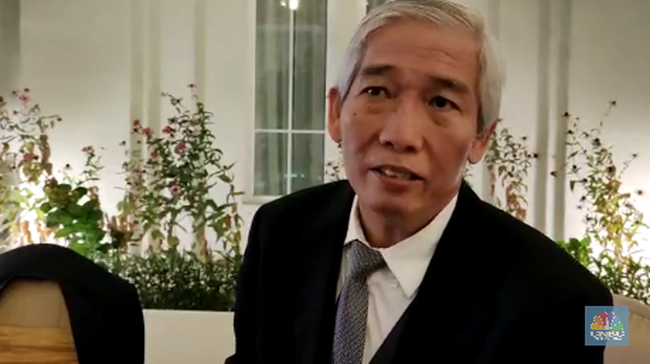
Jakarta, CNBC Indonesia — Veteran investor Lo Kheng Hong has said that his 37-year journey investing in Indonesia’s capital market has not always been smooth. He has experienced portfolio value declines of 50% to 85% as a result of various economic crises that hit Indonesia.
Lo Kheng Hong said he had weathered at least five major crises since he began investing in 1991, through to 2026. He said two main factors had enabled him to withstand market turmoil: divine assistance and investing without debt.
“I was able to get through those five crises from 1991 to 2026, first because God has always helped me,” he said at the CMSE event at the Indonesia Stock Exchange in Jakarta on Thursday, 5 November 2026.
He added that he had always bought shares with his own money, without borrowing. As a result, he had no debt repayments to meet when share prices plunged during economic crises.
He recalled facing his first crisis in 1991, when the government introduced a tight-money policy.
The policy, implemented by then Finance Minister J.B. Sumarlin, was intended to curb inflation, which had risen to 8%. It involved withdrawing funds held by state-owned enterprises (SOEs) from commercial banks and transferring them to Bank Indonesia.
The move sharply tightened liquidity in the banking system and also put pressure on share prices. Lo Kheng Hong said his portfolio value fell by as much as 50% at the time.
Conditions began to improve in 1992–1993 as inflation fell and the tight-money policy was gradually eased. Shares that had previously lost value subsequently turned profitable for him.
The second crisis came in 1998, when Indonesia was hit by a severe monetary crisis. The rupiah fell from about Rp2,400 to Rp14,850 per US dollar, while interest rates surged to 70%.
Many companies with foreign-currency or bank debt struggled to meet their obligations and went bankrupt. Several banks also faced capital problems and were closed by the Indonesian Bank Restructuring Agency (BPPN).
“I looked at my portfolio and thought, ‘Oh dear, it was down 85%. I had stopped working, my wife was a housewife, we had two children, and only 15% of the money was left,’” he said.
Even so, he found investment opportunities amid the share-price collapse. He likened the experience to finding diamonds being sold at the price of gravel, as shares in many sound companies were trading very cheaply.
The third crisis occurred in 2008, following the subprime mortgage crisis in the United States. The turmoil also weighed on Indonesia’s stock market, but Lo Kheng Hong said its effects did not last long because Indonesia’s economy was in relatively better health after the 1998 monetary crisis.
He also cited legendary investor Warren Buffett, who took advantage of the 2008 crisis to buy shares in Bank of America. Buffett held the investment for the long term, eventually making substantial gains.
The fourth crisis came in 2020, when the Covid-19 pandemic swept the world and dragged down share prices on markets around the globe. Lo Kheng Hong said he had substantial cash reserves, allowing him to buy shares when prices were low.
He applied a similar strategy when the stock market came under pressure again in 2026. With sufficient cash available, he was able to take advantage of falling share prices to increase his holdings in a number of listed companies at lower prices.
Lo Kheng Hong said he was grateful to have weathered five periods of crisis during his 37 years investing in Indonesia’s capital market. The experience strengthened his belief that avoiding debt and holding cash to seize opportunities are crucial when navigating stock-market volatility.
Source: jawawa.id (https://jawawa.id/newsitem/after-weathering-five-crises-lo-kheng-hongs-portfolio-once-slumped-85-1793947862)
Originally published by CNBC Indonesia (https://www.cnbcindonesia.com/market/20261106131753-17-782977/lewati-5-kali-krisis-portofolio-lo-kheng-hong-pernah-amblas-85), translated from Indonesian