
After Venezuela and Iran, Is Cuba Next? Trump Says 'Maybe'
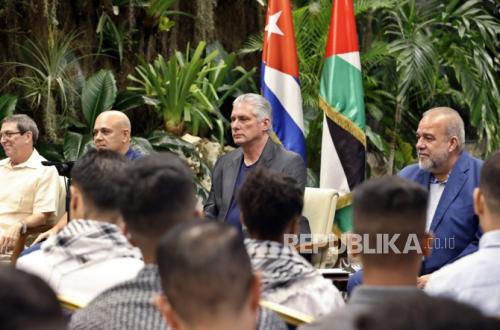
When asked whether the United States could conduct a military operation against Cuba, President Donald Trump did not offer a firm denial. Instead, he gave an answer that turned heads towards the Caribbean Sea. “Maybe, maybe so,” Trump said in an interview with Axios on Friday (19/6). The sentence was brief, but its reverberations travelled far beyond Washington. Because the country in question is no ordinary nation. Cuba is an island just 150 kilometres from the Florida coast and has been a symbol of resistance to American pressure for more than six decades. Why did Trump suddenly open the possibility of military action against Havana? The question arises because relations between the two countries have never been truly normal. But this time the context is different. Trump’s statement came just months after his administration intensified economic pressure on Cuba and expanded measures that narrow the communist country’s room for manoeuvre. Yet that does not explain everything. Trump also revealed that Secretary of State Marco Rubio would be “very” involved in the Cuba issue. At the same time, he claimed that Cuba “very much” wants to engage in dialogue with the United States. This is where the story begins to shift. If Cuba genuinely wants to talk to Washington, why does the threat of military action emerge? And if the threat is merely a tool of diplomatic pressure, what exactly is America seeking? The first clue lies in a policy taken by Washington at the start of this year. In late January, the US government imposed tariffs on countries that supply oil to Cuba. The move was accompanied by a declaration of a state of emergency on the grounds that Cuba poses a threat to US national security. On paper, the policy appeared to be ordinary economic pressure. But its impact was felt directly on the streets of Cuba. Fuel supplies became scarcer. Rolling blackouts grew more frequent. Buses struggled to operate. Food production was disrupted. Hospitals and schools were also affected. Cuba accuses Washington of doing something far larger than simply imposing sanctions. The government in Havana charges that the United States is using the energy embargo to “strangle” the island’s economy and worsen the daily lives of its people. But economic pressure is not the only battleground. In mid-May, the US Department of Justice indicted former Cuban President Raul Castro along with five Cuban military personnel in connection with the 1996 shooting down of two planes affiliated with the Miami-based Cuban exile group Brothers to the Rescue. The case has reopened old wounds that have never fully healed. For Washington, the incident is a legal matter that must be accounted for. But for Havana, the indictment is seen as a political provocation deliberately revived to add pressure on the Cuban government.