
After Two Failures, Andy Burnham Now a Candidate for UK Prime Minister: Who Is He?
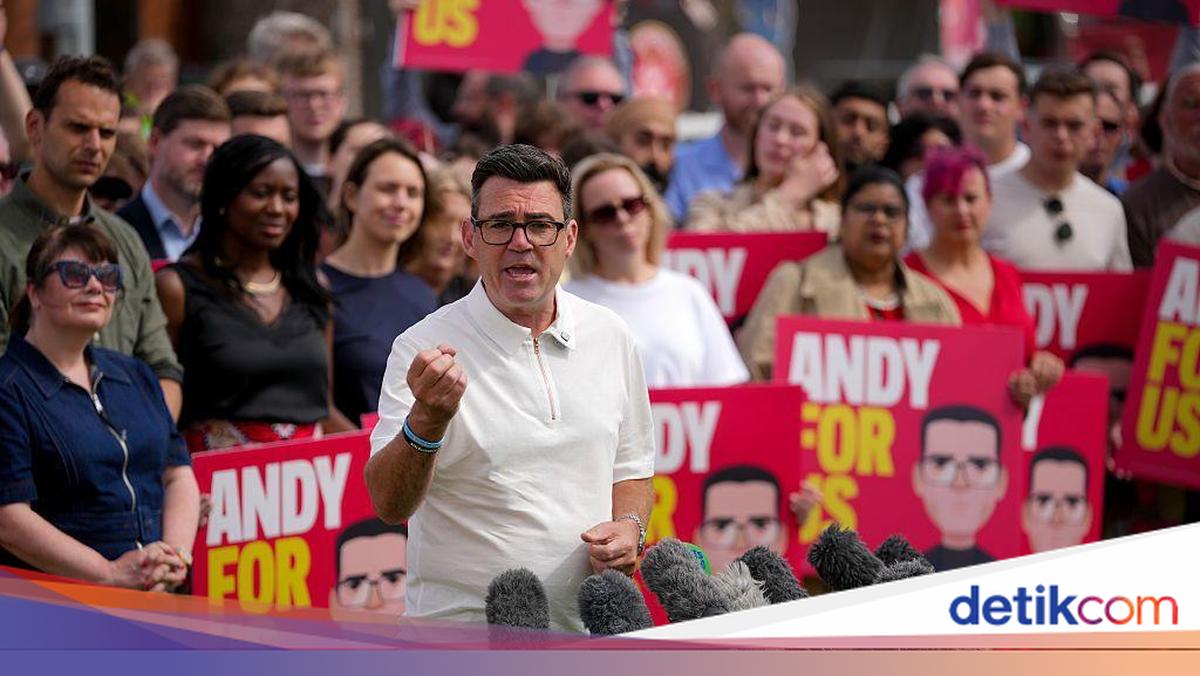
Andy Burnham has previously tried to become leader of the Labour Party, standing twice and failing twice. However, a third attempt is likely to succeed after Sir Keir Starmer resigned as Labour leader and UK prime minister. Many Labour MPs in parliament support Burnham, including Wes Streeting, the former health secretary in Sir Keir’s government. Burnham has confirmed that he intends to run for UK prime minister and Labour Party leader. The first major hurdle on Burnham’s path to Downing Street was overcome when he won a by-election in the Makerfield constituency, defeating Reform UK, which came second but trailed by more than 9,000 votes. The former Mayor of Greater Manchester increased Labour’s vote share from 45% in the general election to nearly 55%. He will be sworn into parliament on Monday afternoon. So how did he become the leading candidate for the premiership? An Everton fan and indie music lover, Burnham was born in Liverpool in 1970 and raised in Culcheth, a quiet village in Cheshire near Warrington. His father, a telecommunications engineer, and his mother, a GP receptionist, were staunch Labour supporters, sparking his early interest in politics. Burnham has said he was inspired to join the Labour Party at the age of 14 after being moved by the BBC television drama ‘Boys from the Blackstuff’, about unemployment in Liverpool. An Everton FC fan, friends remember him as a competitive child who loved sports. At his local Catholic secondary school, his English teacher recalled how he stood as the Labour candidate in a mock election and won by a landslide. Burnham and his two brothers were the first in their family to attend university. He studied English at Cambridge University. In his book ‘Head North’, Burnham wrote that he ‘struggled to feel a sense of belonging’ at university and felt like someone who constantly doubted his own abilities, intelligence, or achievements. However, the fan of indie bands like The Smiths and The Stone Roses said that ‘a growing interest in Manchester music gave me an identity and an edge’. After graduating, he began a career in journalism, working for trade magazines including Tank World and Passenger World Management. In his early twenties, he got his first break in politics working as a researcher for the late Tessa Jowell, an MP who later served as a minister under Tony Blair and Gordon Brown. Despite expressing a dislike for Westminster politics, Burnham rose quickly, becoming a special adviser to Culture Secretary Chris Smith before being elected as MP for his hometown of Leigh in Greater Manchester in 2001. As Culture, Media and Sport Secretary, Burnham faced heckling at a 20th anniversary memorial for the Hillsborough disaster, in which 97 Liverpool fans died at the stadium in 1989. The incident prompted him to raise the issue in cabinet, contributing to the launch of a second inquest into the disaster. After Gordon Brown resigned following Labour’s general election defeat in 2010, Burnham ran for party leader. He placed fourth out of five candidates, losing to Ed Miliband, but spent the next five years building grassroots support. He tried again in 2015 but lost to Jeremy Corbyn. Critics have labelled Burnham a weathervane, whose views shift with the political winds to boost his chances of success. A Remain supporter in the Brexit referendum, he has stated a desire to see the UK rejoin the European Union in his lifetime. However, despite recently reaffirming his belief that there is a long-term case for rejoining the EU, he said he would not push for it during the Makerfield by-election, which took place in a Leave-voting area. Burnham served in Corbyn’s shadow cabinet as shadow home secretary, though he was seen as belonging to the centre-right, Blairite wing of the party. His views have since moved leftwards, with him supporting the nationalisation of water and energy. Burnham was not among those who resigned in protest against Corbyn’s leadership in 2016. Instead, he stepped down in 2017 to run for the newly created position of Mayor of Greater Manchester. He won the contest with over 60% of the vote and was re-elected with an even larger margin in 2021. As mayor, he earned praise for transforming the region’s transport system. Under his leadership, Greater Manchester became the first area outside London to bring bus services back under public control, integrating them with other transport modes under the ‘Bee Network’ brand. Other bold policies included a pledge to end rough sleeping in the region by 2020, though the target was not met. His profile rose significantly during the Covid pandemic.