
After the Internship, the Job Hunt Begins
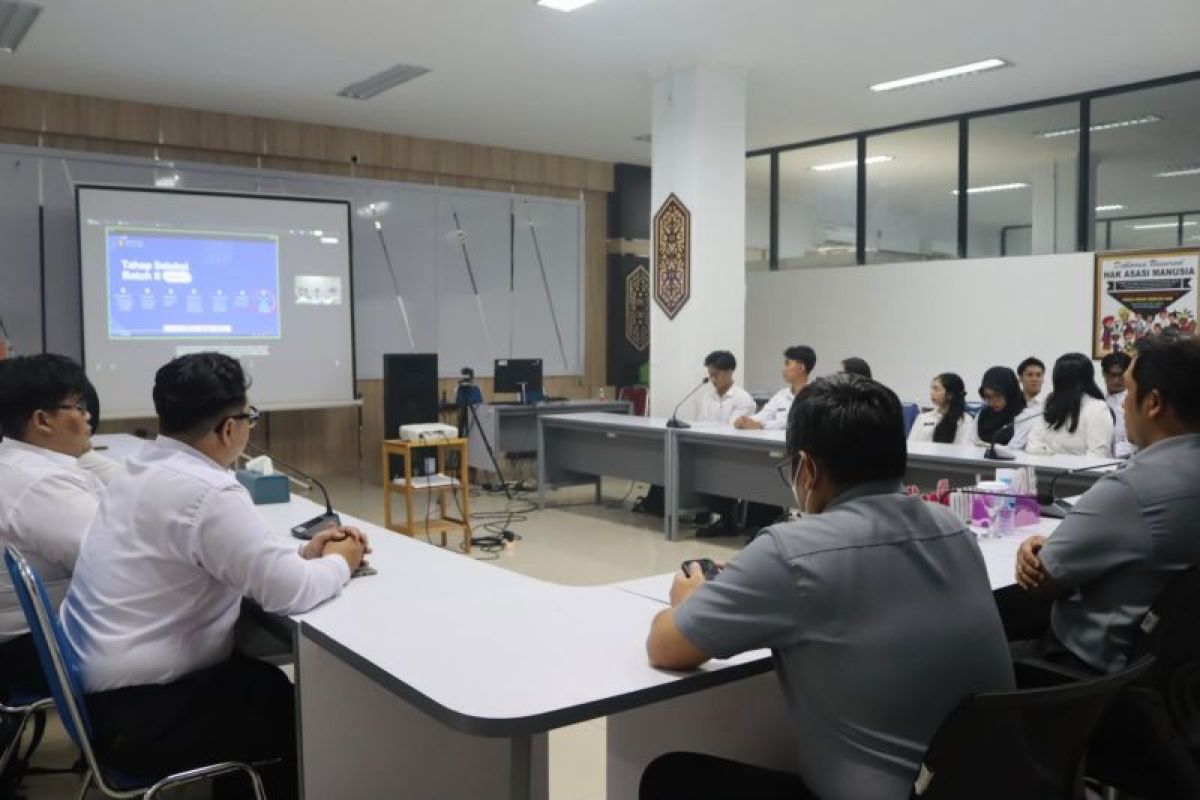
Jakarta (ANTARA) – The labour market and competition facing new graduates are undeniably intense. Finding and securing their first formal job is becoming increasingly difficult and exhausting for new entrants to the workforce.
The Higher Education Database (PDDikti) recorded that universities graduate around 1.26 million people each year.
The figures point to an anomaly that warrants attention. Despite the high annual number of university graduates, Statistics Indonesia (BPS) recorded 1.3 million unemployed university graduates as of May 2026, or around 14.3 per cent of total open unemployment.
This indicates that the number of new graduates each year is not matched by the availability of formal jobs.
Alongside this gap, increasingly demanding recruitment requirements are also a challenge for new graduates. Employers are seeking higher qualifications for roles that previously did not require them.
One requirement that appears increasingly common is that new graduates must have work experience, particularly in the field they are interested in or seeking to enter.
This shift requires young people to gain a taste of working life before they graduate. It also calls on the government, academia and industry to work together to open up access to such experience and expand opportunities for the first formal jobs of millions of new graduates.
Internships are therefore becoming an increasingly important part of university programmes as industries evolve. These include community service programmes (KKN) and fieldwork placements (PKL), which are generally compulsory for final-year students, last one to three months and form part of graduation requirements.
These efforts continue to evolve, including through the National Internship Programme (MagangHub), which has been running since October last year.
A stepping stone
Since its launch a year ago, the National Internship Programme has attracted considerable interest among Indonesian university graduates.
The Ministry of Manpower (Kemnaker) said that 102,696 participants were selected for and took part in the first intake, held in 2025. This exceeded the government’s initial target of 100,000 participants.
The ministry said the programme’s second year, which aims to enrol 150,000 participants, is intended to provide a stepping stone for new graduates facing job vacancies that require experience when they have not yet had the opportunity to gain it.
The programme gives graduates six months of practical work experience, mentoring, exposure to workplace culture, opportunities to develop technical and soft skills, and the chance to build portfolios and professional networks.
This experience is expected to make participants not only better prepared to find work, but also more able to remain in a role, adapt and develop in the workplace.
Kemnaker reported that around 30 per cent of participants in the previous intake received job offers after completing the programme.
A further 34 per cent had not received formal offers but had indications or prospects of being offered a job, while around 36 per cent had not received an offer.
Among those who received offers, the largest hiring sectors were finance, at 23.4 per cent; wholesale trade, at 17.9 per cent; manufacturing, at 16.5 per cent; and healthcare, at 10.3 per cent.
Towards formal employment
Despite the programme’s overall positive results, it is important to recognise that internships are temporary by nature.
An internship is a learning opportunity for young workers, with workloads and compensation that differ from those of formal employees.
A glance at job portals shows that companies increasingly advertise internships—outside MagangHub—instead of permanent positions.
It is therefore important for the government and businesses to set clear boundaries, covering the criteria that distinguish an internship from an ordinary employment relationship, the training workload and duration, and participants’ rights.
Internships must not become a loophole for unscrupulous companies to replace permanent jobs with cheap labour under the guise of training.
The government recognises this concern. Kemnaker has stressed that protections and certainty for internships are now clearly regulated under the Employment Protection Law.
“Internships are not intended to replace workers with cheap labour,” Manpower Minister Yassierli said.
Beyond clear rules and protections for internships, the next task is to create more jobs so that young workers can access formal employment more easily and avoid unemployment during their working years.
The Employment Protection Law also provides safeguards for jobseekers. They will have access to more open labour market information, while stronger requirements to report vacancies are intended to prevent labour-broking, fraud and fictitious job advertisements.
Indonesia aims to achieve Golden Indonesia 2045 by harnessing its substantial demographic dividend. To reach that goal, the country should ensure that young people are not afraid to dream big and are equipped through stronger skills and access to career opportunities.
Quality internship programmes—whether through the National Internship Programme or other schemes—alongside more inclusive access to employment can equip young people with practical skills and the confidence to enter professional life. They can also help pave the way for a skilled, competitive workforce.
Co-operation between the government, educational institutions and industry must continue to be strengthened to ensure that every young person has an equal opportunity to develop, become independent and ultimately contribute to the national economy.