
After the Congress, It is Time to Become 'Us' Again
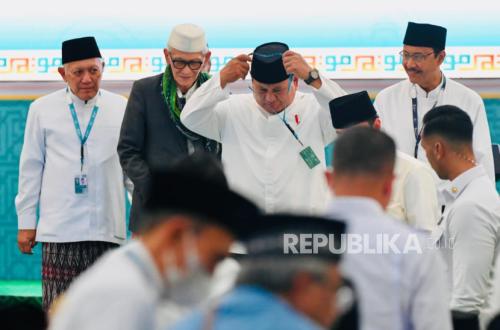
The 35th Nahdlatul Ulama (NU) Congress concluded on 31 August 2026. Decisions have been finalised, with KH Abdul Hakim Mahfudz, also known as Gus Kikin, appointed as the General Chairman of PBNU for the 2026–2031 term, while KH Miftachul Akhyar has been reappointed as the Rais Aam of PBNU.
The contest between candidates has ended. However, the greater task has only just begun: ensuring that after the Congress, no one feels they have lost their home. Congresses always present choices; there are supporting groups and those who oppose, those with shared views and those with differing perspectives, all of which are inherently human.
The 35th Congress in Jombang was dynamic. The election mechanism for the General Chairman of PBNU underwent changes, granting decisive roles to the Ahlul Halli wal Aqta (AHWA) after an initial period of gathering aspirations from congress participants.
Differences in views regarding mechanisms or choices are part of the dynamics of a large organisation. Such differences should not be feared, as no organisation survives without them. What is more important is that differences in choice do not persist too long after the election, gradually turning into a distance between brothers.
From ‘Us’ and ‘Them’ to ‘Us’
In social psychology, formal decisions do not automatically resolve human feelings. An individual may accept a decision organisationally, but may still harbour disappointment in their heart. Some may feel unheard, while others may feel their hopes have not been accommodated.
This can be described as the emotional residue of a contest. If not managed wisely, such residue can create identity polarisation: ‘us’ versus ‘them’. Yet, once the Congress is over, ‘us’ and ‘them’ should return to being ‘us’.
No member should feel ‘more NU’ simply because the candidate they supported won. Conversely, no one should feel they have lost their place in the community because they chose differently. NU is too large to be narrowed down into winners and losers. The bonds of NU members were formed long before any Congress took place. The pesantren, the relationship between kiai and students, various religious gatherings, tahlilan, madrasas, mosques, and the tradition of silaturahim (social visiting) have grown far beyond this Congress. This is NU’s greatest strength. Furthermore, there are millions of members who may never attend a Congress but feel throughout their lives that NU is a part of them.
They are the true ‘big house’. Therefore, one of the vital tests for the new leadership is how to ensure everyone still feels that this house is large enough for anyone.
Victory Requires Humility
The humility of a winner is crucial in a contest such as this Congress. A mature winner does not need the defeat of others to assert their victory. A winner will never shame those who chose differently or create distance.
On the contrary, great leaders actually need people with differing views. Leadership always requires a mirror. A leader surrounded only by those who say ‘correct’ may slowly lose the opportunity to see their own flaws. Sometimes, criticism and difference arise from genuine care.
Similarly, maturity is required from those whose choices differed from the Congress decision. Not attaining a position does not mean losing the opportunity to serve. In NU traditions, service does not depend entirely on position. Many kiai spend their lives educating students without seeking positions. Many madrasa teachers, local officials, and members of Muslimat, Fatayat, Ansor, and IPNU-IPPNU work quietly in the shadows without public recognition. They teach a simple but profound lesson: positions may end, but service can last a lifetime.
Returning to the Tradition of Silaturahim
NU possesses a very strong cultural capital to nurture differences: tabayun (clarification), musyawarah (deliberation), tawadhu (humility), and respect for the ulama. Additionally, there is one simple but powerful tradition: silaturahim.
Sometimes, tension does not require long speeches. It only requires the willingness to come, sit together, drink coffee, listen to one another, and then call those who were opponents yesterday ‘brothers’ once again.
Has the face of NU not always been like this? If elite conflicts persist too long, the cost is not merely psychological. The organisation’s energy will be drained by internal scrutiny: who supports whom, who obtained which position, and which group someone belongs to.
Meanwhile, the community’s issues continue. Children need quality education, pesantren need independence and professionalism, MSMEs need support and guidance, and the next generation needs direction in facing rapid technological changes. They do not need stories about which side anyone is on. They need NU to be present.
Therefore, after the Congress, our question should change. It should no longer be: ‘Who is with whom?’ but rather: ‘What can we achieve together?’ Social psychology recognises ‘superordinate goals’—large objectives that can only be achieved if previously opposing groups are willing to cooperate. NU has that great objective: service to the community. When the shared goal is enlarged, the barriers between groups will feel smaller.
Nurturing the Heart
Reconciliation, therefore, is not enough…