
After Teachers Become Civil Servants
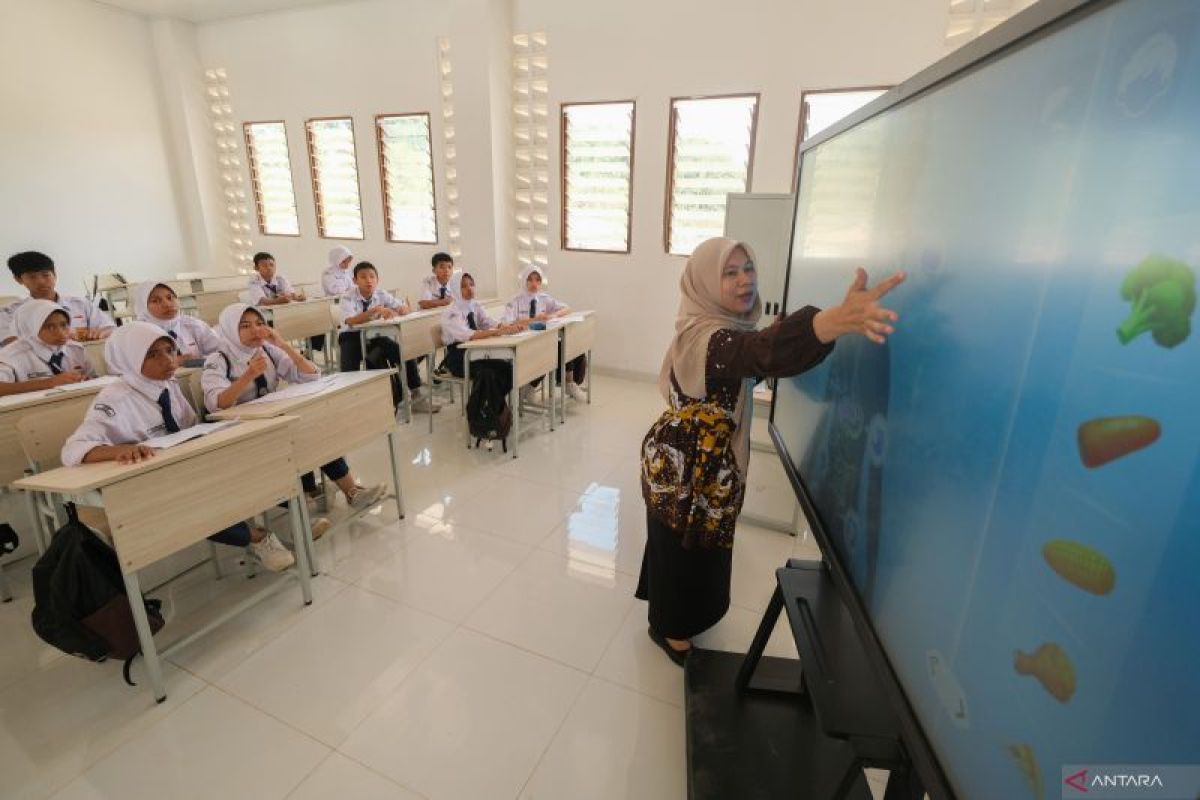
Jakarta (ANTARA) – The government has taken a major step towards resolving a problem that has troubled honorary teachers for years: uncertainty over their employment status.
Around 900,000 teachers now have full-time PPPK status, while more than 230,000 are in the part-time PPPK scheme. The policy deserves recognition. The state is beginning to provide greater certainty over teachers’ careers, incomes and futures. From 2027, the government will also open a pathway for part-time PPPK teachers to move to full-time PPPK status, subject to requirements and needs.
As employment status begins to be put in order, a more fundamental question arises: has the system managing teachers changed as well? This is the next challenge.
The teaching profession is still governed, among other things, by Law No. 14 of 2005 on Teachers and Lecturers. This was an important milestone, recognising teachers as professionals and regulating their competencies, certification, rights, obligations, development and welfare.
The problem is not that the law is flawed. It was enacted more than two decades ago, before PPPK became part of the civil service architecture as it is today.
Law No. 20 of 2023 on the State Civil Apparatus (ASN) now places both civil servants (PNS) and PPPK employees within the ASN. The employment system has also evolved, incorporating a merit system, talent development, mobility, digitalisation of ASN management and the reorganisation of non-ASN personnel. We are therefore dealing with two frameworks that emerged in different eras: the framework for the teaching profession and the framework for ASN employment.
As a result, teachers are managed according to several different sets of logic at once. As educators, they are professionals. As ASN employees, they are part of the civil service system. As employees in regional governments, their management is tied to local authorities’ powers and fiscal capacity. For schools, meanwhile, the question is much simpler: is the right teacher available to serve the pupils who need one?
We must therefore distinguish between appointing teachers and organising the teacher workforce. Appointing hundreds of thousands of teachers as ASN employees is a major achievement. However, a change in employment status does not automatically solve distribution problems.
A region may have enough teachers overall, while particular schools remain short of staff. There may be too many teachers in some subjects and too few in others. Urban schools can generally recruit teachers more easily, while schools in remote areas may still have to wait. The success of teacher policy cannot therefore be measured solely by the number of posts filled. The more important question is whether the right teachers are in the right places.
The state needs more precise workforce planning for teachers. It must do more than count teachers: it needs to forecast which schools will need them, which subjects have shortages, what competencies are required, how pupil numbers are changing, which teachers are approaching retirement, and the most efficient ways of meeting those needs.
Developments in August 2026 have made this issue even more pressing. In the House of Representatives, proposals have emerged to strengthen the central government’s role in managing PPPK teachers, including their funding and distribution. These proposals still require a clear design and legal basis. But the debate should not stop at the simplistic choice between central and regional management.
Indonesia does not simply need to centralise teacher management. It needs a national orchestration of teacher governance. The central government should take the lead in forecasting teacher needs nationwide, setting recruitment standards, building data systems, organising career pathways, securing strategic funding and enabling mobility between regions.
Regional governments still have an important role because they are closer to schools, understand local conditions and can identify the education needs of their communities. With this division of responsibilities, decentralisation need not become fragmentation.