
After Singapore, Malaysia Now Copies Indonesia's QRIS Payment System
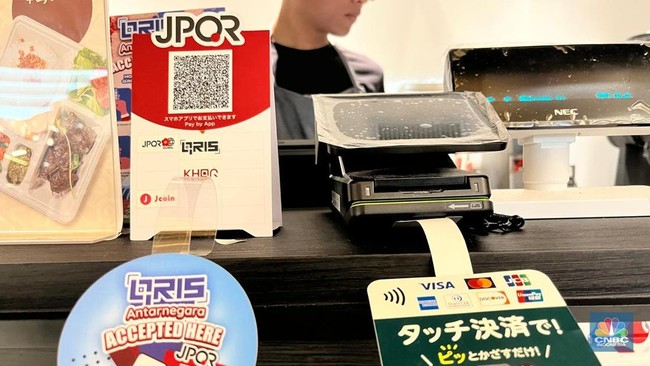
The central bank of Malaysia has decided to gradually phase out individual QR payment networks owned by various providers over the next two years. This policy is intended to realise a single, integrated, and interoperable QR payment system. This plan is similar to QRIS, which has been operational in Indonesia since 2019.
According to the newly released Interoperable Fund Transfer Framework policy document, all proprietary QR networks must be discontinued no later than 30 June 2028. During the transition period, affected financial institutions are also prohibited from recruiting new merchants into their closed QR networks.
The policy aims to allow the public to use any participating banking application or digital wallet to make payments through a single, unified QR network. Consequently, consumers will no longer be dependent on closed systems operated by individual service providers.
Under the new regulations, all banks providing QR payment services are required to join a shared payment infrastructure. Banks must also enable their customers to make payments to merchants served by all participating acquirers.
On the other hand, merchant acquirers are also obligated to ensure that the merchants they serve can accept payments from customers of all financial institutions participating in the network, as reported by The Edge Malaysia on Thursday (2/7/2026).
The shared payment infrastructure in question is the Real-time Retail Payments Platform, which supports services such as DuitNow Transfer and DuitNow QR. This platform is operated by Payments Network Malaysia Sdn Bhd (PayNet).
This mirrors the domestic situation in Indonesia with QRIS, which is a single QR code that can be read by all digital wallet applications and banks operating in Indonesia. There is no longer any confusion caused by seeing numerous different QR codes at a single business, and this experience is also highly beneficial for foreign tourists.
The advantages of QRIS have been widely proven. As of mid-2026, QRIS is used by more than 30 million merchants and 45 million active users throughout Indonesia, and it has established cross-border connections with Singapore, Malaysia, Thailand, and other countries. Furthermore, since November 2023, QRIS has been integrated with SGQR in Singapore, facilitating transactions for Indonesian tourists there.
This move by our neighbouring country comes amidst the increasing use of electronic fund transfer services in Malaysia. According to Bank Negara Malaysia (BNM), mobile banking has become the public’s favourite payment channel, driving the sustainable adoption of digital transactions. Currently, every Malaysian citizen performs an average of at least 1.5 electronic payment transactions per day.
“This achievement is supported by a shared payment infrastructure that functions as an interoperability network connecting bank accounts and non-bank electronic money accounts, both for inter-account fund transfers and payments to merchants,” wrote the Malaysian central bank.
Source: jawawa.id (https://jawawa.id/newsitem/after-singapore-malaysia-now-copies-indonesias-qris-payment-system-1782985940)
Originally published by CNBC Indonesia (https://www.cnbcindonesia.com/tech/20260702121536-37-747470/ditiru-singapura-teknologi-kebanggaan-ri-sekarang-dicontek-malaysia), translated from Indonesian