
After Resigning, This Indonesian Vice-President Relied on His Pension to Get By
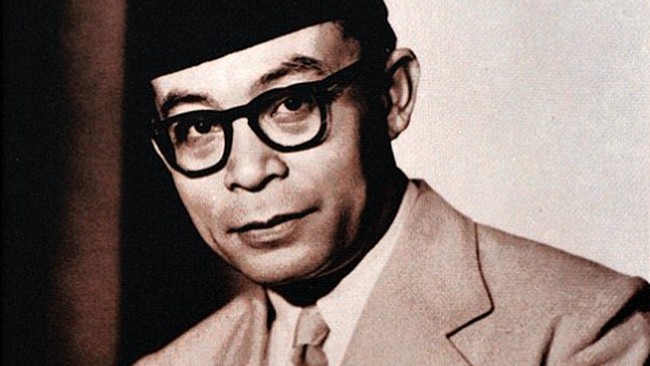
Jakarta, CNBC Indonesia – Retirement did not always bring a former vice-president a life of luxury. Mohammad Hatta, for example, lived far from a comfortable existence after resigning as Indonesia’s vice-president on 1 December 1956.
According to General Hoegeng’s biography, Hoegeng: A Refreshing Oasis Amid the Corrupt Behaviour of the Nation’s Leaders (2009), Hatta had only Rp200 left in his savings when he retired.
Hatta nevertheless tried to carry on by relying on his pension and writing. The newspaper Indonesia Raya reported on 3 December 1956 that he had moved to Megamendung, Bogor, to focus on writing books on economics and sociology. He hoped the proceeds from book sales would supplement his pension, which amounted to just Rp1,000.
However, this did not immediately improve his finances. His autobiography, Mohammad Hatta: Political Biography (1990), says that income from writing books was still not enough to cover his living costs.
“His pension was indeed insufficient from month to month […] and the proceeds from his books were not particularly steady,” it stated.
As a result, he often struggled to meet household expenses, including monthly electricity, water and telephone bills. Despite his financial difficulties, Hatta never complained or asked anyone for help.
The situation once led his daughter, Rahmi, to consider putting out a money box for visitors, so they could contribute towards the family’s needs. But Hatta became angry when he heard the suggestion. The book Pribadi Manusia Hatta (2002) recounts that he regarded it as tantamount to begging.
Hatta’s personal hardship coincided with his growing anxiety about the state of Indonesia’s government. He felt that decades of struggle to build an independent, united and prosperous country had been followed by setbacks in many areas. He conveyed his concerns to President Soekarno in a letter.
“As someone who has struggled for decades and made many sacrifices to achieve an independent, united, sovereign, just and prosperous Indonesia, I feel obliged to write this letter. My heart is troubled to see setbacks in many areas,” Hatta wrote, according to Hati Nurani Melawan Kezaliman: Surat-Surat Bung Hatta Kepada Presiden Sukarno 1957–1965 (1988).
Seeing the difficulties Hatta faced, Jakarta Governor Ali Sadikin felt concerned. In his biography, Ali Sadikin: Making Jakarta a Humane City (2012), he described efforts to help the independence hero.
The Jakarta administration eventually took over payment of all the bills for Hatta’s home, including electricity and water, on behalf of the governor.
Even so, the assistance did not substantially improve Hatta’s financial position. When his health began to deteriorate and he needed costly treatment, he still did not have enough money.
The government offered to cover all the costs of Hatta’s travel and medical treatment in the Netherlands. But Hatta was uncomfortable using state funds for personal purposes, even though, as a former vice-president, he was entitled to government-provided healthcare.
He therefore used his own savings to reimburse the state for the full cost of the travel and treatment. The government refused to accept the repayment, but Hatta insisted on settling all the expenses.
Source: jawawa.id (https://jawawa.id/newsitem/after-resigning-this-indonesian-vice-president-relied-on-his-pension-to-get-by-1794624636)
Originally published by CNBC Indonesia (https://www.cnbcindonesia.com/entrepreneur/20261113184823-25-785159/usai-mundur-wapres-ri-ini-andalkan-hidup-dari-uang-pensiunan), translated from Indonesian